Two Conflicts That Defined the Twentieth Century
World War I and World War II stand as the two most significant military conflicts in modern history. Though separated by only two decades, the wars differed profoundly in their causes, strategies, technologies, and global consequences. Together they reshaped international politics, accelerated technological progress, and transformed the nature of warfare itself. World War I, often called the Great War, erupted in 1914 after a complex web of alliances and rising nationalism collided with the assassination of Archduke Franz Ferdinand. It became a prolonged struggle dominated by trench warfare, massive artillery bombardments, and grinding stalemates across Europe. World War II began in 1939 under dramatically different circumstances. The political aftermath of the first war, combined with economic instability and the rise of expansionist regimes, created a volatile international environment. The second conflict unfolded with far greater mobility, technological sophistication, and global reach. Understanding how these wars differed helps reveal how warfare evolved from industrial stalemate into the highly mechanized, fast-moving conflicts that shape modern military strategy.
A: World War I was dominated by trench stalemate, while World War II emphasized mobility, mechanization, and rapid combined-arms offensives.
A: World War II, because aircraft evolved from reconnaissance tools into decisive weapons for bombing, interception, and battlefield support.
A: Defensive firepower from artillery and machine guns made open assaults extremely costly, forcing armies into fortified trench systems.
A: Yes. They emerged late in World War I but became central to operational strategy in World War II.
A: World War II, because it expanded across Europe, Africa, Asia, the Atlantic, and the Pacific on a much larger operational scale.
A: World War I relied more on observation and interception, while World War II added sophisticated codebreaking, radar, and strategic deception.
A: World War II, because aircraft carriers, large amphibious operations, and expanded submarine campaigns reshaped sea power.
A: Yes, especially in total casualties, civilian losses, urban destruction, and technological lethality.
A: The atomic bomb, because it introduced nuclear warfare and transformed global strategy.
A: Because the differences between them show how rapidly modern warfare evolved in strategy, technology, intelligence, and global reach.
Causes of Conflict: Political Tensions vs Ideological Struggles
One of the most important differences between the two wars lies in their causes. World War I grew out of a complicated network of political rivalries, alliances, and nationalist ambitions. European powers had spent decades building military strength and forming defensive alliances designed to deter aggression. Ironically, these alliances helped escalate the conflict once war began.
The assassination of the Austrian archduke in 1914 triggered a diplomatic crisis that spiraled into global conflict within weeks. Nations mobilized armies and declared war in rapid succession, transforming a regional dispute into a continent-wide war.
World War II, by contrast, was driven more clearly by ideological expansion and deliberate territorial aggression. Totalitarian regimes in Germany, Italy, and Japan pursued aggressive strategies aimed at expanding their influence and reshaping global power. The ideological conflict between authoritarian expansion and democratic resistance became a defining feature of the second war. This ideological dimension helped transform World War II into a global struggle over political systems and the future direction of the international order.
Military Strategy: Stalemate vs Rapid Maneuver Warfare
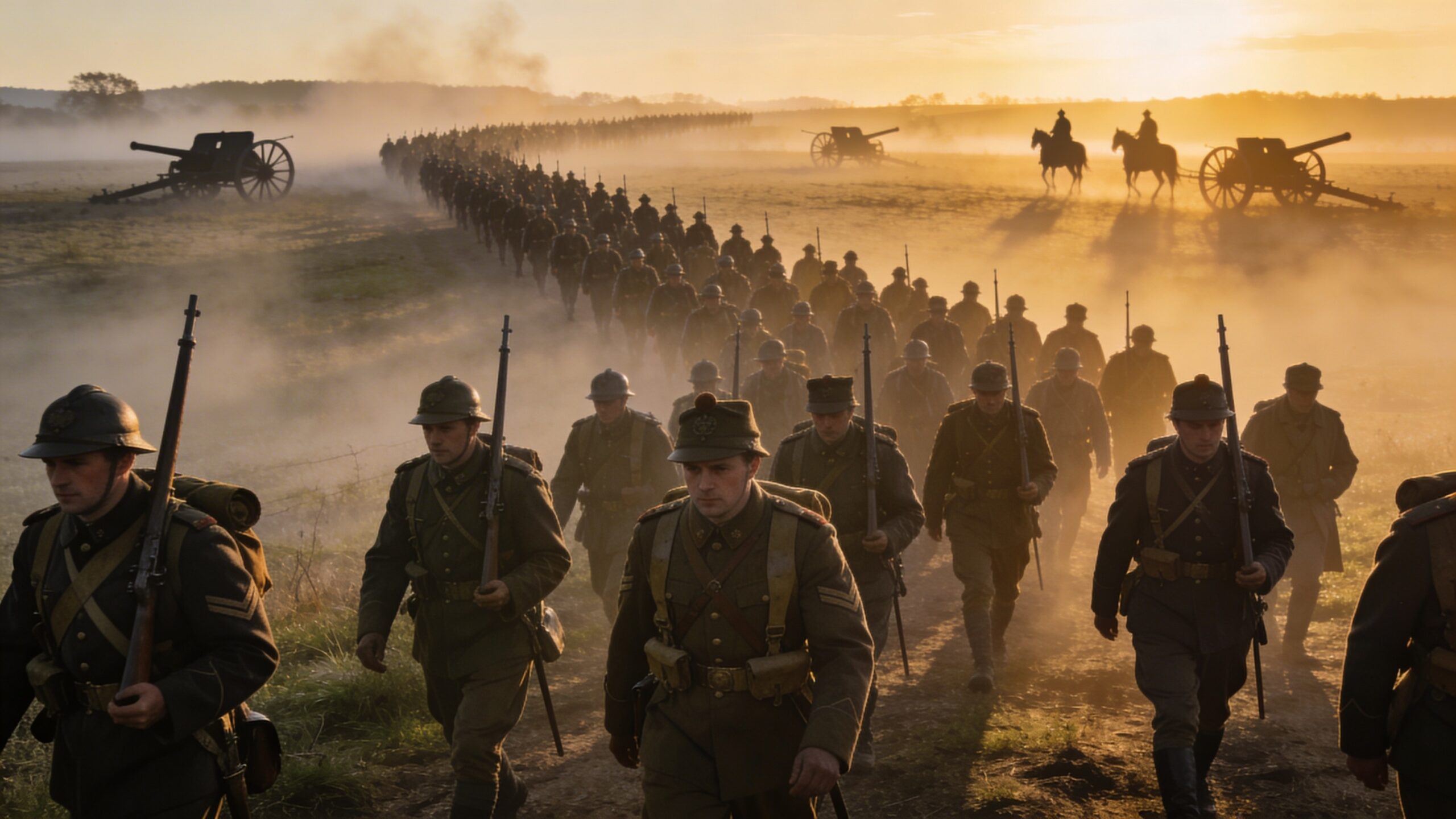
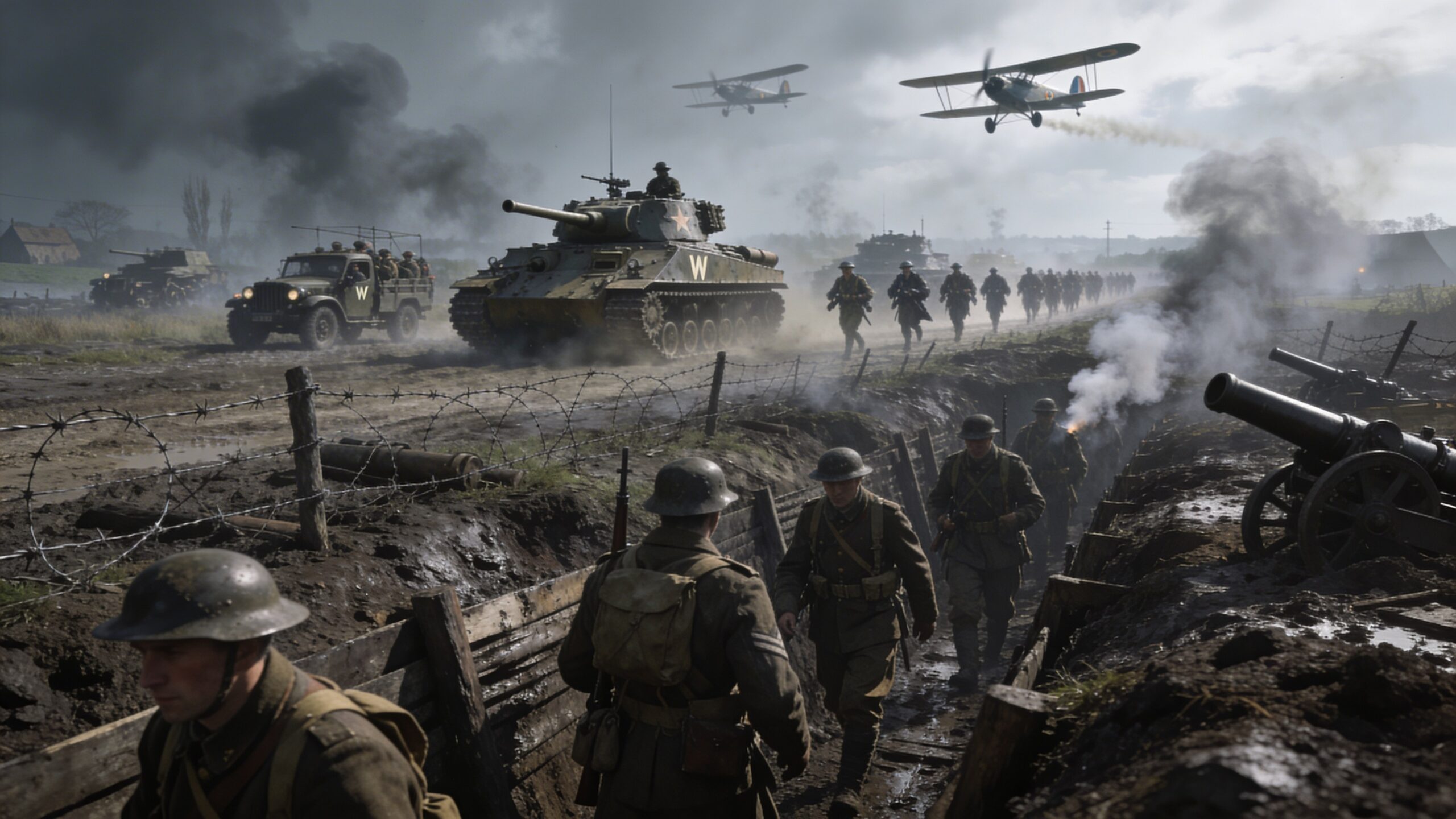
Perhaps the most visible difference between the two wars lies in military strategy. World War I quickly devolved into a stalemate along the Western Front. Armies dug extensive trench networks across Europe, creating defensive positions protected by barbed wire, machine guns, and artillery. These defensive technologies made offensive breakthroughs extremely difficult. Attacks across open ground often resulted in enormous casualties with limited territorial gains. Battles such as Verdun and the Somme lasted for months and inflicted devastating losses on both sides.
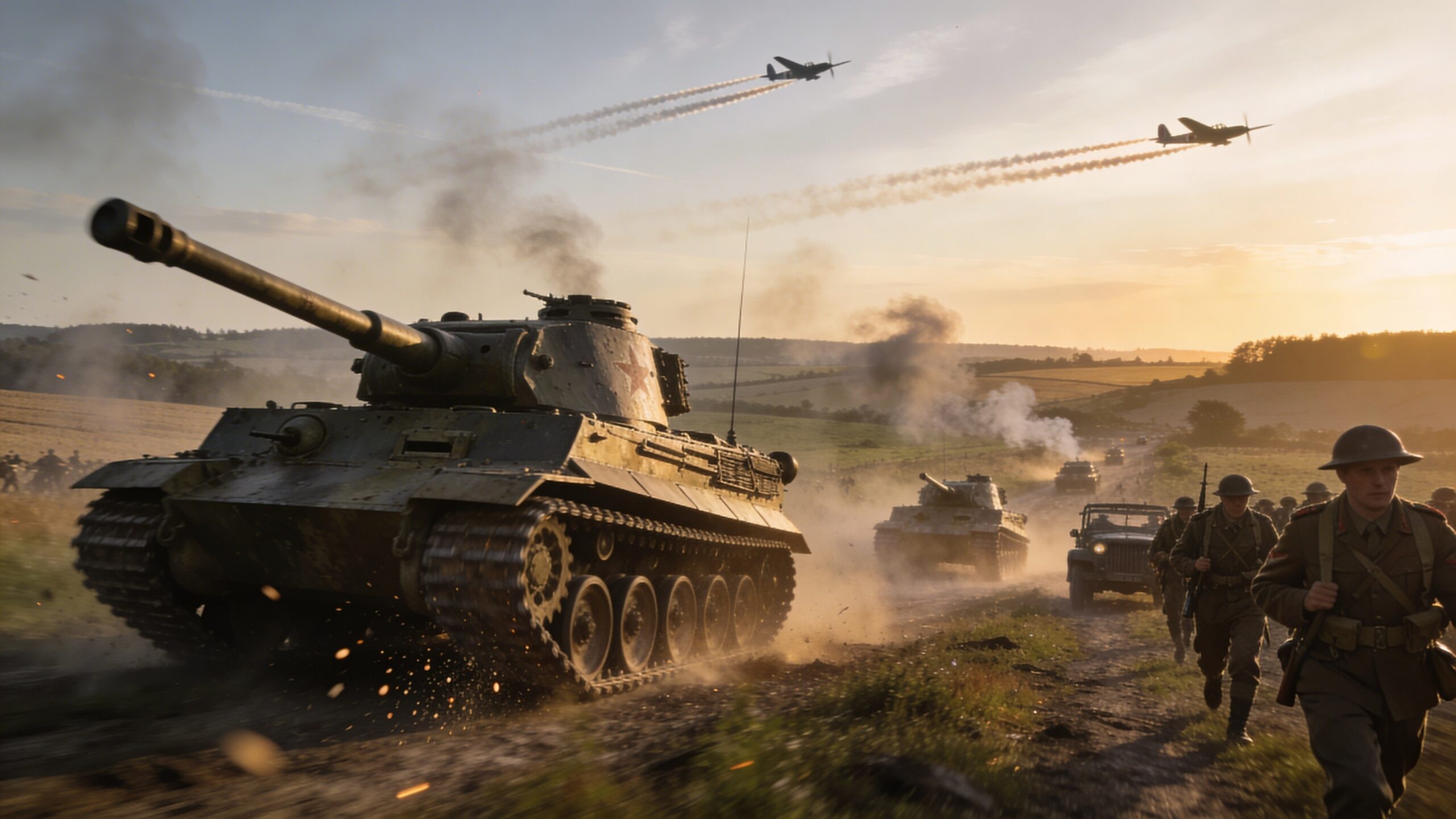
World War II unfolded very differently. Military planners sought to avoid the stalemate of the earlier conflict by emphasizing mobility and coordination. Germany pioneered a strategy known as Blitzkrieg, or lightning war, which combined armored vehicles, aircraft, and fast-moving infantry to break through enemy defenses rapidly. This strategy allowed German forces to defeat several European countries quickly during the early years of the war. The emphasis on speed and maneuver fundamentally transformed military planning and marked a shift away from static trench warfare.
Technology: Industrial Weapons vs Mechanized Warfare
Technological development also created major differences between the two conflicts. World War I introduced several powerful new weapons that dramatically increased battlefield lethality. Machine guns, heavy artillery, and poison gas made defensive positions extraordinarily deadly. However, many armies were still organized around nineteenth-century concepts of warfare. Infantry assaults remained common even though new technologies made them extremely dangerous.
By the time World War II began, military technology had advanced significantly. Tanks had become more reliable and capable of operating in coordinated formations. Aircraft were faster and more powerful, enabling both strategic bombing and close air support. Naval warfare also evolved dramatically. Aircraft carriers replaced battleships as the dominant force at sea, allowing naval aviation to strike targets hundreds of miles away.
Perhaps the most dramatic technological development of the war was the creation of nuclear weapons. The atomic bombs used against Hiroshima and Nagasaki introduced a level of destructive power previously unimaginable. These technological changes reshaped the future of warfare.
The Global Scope of Combat
World War I involved many nations and several continents, but much of the fighting occurred in Europe. The Western Front, Eastern Front, and Middle Eastern campaigns dominated the conflict, while colonial territories provided additional manpower and resources. World War II expanded the scale of global warfare even further. Battles occurred across Europe, North Africa, the Atlantic Ocean, the Pacific Islands, and East Asia. Entire oceans became theaters of conflict.
The Pacific War between the United States and Japan involved vast naval battles, amphibious invasions, and air campaigns across thousands of miles of ocean territory. The war in Europe also spread into North Africa and eventually into the Soviet Union, creating one of the largest land conflicts in history. This truly global scale distinguished World War II from the earlier conflict.
The Role of Air Power
Airpower played a relatively limited role during World War I. Early aircraft were primarily used for reconnaissance missions, allowing commanders to observe enemy movements from the air. As the war progressed, fighter aircraft began engaging in aerial combat and bombers conducted small-scale attacks.
By World War II, airpower had become central to military strategy. Strategic bombing campaigns targeted factories, transportation networks, and industrial centers. Aircraft also supported ground troops through close air support missions.
Air superiority became a decisive factor in many battles. Control of the skies allowed armies to move more freely while denying the same advantage to the enemy. The dramatic expansion of airpower during World War II helped define modern military operations.
Economic Mobilization and Total War
Both world wars required enormous economic mobilization, but the scale reached during World War II was unprecedented. Governments reorganized national economies to support massive war production. Factories produced tanks, aircraft, ships, and weapons at astonishing rates. Industrial capacity often determined which nations could sustain prolonged conflict. Civilian populations also became deeply involved in the war effort. Women entered industrial workforces in large numbers, and entire societies were mobilized to support military operations. This level of economic mobilization helped transform modern concepts of national security and defense preparedness.
Intelligence and Codebreaking
Intelligence operations played important roles in both conflicts, but technological advancements made intelligence even more critical during World War II. In World War I, espionage networks and reconnaissance provided valuable information about enemy movements. However, communication systems were relatively limited.
World War II saw the development of sophisticated codebreaking programs that intercepted and deciphered enemy communications. Breaking encrypted messages provided critical insights into enemy strategies and troop deployments. These intelligence efforts significantly influenced the outcome of several campaigns and helped shape modern intelligence agencies.
The End of the Wars
The conclusion of the two conflicts also differed dramatically. World War I ended in 1918 when Germany sought an armistice after years of grinding warfare and economic hardship. The Treaty of Versailles imposed severe penalties on Germany and attempted to establish a framework for lasting peace. However, the treaty’s terms created resentment and instability that contributed to future conflicts.
World War II ended in 1945 with the unconditional surrender of Germany and Japan. The defeat of Axis powers led to major political transformations, including the collapse of several regimes and the restructuring of global alliances.
The aftermath of World War II also introduced a new geopolitical rivalry between the United States and the Soviet Union, beginning the Cold War.
How These Wars Shaped Modern Warfare
The differences between World War I and World War II reveal how quickly military strategy and technology evolved during the twentieth century. The first war demonstrated the devastating power of industrial weapons but also exposed the limitations of outdated military tactics. The second war embraced mechanization, airpower, intelligence operations, and advanced technology in ways that continue to influence modern military planning.
Together, these conflicts reshaped global politics, transformed military doctrine, and accelerated technological innovation across nearly every field. Modern warfare, international alliances, and global security systems all trace their origins to the lessons learned during these two catastrophic yet transformative conflicts.
Understanding the differences between World War I and World War II provides insight into how modern warfare evolved and why the twentieth century became one of the most pivotal periods in human history.