The World on the Brink of War
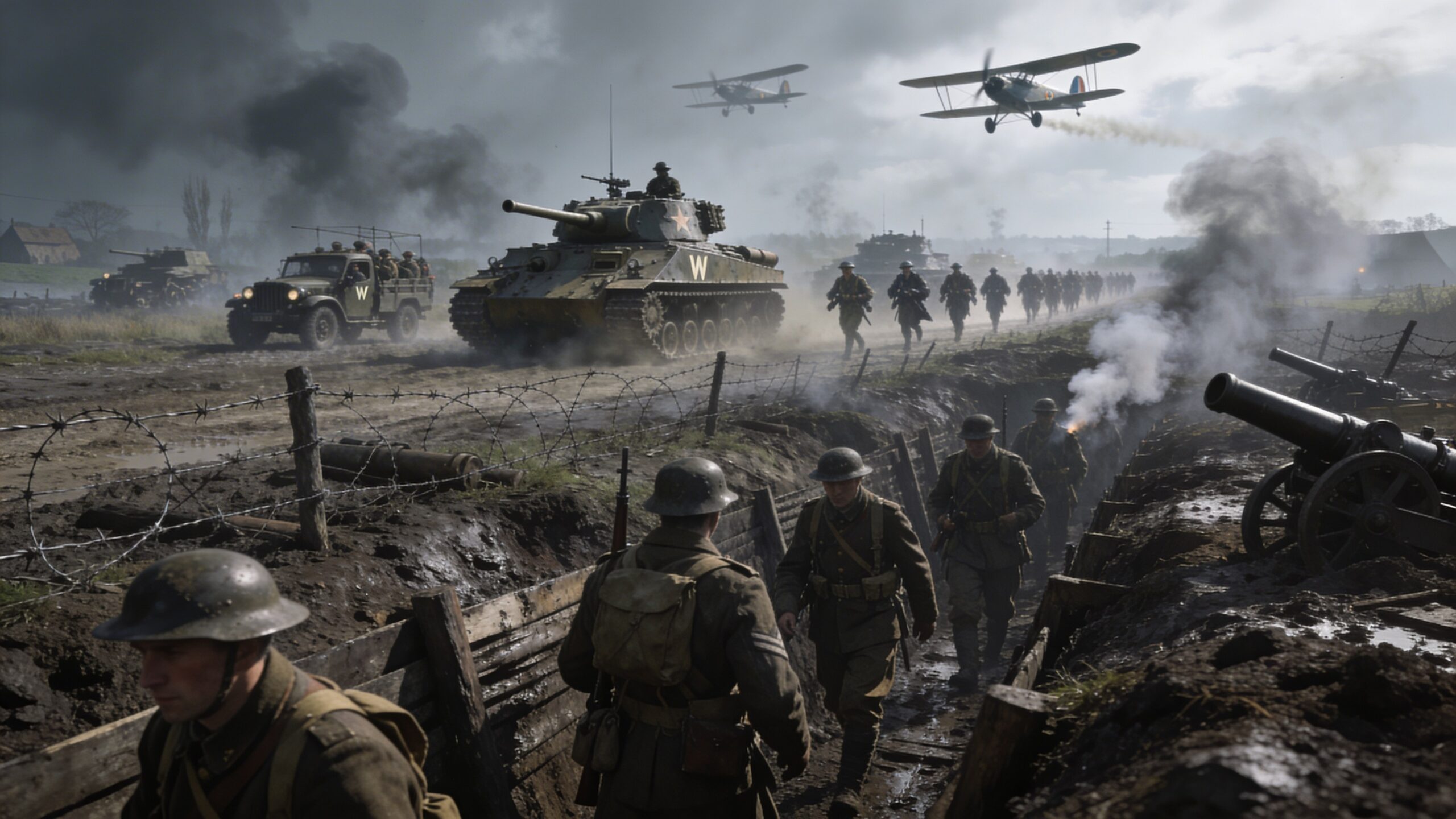
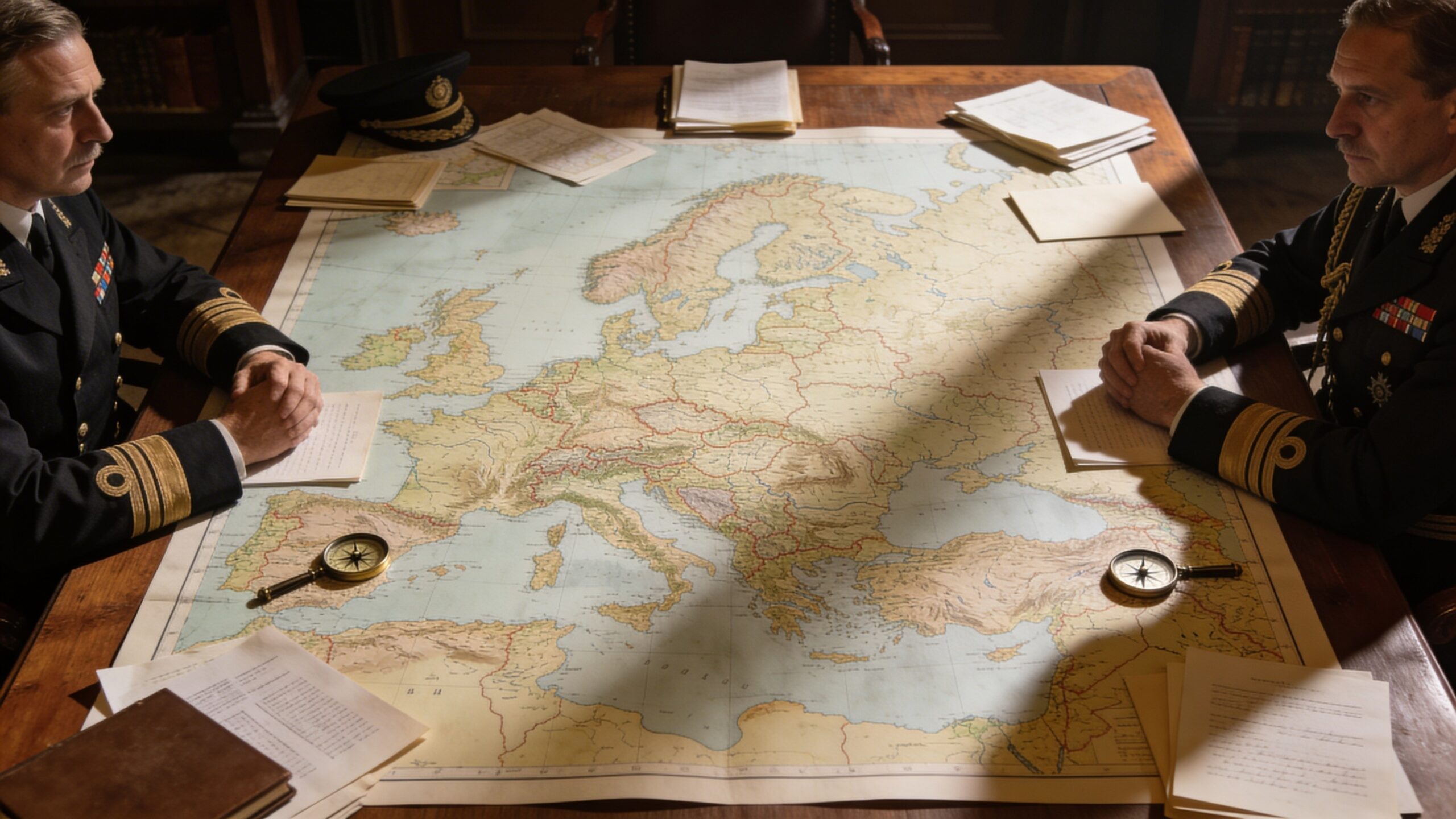
By the late 1930s, the world was still struggling to recover from the devastation of World War I. The economic instability of the Great Depression had weakened many nations, while political tensions intensified across Europe and Asia. Several authoritarian governments rose to power during this turbulent period, promoting expansionist policies and aggressive nationalism. Germany, under Adolf Hitler, pursued rapid military expansion and territorial ambitions. The country rejected the restrictions imposed after World War I and rebuilt its armed forces at remarkable speed. Meanwhile, Imperial Japan was expanding its influence in East Asia, and Italy sought to establish dominance in parts of Africa and the Mediterranean. The fragile peace that followed the First World War began to unravel as diplomatic negotiations repeatedly failed to contain these growing ambitions. By the end of the decade, the stage was set for a conflict that would soon engulf the entire world.
A: The war began on September 1, 1939 when Germany invaded Poland.
A: A rapid military strategy using tanks, aircraft, and mechanized forces to overwhelm defenses.
A: The United States joined the war after the attack on Pearl Harbor in December 1941.
A: It marked a major turning point that halted Germany’s eastern advance.
A: The Allied invasion of Normandy on June 6, 1944 that began the liberation of Western Europe.
A: Germany surrendered in May 1945 after Allied forces captured Berlin.
A: Japan surrendered in August 1945 following atomic bombings and Soviet entry into the war.
A: Tens of millions of soldiers and civilians were killed during the conflict.
A: Organizations such as the United Nations were created to encourage global cooperation.
A: Its strategies, technologies, and geopolitical impacts continue to shape modern history.
1939: Blitzkrieg and the Beginning of Global War
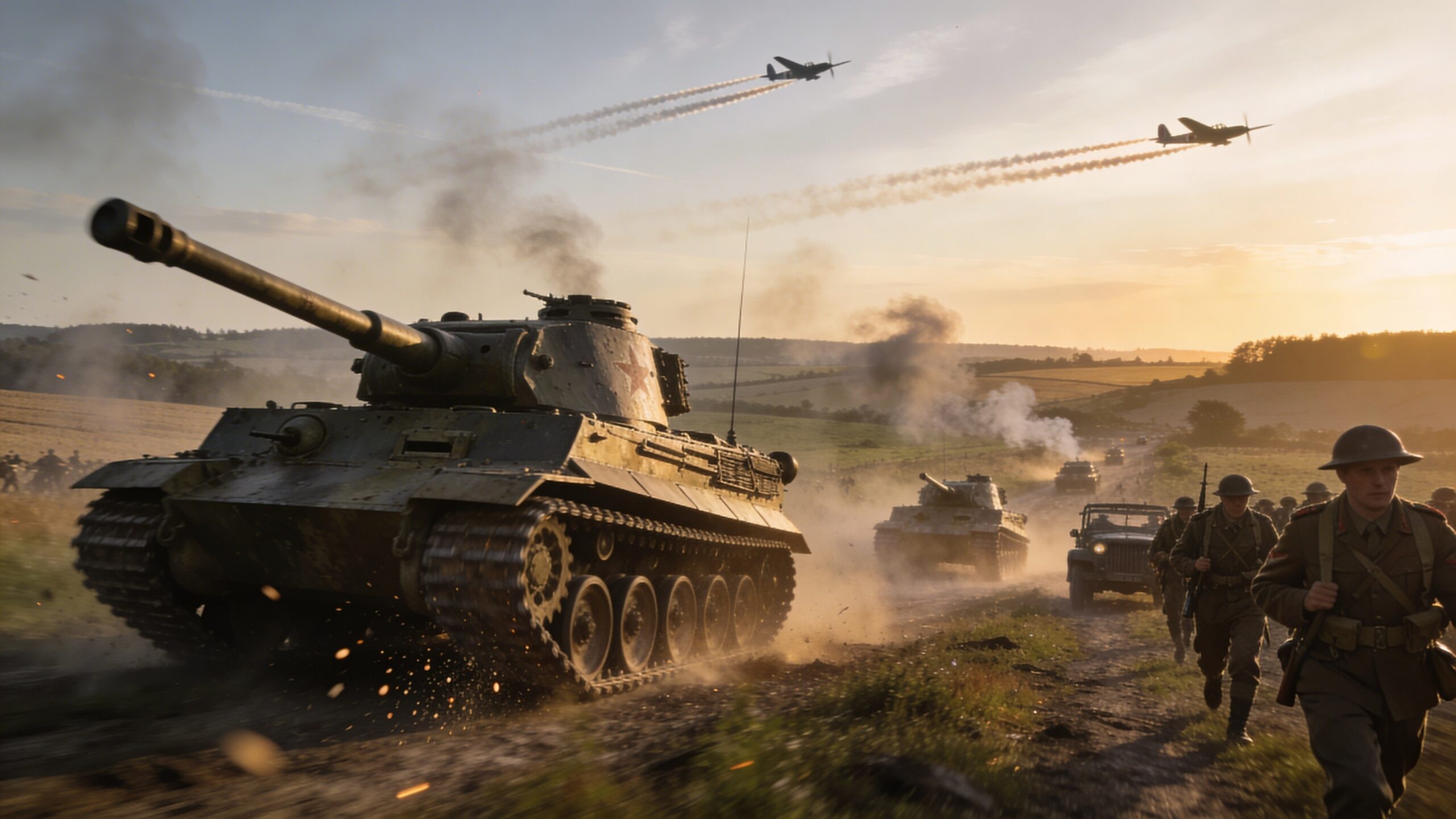
The outbreak of World War II is most often traced to September 1, 1939, when Germany launched a sudden invasion of Poland. The attack demonstrated a new form of warfare that would soon become known as Blitzkrieg, or “lightning war.” Instead of slow-moving trench battles like those of World War I, German forces used coordinated attacks involving tanks, aircraft, and mechanized infantry to overwhelm defenses rapidly.
The strategy proved devastatingly effective. German armored divisions moved quickly across Polish territory while aircraft targeted communication networks and defensive positions. Within weeks, Poland’s resistance collapsed. In response, Britain and France declared war on Germany. What had begun as a regional invasion quickly escalated into a wider European conflict. Although the war had officially begun, the early months were relatively quiet along the Western Front. This period was sometimes referred to as the “Phoney War,” as both sides prepared for larger battles yet to come.
1940: The Lightning Campaign Across Europe
The year 1940 marked one of the most dramatic periods of the war. Germany launched a series of rapid offensives across Western Europe, demonstrating the full power of Blitzkrieg tactics. In April, German forces invaded Denmark and Norway, securing strategic positions in northern Europe. Soon afterward, a much larger offensive began against Belgium, the Netherlands, and France.
German armored divisions bypassed heavily fortified defensive lines and advanced quickly through the Ardennes region, surprising Allied forces. Within weeks, German troops had pushed deep into France, forcing Allied soldiers to retreat toward the English Channel.
One of the most remarkable events of the campaign was the evacuation of Allied forces from Dunkirk. Hundreds of thousands of British and French troops were rescued across the channel to Britain in a massive maritime operation involving naval vessels and civilian boats. Despite this evacuation, France soon fell to German forces. By June 1940, much of Western Europe was under German control.
The Battle of Britain
Following the fall of France, Germany turned its attention toward Britain. The German leadership hoped to weaken British resistance through an intense air campaign designed to destroy the country’s air defenses. The Battle of Britain became the first major military campaign fought entirely in the air. German aircraft launched repeated bombing raids against military targets, airfields, and eventually cities.
British pilots and radar systems played a crucial role in defending the country. Fighter aircraft intercepted incoming raids, while early radar technology provided valuable warning of approaching enemy formations. Despite heavy losses on both sides, Britain successfully resisted the campaign. The failure of Germany to gain air superiority prevented a planned invasion of the British Isles. This marked one of the first major turning points in the war.
1941: The War Expands
The conflict expanded dramatically in 1941. In June, Germany launched Operation Barbarossa, the largest military invasion in history. Millions of German troops advanced into the Soviet Union along a massive front stretching from the Baltic Sea to the Black Sea. The early stages of the invasion were devastating for Soviet forces, with entire armies encircled and captured. German forces advanced rapidly toward major cities including Moscow and Leningrad.
However, the vast distances of the Soviet Union and the resilience of Soviet defenses slowed the German advance. Harsh winter conditions and logistical challenges further complicated the invasion. Later that year, another event transformed the conflict into a truly global war. On December 7, 1941, Japanese aircraft attacked the American naval base at Pearl Harbor in Hawaii. The surprise attack damaged much of the United States Pacific Fleet and shocked the American public.
Within days, the United States entered the war, joining the Allied powers against both Germany and Japan.
1942: The War Reaches Its Turning Points
By 1942, the war had spread across multiple continents. Battles raged across Europe, North Africa, the Atlantic Ocean, and the Pacific. Two major battles during this year began shifting momentum away from the Axis powers.
In the Pacific, the Battle of Midway became one of the most decisive naval engagements in history. American forces managed to destroy several Japanese aircraft carriers, weakening Japan’s naval strength and halting its expansion across the Pacific.
Meanwhile, in Eastern Europe, the Battle of Stalingrad began as German forces attempted to capture the strategically important city along the Volga River. The battle soon developed into one of the most brutal urban conflicts ever fought. By the end of the year, Soviet forces launched a counteroffensive that surrounded the German army inside the city. The war had reached a turning point.
1943: Momentum Shifts
In early 1943, German forces trapped in Stalingrad surrendered after months of intense fighting. The defeat marked a major strategic loss for Germany and strengthened Soviet morale. The Eastern Front soon saw another enormous battle at Kursk, which became the largest tank battle in history. German forces attempted one last major offensive against Soviet defenses, but the attack failed.
From that point forward, Soviet armies began pushing German forces westward across Eastern Europe. Elsewhere, Allied forces were advancing in North Africa. Following successful campaigns against Axis forces, Allied troops invaded Italy in 1943. The campaign through Italy proved difficult and slow, but it opened another front against Germany. The war was gradually shifting in favor of the Allies.
1944: The Road to Liberation
One of the most important moments of World War II occurred on June 6, 1944. Allied forces launched the largest amphibious invasion in history along the coast of Normandy in France. Known as D-Day, the invasion involved thousands of ships, aircraft, and landing craft carrying Allied soldiers across the English Channel.
Despite heavy resistance, Allied troops established a foothold on the beaches and gradually pushed inland. The successful invasion opened a western front against Germany and accelerated the liberation of Western Europe. Throughout the remainder of 1944, Allied armies advanced across France, Belgium, and the Netherlands.
Meanwhile, Soviet forces continued their advance from the east. Germany was increasingly surrounded.
1945: The Final Battles
By early 1945, the Axis powers were collapsing under the pressure of multiple Allied offensives. Soviet forces advanced toward Berlin from the east, while American and British forces pushed into Germany from the west. Intense battles took place as Allied armies closed in on the German capital. In April 1945, Soviet troops captured Berlin after fierce urban combat. Germany surrendered shortly afterward, bringing the war in Europe to an end. However, fighting continued in the Pacific.
Japanese forces resisted fiercely across island territories despite growing shortages of resources. The United States launched massive bombing campaigns against Japanese cities while preparing for a possible invasion of the Japanese mainland. In August 1945, the United States used atomic weapons against the cities of Hiroshima and Nagasaki. Soon afterward, Japan surrendered, officially ending World War II.
The Legacy of Victory
World War II transformed the world in profound ways. The conflict reshaped international politics, accelerated technological development, and redefined military strategy. New international institutions emerged in the war’s aftermath, including the United Nations. Former colonial territories began moving toward independence, and global alliances shifted dramatically.
The war also marked the beginning of the nuclear age and the geopolitical rivalry between the United States and the Soviet Union. Although the war ended in 1945, its influence continues to shape modern global politics and military strategy.
The timeline of World War II tells the story of one of the most consequential conflicts in human history—from the rapid Blitzkrieg invasions that shocked Europe to the hard-fought victories that ultimately reshaped the world.