
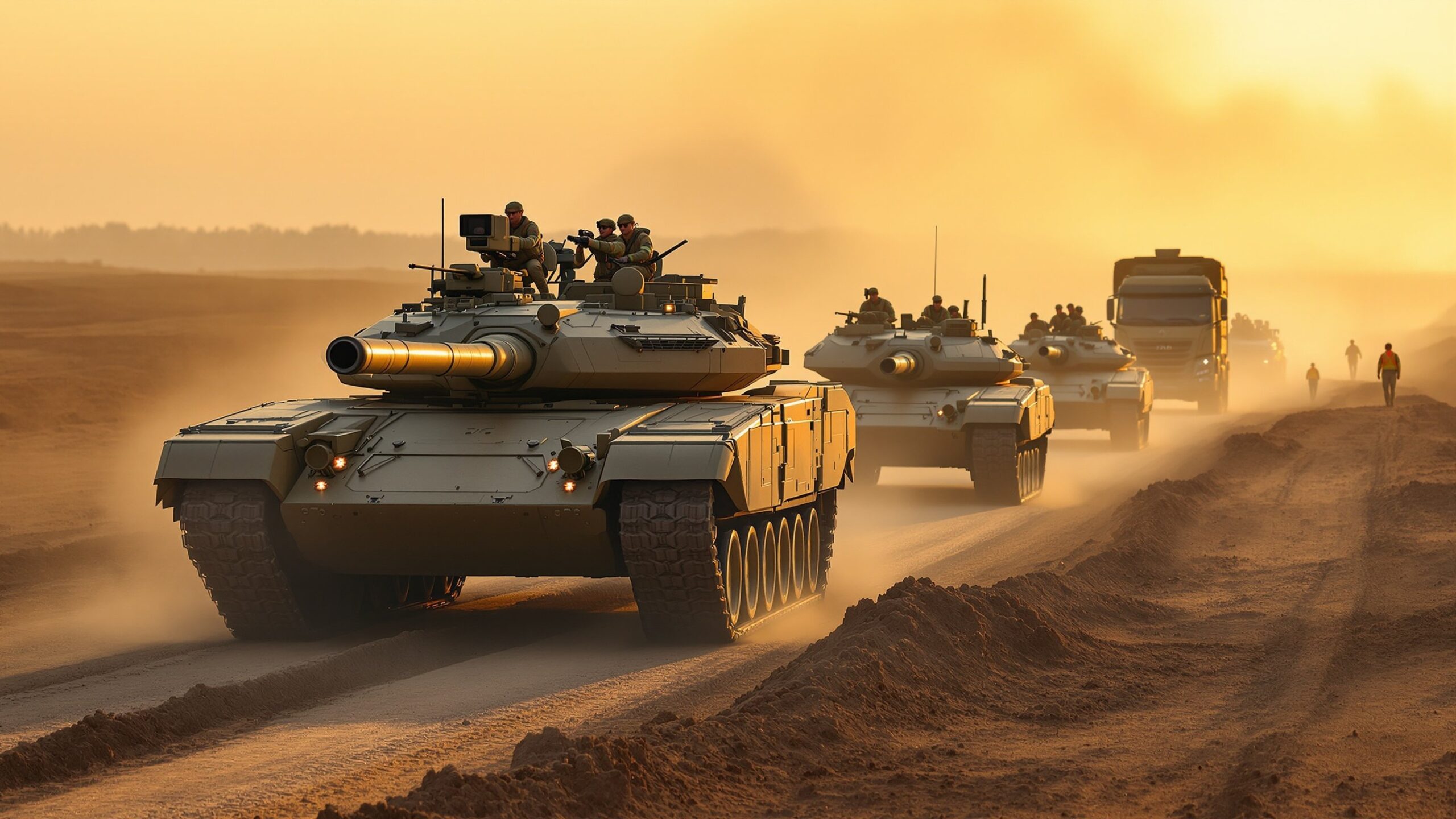
On Defense Street, Ground Weapons Systems is where steel, software, and strategy meet the realities of the modern battlefield. This sub-category explores the armored vehicles, mobile artillery, air-defense launchers, and support platforms that give ground forces their reach, protection, and precision. Instead of focusing on spectacle, we dig into how these systems are designed, integrated, and deployed within doctrine, logistics, and coalition operations. You’ll find articles that unpack how a main battle tank fits into a combined-arms team, why self-propelled artillery still matters in a satellite-driven age, and how unmanned ground vehicles are reshaping reconnaissance and route clearance. We’ll look at sensors, survivability upgrades, counter-drone kits, and how digital fire-control networks tie everything together. Whether you’re a defense enthusiast, analyst, student, or professional, Ground Weapons Systems on Defense Street gives you structured, accessible context for understanding how land forces deter, respond, and adapt in complex environments—through the lenses of engineering, strategy, and responsible use, not hype.
A: Any land-based platform designed to deliver or support controlled military effects, from tanks to air-defense vehicles.
A: Planners match capabilities to terrain, threat, logistics, and political constraints.
A: Upgrades can add sensors and protection while leveraging existing training and infrastructure.
A: Highly—well-trained crews can maximize capabilities and manage complex situations more safely.
A: They mostly complement crews, taking on high-risk tasks like route clearance or remote observation.
A: Doctrine, rules of engagement, and targeting procedures are designed to limit harm.
A: Defense companies design, build, and support systems under government oversight and regulation.
A: Yes—modern platforms rely on secure software, networks, and data links.
A: Many remain in service for decades, with periodic upgrades.
A: Greater automation, connectivity, protection, and efficiency, while keeping humans in responsible control.