
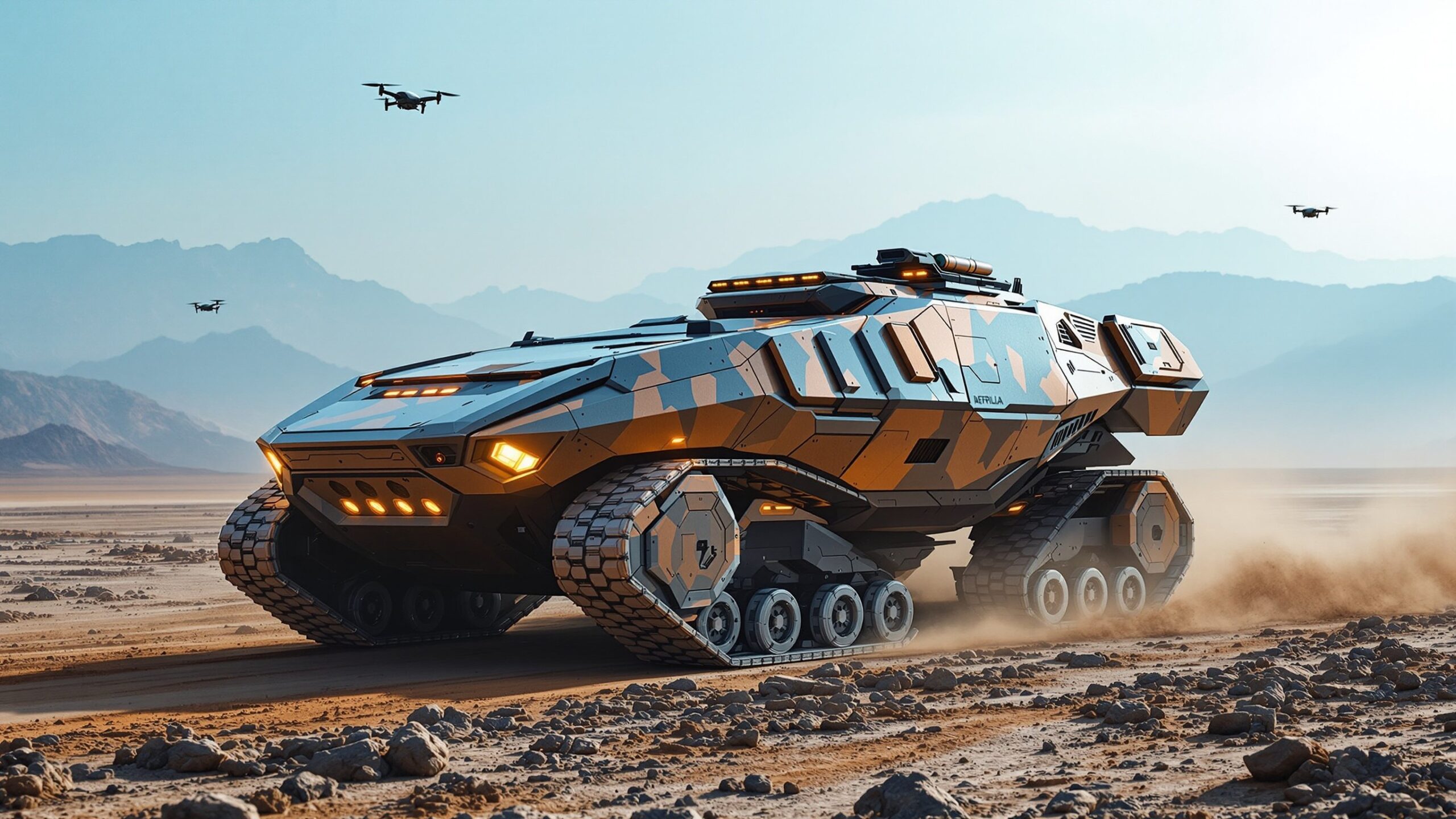
Weapon & Vehicle Design Renders push the boundaries of imagination, engineering, and future battlefield innovation. On Defense Street’s Weapon & Vehicle Design Renders hub, readers step into a world where creative concept artistry meets cutting-edge defense technology. These visuals bring prototype systems to life long before they ever reach a proving ground—revealing aerodynamic armor curves, high-output propulsion layouts, modular weapon bays, adaptive camo skins, and next-generation cockpit environments in breathtaking detail. Renders allow designers, analysts, and enthusiasts to explore what could be possible, experimenting with form, performance, and tactical purpose. From unmanned strike platforms to heavy mechanized transports and precision-built infantry weapons, every image blends realism with forward-leaning innovation. This sub-category showcases inspiration, engineering logic, and the evolving visual language of modern warfare design. Whether you’re studying structure or envisioning capabilities of tomorrow’s arsenal, this space unlocks a thrilling view into defense creativity at its highest level.
A: They accelerate decisions, clarify requirements, and align engineers, operators, and leadership visually.
A: Realistic enough to respect physics and doctrine, but flexible for iteration and innovation.
A: Yes—imagery is reviewed to avoid exposing classified sensors, layouts, or performance hints.
A: Program managers, design teams, operators, acquisition staff, and strategic communication teams.
A: No, they also support engineering reviews, simulations, and training concept development.
A: Tie every depicted capability to realistic tech assumptions and clearly label speculative features.
A: Yes, modular 3D models can be reused, reconfigured, and re-textured across programs.
A: High-resolution stills plus secure 3D or animation exports approved by security and IT.
A: With each major design change so leadership always sees the current configuration.
A: They reduce the need for early mockups but are often complemented by physical prototypes later.