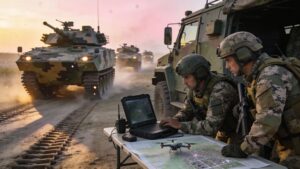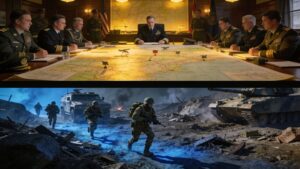
On Defense Street, Military Strategy & Planning is where big ideas meet real-world limits—time, terrain, technology, and the unpredictable human factor. This hub gathers articles that explore how leaders translate national goals into achievable objectives, align forces and resources, and make decisions when information is incomplete and the stakes are high. Expect clear, accessible deep dives on strategy versus tactics, campaign thinking, deterrence and escalation, intelligence cycles, and the quiet power of logistics and sustainment. You’ll also see how doctrine evolves, why adaptability matters, and how history, culture, and geography shape what’s possible long before a plan meets reality. We also spotlight the ethical guardrails, civilian oversight, and how emerging domains—cyber, space, unmanned systems—reshape planning without rewriting fundamentals entirely. From key theorists to joint planning today, we unpack ideas like centers of gravity, lines of effort, and risk tradeoffs in plain language. See how teams use mapping, red teaming, tabletop exercises, and decision tools to test assumptions, coordinate, and prepare for friction. Each piece informs and contextualizes—focused on analysis, history, and responsible thinking for readers.
A: Strategy sets the purpose and priorities; tactics are the methods used in specific situations.
A: Assumptions break, information changes, and friction appears—adaptation matters as much as detail.
A: To test ideas, expose gaps, and explore second-order effects before committing to a course of action.
A: By stating confidence levels, identifying risks, and building decision points and contingencies.
A: A key source of strength or cohesion—understanding it helps prioritize efforts and resources.
A: Sustainment determines reach, endurance, readiness, and what options are truly feasible.
A: Partners share goals but differ in rules, capabilities, and constraints—coordination must be designed.
A: It challenges assumptions and reduces blind spots, improving decision quality and resilience.
A: They add new constraints and opportunities, but fundamentals—purpose, risk, coordination—still apply.
A: No—this section is focused on analysis, history, doctrine concepts, and responsible decision-making.