A New Way to Think Faster Than the Enemy
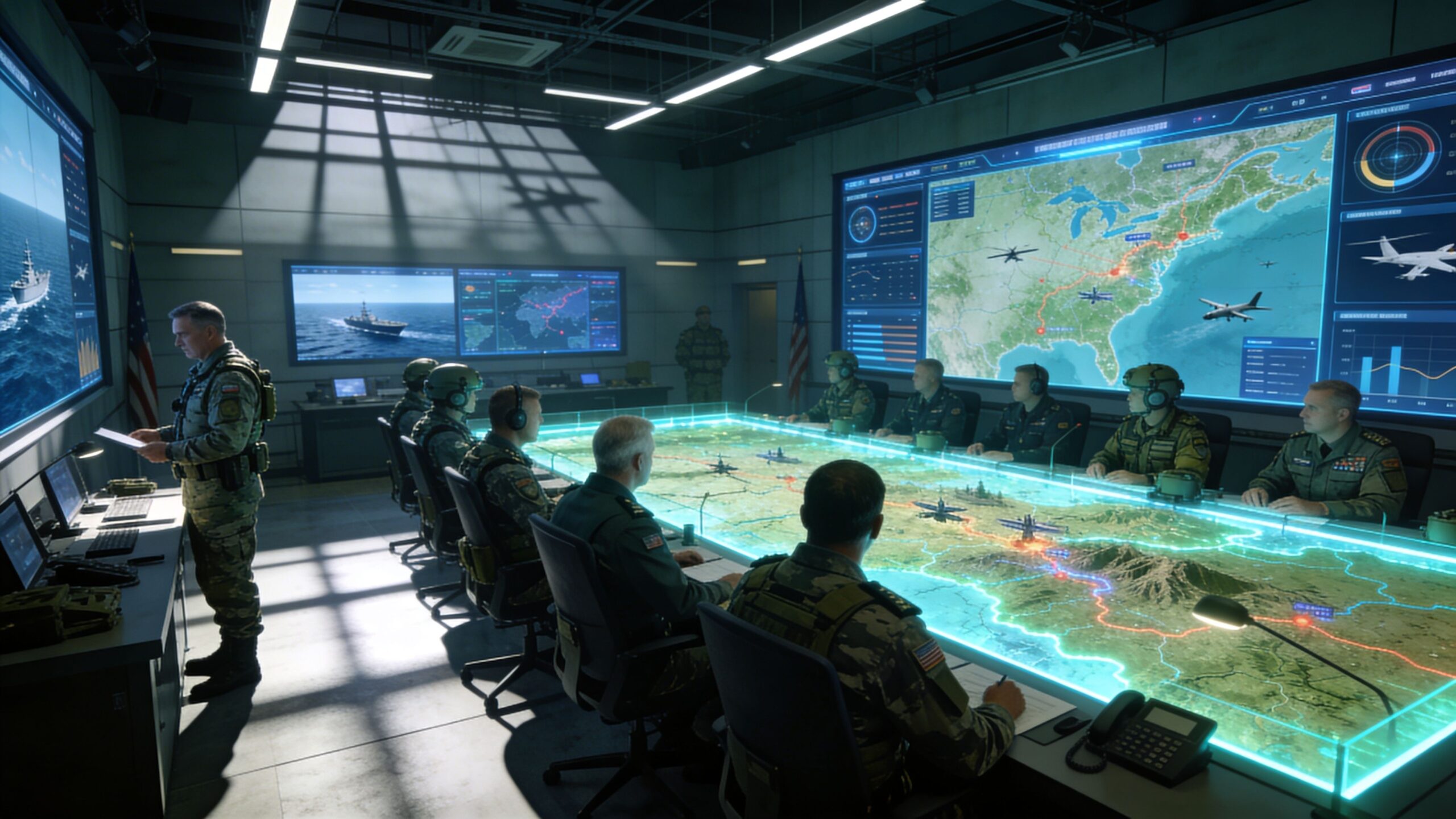
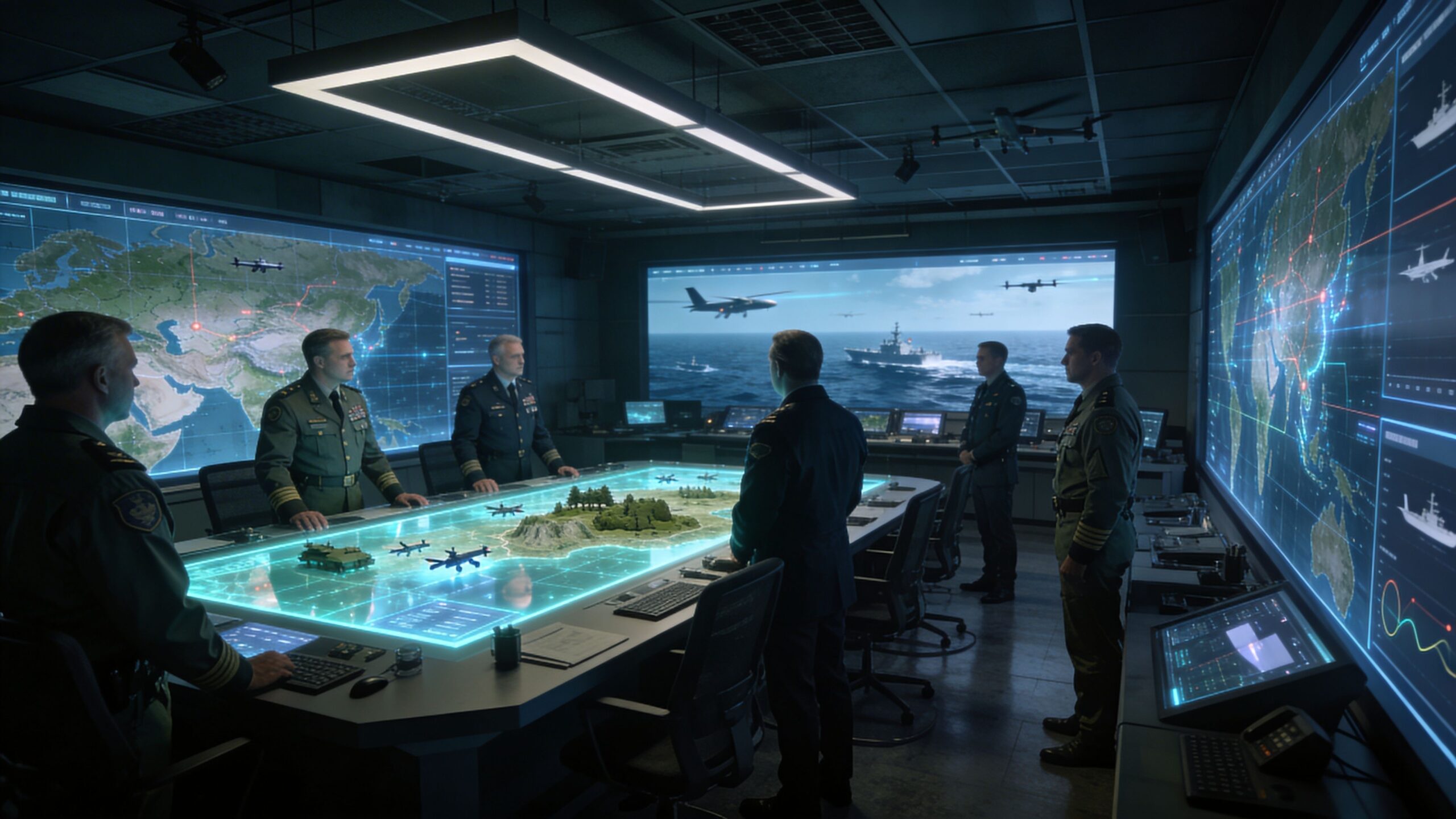
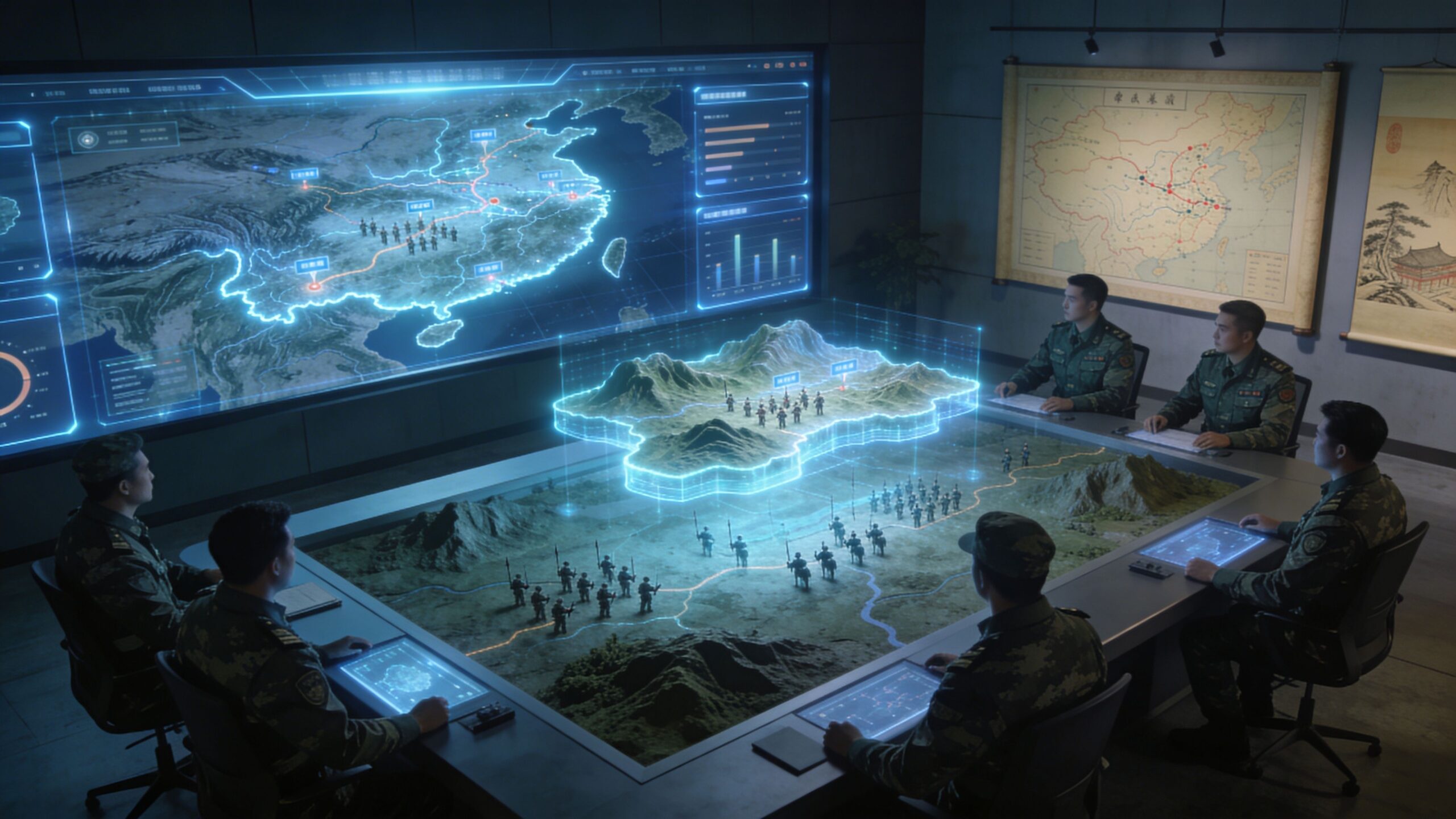
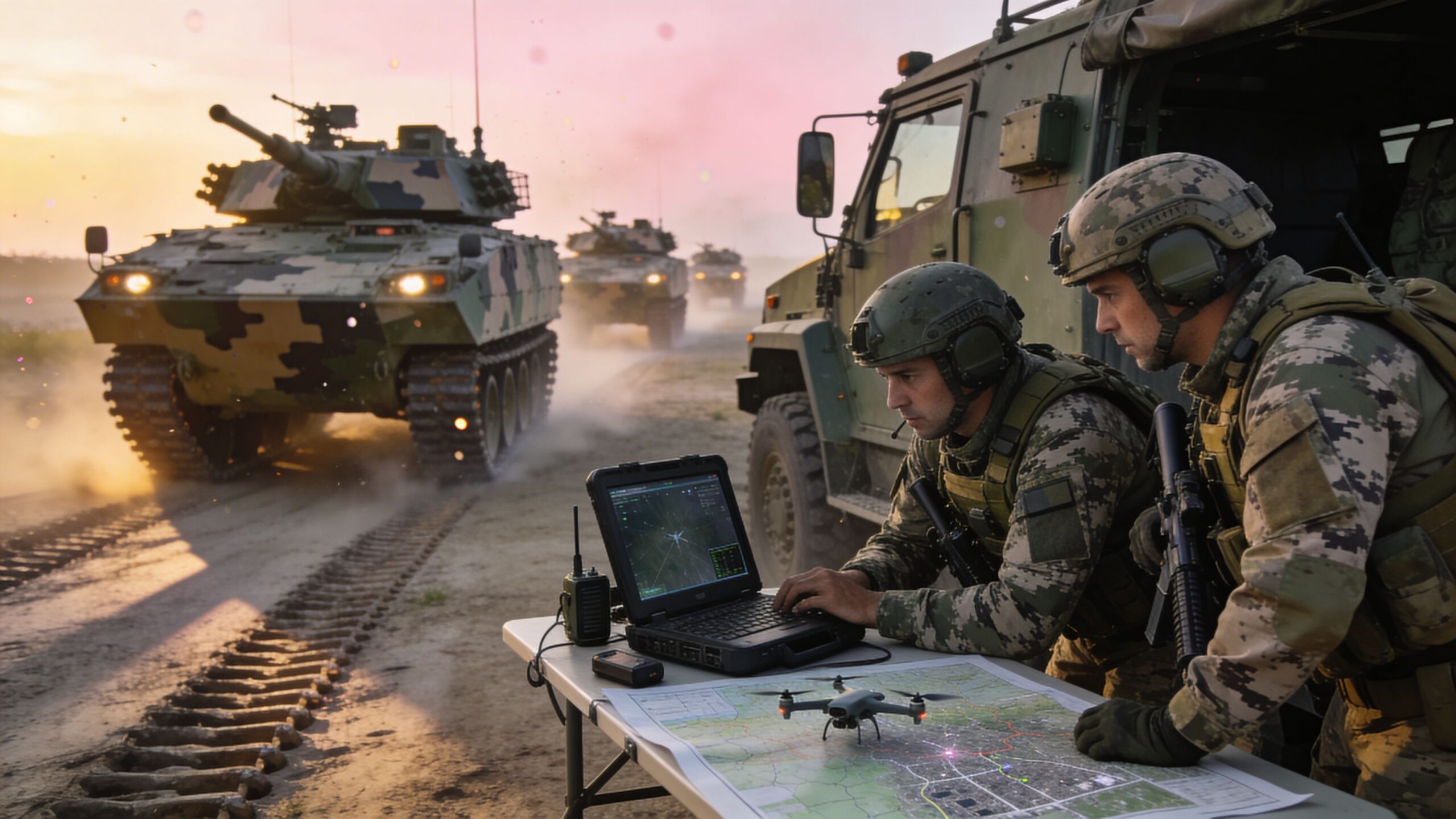
In war, speed has always mattered. Fast armies could seize territory, strike unprepared forces, and disrupt command structures before an opponent had time to respond. Yet modern warfare revealed that physical speed alone was not enough. Tanks, aircraft, missiles, and communications systems could move at incredible pace, but the side that truly gained the advantage was often the one that could understand events, make sense of chaos, choose a response, and act before the enemy completed the same process. That insight gave rise to one of the most influential decision models in modern military thought: the OODA Loop. OODA stands for Observe, Orient, Decide, and Act. At first glance, it appears simple, almost too simple for the complexity of war. But the model’s strength lies in how clearly it explains conflict as a contest of decision cycles. The idea is not merely to react quickly. It is to process reality faster and more effectively than the opponent, throwing them off balance and forcing them into a constant state of confusion, hesitation, and recovery. In the modern battlefield, where information, perception, and timing can be as decisive as firepower, that concept changed the way strategists thought about combat. The OODA Loop has influenced military planning, pilot training, maneuver warfare, command doctrine, and even cyber operations. It has moved far beyond its origins and become a foundational idea in understanding how modern conflict unfolds. More than just a formula, it is a framework for surviving and winning in fast, uncertain, high-pressure environments.
A: It stands for Observe, Orient, Decide, and Act.
A: The concept is most closely tied to Colonel John Boyd of the U.S. Air Force.
A: It explains how faster, clearer decisions can disrupt and outpace an opponent.
A: Orientation, because it turns information into meaning and judgment.
A: No, it applies across land, sea, air, cyber, and strategic operations.
A: No, speed without sound judgment can lead to costly mistakes.
A: Both emphasize tempo, disruption, initiative, and forcing the enemy into confusion.
A: Technology can help, but human interpretation and leadership still matter greatly.
A: Deception distorts enemy observation and orientation, slowing their response.
A: Because modern warfare remains a contest of perception, adaptation, and decision speed.
The Origins of the OODA Loop
The OODA Loop is most closely associated with Colonel John Boyd, a U.S. Air Force fighter pilot and military theorist whose ideas reshaped modern strategic thinking. Boyd became famous for his work on air combat and decision-making, especially his belief that success in battle depended on more than technology or raw power. He argued that victory often went to the force that could adapt more quickly, interpret situations more effectively, and disrupt the enemy’s ability to respond coherently.
Boyd’s background in fighter aviation strongly influenced his theory. Air combat unfolds at tremendous speed, often leaving only moments for a pilot to interpret an opponent’s movements, anticipate intentions, and make life-or-death decisions. A pilot who moved through that decision cycle more effectively could gain the upper hand, even against an enemy with similar aircraft or weapons. Boyd expanded this principle beyond air-to-air combat and argued that it applied across warfare as a whole. His insight was powerful because it treated conflict as a dynamic competition of minds and systems rather than a static clash of forces. The battlefield was not simply a place where units exchanged fire. It was an environment of uncertainty, incomplete information, shifting conditions, and constant interpretation. The OODA Loop offered a way to understand that struggle.
Observe: Seeing the Battlefield Clearly
The first stage of the OODA Loop is observation. In military terms, this means gathering information about the battlefield, the enemy, friendly forces, terrain, weather, timing, and emerging threats. Observation sounds straightforward, but in modern warfare it is a massive challenge. Commanders and operators face floods of data from drones, satellites, radar systems, communications intercepts, sensors, and human reporting. The issue is rarely a total lack of information. More often, it is sorting meaningful signals from noise.
Good observation requires awareness, discipline, and access to reliable intelligence. A force that fails to see what is happening around it is already falling behind. Surprise attacks, hidden troop movements, misinformation, and electronic warfare can all distort observation. In this way, the first stage of the OODA Loop is already a contested battlefield of its own.
Modern militaries invest heavily in surveillance and reconnaissance because accurate observation is the starting point for every good decision. Yet observation is never perfect. Fog, weather, deception, and human error remain part of war. The goal is not to know everything. It is to know enough, fast enough, to stay ahead of the enemy’s cycle.
Orient: The Most Important and Most Complex Step
Of all four stages, orientation is often considered the most important. This is where raw information becomes understanding. It is also where culture, doctrine, training, experience, mental models, and emotional state all influence how people interpret what they see. Two commanders can observe the same battlefield and reach entirely different conclusions because they orient differently. Orientation is what gives meaning to information. A radar signature may look like a threat, a feint, or a harmless anomaly depending on context. A sudden withdrawal by an enemy unit may signal weakness, a trap, or preparation for something larger. The quality of orientation determines whether a force understands reality or misreads it.
This stage explains why the OODA Loop is not just about moving quickly. A rushed but flawed orientation can be disastrous. Fast action based on bad interpretation can create chaos instead of advantage. Boyd understood that superior orientation allowed a force not only to react quickly but to shape the battlefield in ways the enemy could not understand in time. Modern warfare places enormous emphasis on orientation because the volume of data can overwhelm human judgment. Training, doctrine, and command culture help soldiers and leaders interpret complexity under pressure. Orientation is where experience matters, where strategic education matters, and where adaptability becomes a weapon.
Decide: Turning Understanding Into Choice
Once information has been observed and interpreted, a decision must follow. This may involve choosing a route, launching a strike, repositioning forces, holding ground, withdrawing, or shifting to a different objective. In high-speed conflict, delay can be fatal. The battlefield does not pause while commanders debate. Hesitation allows the enemy to regain balance, reorganize, and seize initiative.
Decision-making in war is rarely clean or comfortable. Leaders often make choices with incomplete information and under intense pressure. That is why doctrine, planning, rehearsals, and command philosophy matter so much. They create mental shortcuts and shared expectations that allow faster, more confident decisions when time is limited.
The OODA Loop helped modern military thinkers recognize that decision speed is not simply a personality trait. It is something organizations can design for. Clear command structures, mission-based orders, realistic training, and decentralized initiative all help compress decision time. Forces that empower lower-level leaders to act within commander’s intent often move through the loop faster than highly centralized organizations waiting for permission at every step.
Act: Converting Decisions Into Battlefield Results
The final stage is action. This is where the decision becomes reality through movement, fire, communication, disruption, or maneuver. Action is what changes the battlefield and creates new conditions for both sides. Once action occurs, the cycle begins again, because every move generates new information that must be observed and interpreted.
Effective action is not just about doing something quickly. It is about doing the right thing at the right moment with enough coordination to matter. In modern warfare, actions may range from a fighter intercept to an artillery barrage, a cyber intrusion, an amphibious landing, or a rapid unit repositioning. Each action should ideally place the enemy into a worse situation while preserving or improving one’s own position. When a force acts faster and more coherently than its opponent, it can begin to break the enemy’s rhythm. The enemy may still be trying to understand one event while the next event is already unfolding. This creates confusion, misalignment, and hesitation. Eventually, the slower force can become trapped in a reactive cycle, always behind, never in control.
Why the OODA Loop Changed Modern Warfare
The OODA Loop transformed military thinking because it shifted focus from attrition alone to tempo, adaptability, and disruption. Traditional views of war often emphasized destroying enemy forces through superior firepower and material resources. Boyd’s model did not reject those factors, but it showed that the speed and quality of decision-making could be just as decisive.
This perspective fit especially well with modern maneuver warfare. Instead of winning by grinding the enemy down in a slow contest of strength, maneuver warfare seeks to shatter enemy cohesion through rapid movement, surprise, and dislocation. The goal is to create a situation the enemy cannot understand or manage quickly enough. That is pure OODA logic.
The idea also helped explain why smaller or less heavily equipped forces sometimes outperform stronger opponents. If they can adapt faster, exploit confusion better, and move through their decision cycle more effectively, they can create outsized results. In this sense, the OODA Loop became a way to understand warfare as a contest of agility rather than just mass.
Air Combat, Maneuver Warfare, and Boyd’s Lasting Legacy
The OODA Loop’s early impact was especially visible in air combat and fighter tactics, where split-second decisions are critical. Pilots who could read engagements faster than their opponents could gain positional advantage and force mistakes. Boyd’s ideas helped shape tactical thinking around energy, maneuver, and rapid interpretation of combat conditions.
From there, the influence spread to broader military doctrine. Marine Corps and Army thinkers embraced aspects of Boyd’s theories in developing maneuver warfare concepts. Rather than relying only on linear, predictable battle plans, these approaches encouraged speed, initiative, and exploitation of enemy weakness. A force that could create cascading dilemmas for an opponent could collapse resistance more effectively than one relying on sheer firepower. Boyd’s legacy is powerful because he framed conflict as an ongoing battle for initiative. His work suggested that warfare is not just about destroying capability. It is about disrupting the enemy’s ability to think and function coherently under pressure.
The OODA Loop in the Age of Cyber Warfare
The digital battlefield made the OODA Loop even more relevant. Cyber warfare often unfolds at speeds far beyond traditional combat. Systems are probed, penetrated, disrupted, and defended in near real time. The side that detects intrusions faster, understands them more accurately, and responds more effectively can dominate the engagement.
In cyber conflict, observation may involve network monitoring, anomaly detection, and threat intelligence. Orientation means identifying what the activity actually means. Is it espionage, sabotage, reconnaissance, or a diversion? Decision requires determining how to respond without causing greater harm, and action may include isolating systems, deploying countermeasures, or launching a defensive or offensive cyber response.
What makes cyber warfare so aligned with the OODA Loop is that confusion can spread extremely fast. A delayed or misread response can let an attacker move deeper into critical systems. The force that stays inside the enemy’s decision cycle gains the initiative, often before the opponent fully understands what is happening.
Drones, AI, and the Compression of Decision Time
Modern technologies are shrinking the time available for effective decisions. Drones provide real-time observation. Artificial intelligence can assist in identifying patterns and recommending responses. Advanced sensors and data fusion systems deliver faster awareness than ever before. On one hand, these tools improve the first stages of the OODA Loop. On the other hand, they create new pressure by accelerating the pace of combat.
As decision time compresses, orientation becomes even more critical. Technology may provide more information, but human judgment still determines whether that information is understood correctly. Commanders must balance speed with accuracy. A rapid but flawed interpretation can lead to escalation, friendly fire, or operational failure. This tension defines much of modern warfare. Militaries want faster loops, but they also need reliable ones. The challenge is building forces that can absorb huge amounts of information without becoming overwhelmed, rigid, or dangerously impulsive.
Command Culture and the Human Side of the Loop
One reason the OODA Loop remains so influential is that it connects battlefield performance with organizational culture. A force may have advanced equipment, but if its command structure is too slow, too fearful, or too centralized, it may lose to a more agile opponent. The loop is not only about individuals. It is about institutions.
Organizations that encourage initiative, realistic training, trust, and mission clarity tend to move through the loop more effectively. Leaders at lower levels can observe local conditions, orient rapidly, make decisions, and act without waiting for every order to flow from the top. This creates resilience and speed.
By contrast, rigid systems often struggle when plans break down. If subordinates are afraid to act without permission, the whole organization slows. In fast-moving conflict, that delay can be devastating. The OODA Loop therefore became not just a tactical idea, but a leadership lesson about how modern militaries should think, train, and command.
Beyond the Battlefield
The OODA Loop’s influence now reaches beyond combat. It has been applied in intelligence, emergency response, law enforcement, business competition, and crisis leadership. That broad appeal comes from its simple but powerful truth: in uncertain environments, success often belongs to those who can make sense of change and respond coherently before rivals do.
Still, its military importance remains central. The OODA Loop captured something essential about modern warfare: that conflict is not only about weapons and numbers, but about perception, interpretation, and tempo. It gave strategists a language for understanding how initiative is gained, lost, and regained.
The Enduring Power of Fast, Adaptive Thinking
The OODA Loop changed modern warfare because it revealed that decision-making itself is a battlefield. Observe, Orient, Decide, and Act is more than a sequence. It is a way of understanding conflict as a living contest of awareness, interpretation, choice, and execution. The side that manages that cycle better can impose confusion, seize initiative, and force the enemy into a reactive posture. In an age of cyber conflict, drones, precision weapons, and global surveillance, the core lesson remains strikingly human. Technology matters, but it does not eliminate uncertainty. War still depends on how leaders and organizations process reality under pressure. The OODA Loop endures because it explains why some forces adapt and prevail while others hesitate and collapse. That is why the model still matters. It did not change warfare by replacing older principles. It changed warfare by showing that speed of thought, clarity of understanding, and the ability to act with purpose can become decisive weapons in their own right.