
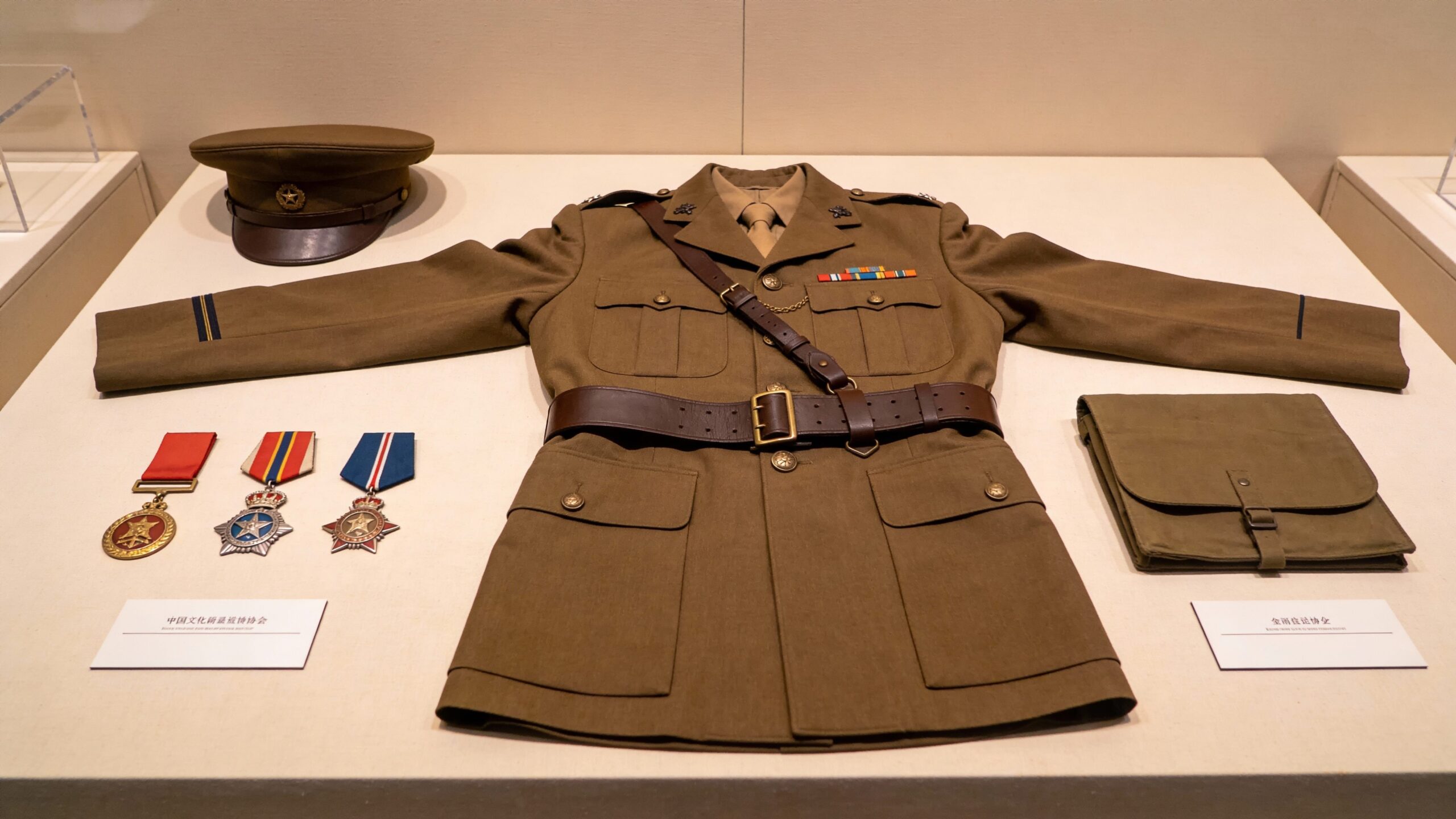
Historical Uniforms & Insignia explores the visual language of defense—how cloth, color, cut, and symbols communicate rank, role, allegiance, and tradition. On Defense Street, this category dives into the garments and markings worn by service members across eras, from formal dress uniforms to field-worn gear shaped by climate, technology, and doctrine. Every stitch tells a story: why certain colors were chosen, how insignia evolved, and what patches, stripes, and medals signaled on and off the battlefield. Articles in this section examine materials, manufacturing methods, unit identifiers, and the subtle differences that distinguish branches, time periods, and theaters of operation. We’ll look at how uniforms balanced visibility and camouflage, pride and practicality, and how insignia became a system of instant recognition in complex organizations. You’ll also find insight into preservation, authentication, and the cultural meaning uniforms carry long after service ends. Whether you’re drawn to military history, symbolic design, or the human stories woven into fabric and metal, this section offers a close, respectful look at how identity was worn—clearly, deliberately, and with lasting meaning.
A: They reveal structure, culture, and function.
A: Usually, but variations exist.
A: Through materials, construction, and provenance.
A: Frequently, especially in the field.
A: Advances in firearms increased risk.
A: Yes, to protect originals.
A: They evolve with organization and doctrine.
A: Context—who wore it, when, and why.
A: No, they’re deeply functional.
A: Accuracy, history, and visual meaning.