
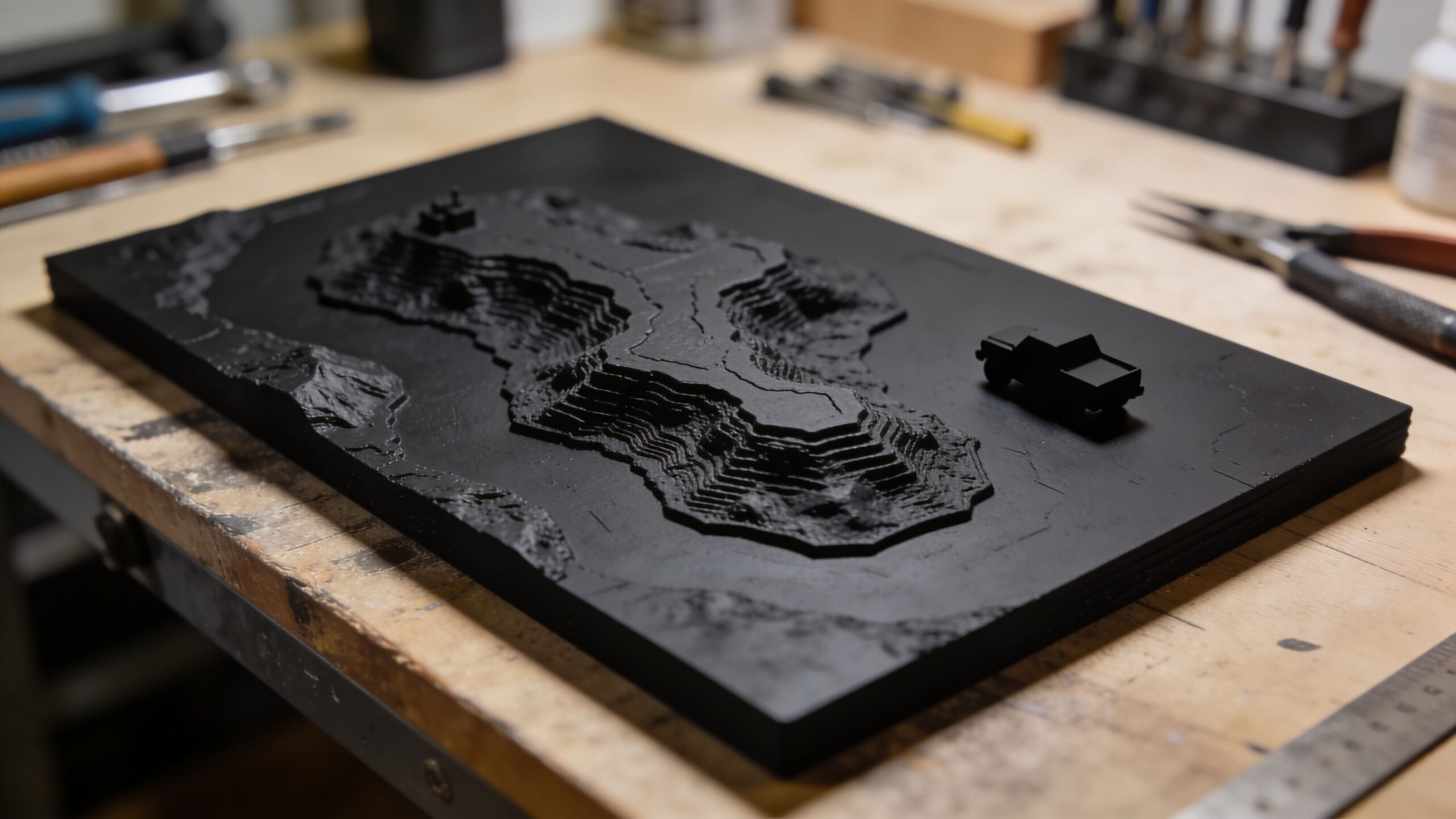
Some of the most valuable assets in defense aren’t full-size—they’re precise, portable, and built to be studied. 3D Fabricated Military Models turn complex platforms, environments, and mission variables into tangible tools you can hold, brief with, and iterate fast. This sub-category collects our best articles on how additive manufacturing supports training, planning, and communication through accurate scale replicas: terrain boards for route decisions, aircraft and vehicle silhouettes for recognition drills, ship and facility mockups for rehearsal, and modular components that demonstrate systems without exposing sensitive details. Explore how model fidelity is chosen on purpose—when you need true-to-life geometry, when simplified forms teach faster, and how paint, surface texture, and lighting can simulate operational conditions. Learn how materials, print orientation, supports, and finishing techniques affect durability for travel, classroom handling, and repeated tabletop exercises. We’ll also cover organization and presentation—label-free visual storytelling, protective cases, and modular “swap parts” that make one model serve many scenarios. Whether you’re building a single briefing centerpiece or an entire library of mission props, these guides help you turn data into decision-ready models.
A: They make scale, spacing, and line-of-sight instantly understandable.
A: Not always—training often works better with simplified, cue-focused forms.
A: Pick a scale that fits tables and cases while preserving the shapes people must recognize.
A: Resin for fine detail; filament for toughness—many programs mix both.
A: Design thicker walls, use keyed joints, and store in foam-cut transport cases.
A: Matte coatings and controlled contrast to reveal contours under venue lighting.
A: Yes—modular parts and swap sets make a single platform highly reusable.
A: Version control your files and keep a standardized parts list for quick reprints.
A: Prioritizing display detail over durability and fast setup for real training sessions.
A: Use controlled access, sanitize detail where appropriate, and manage files like mission assets.