
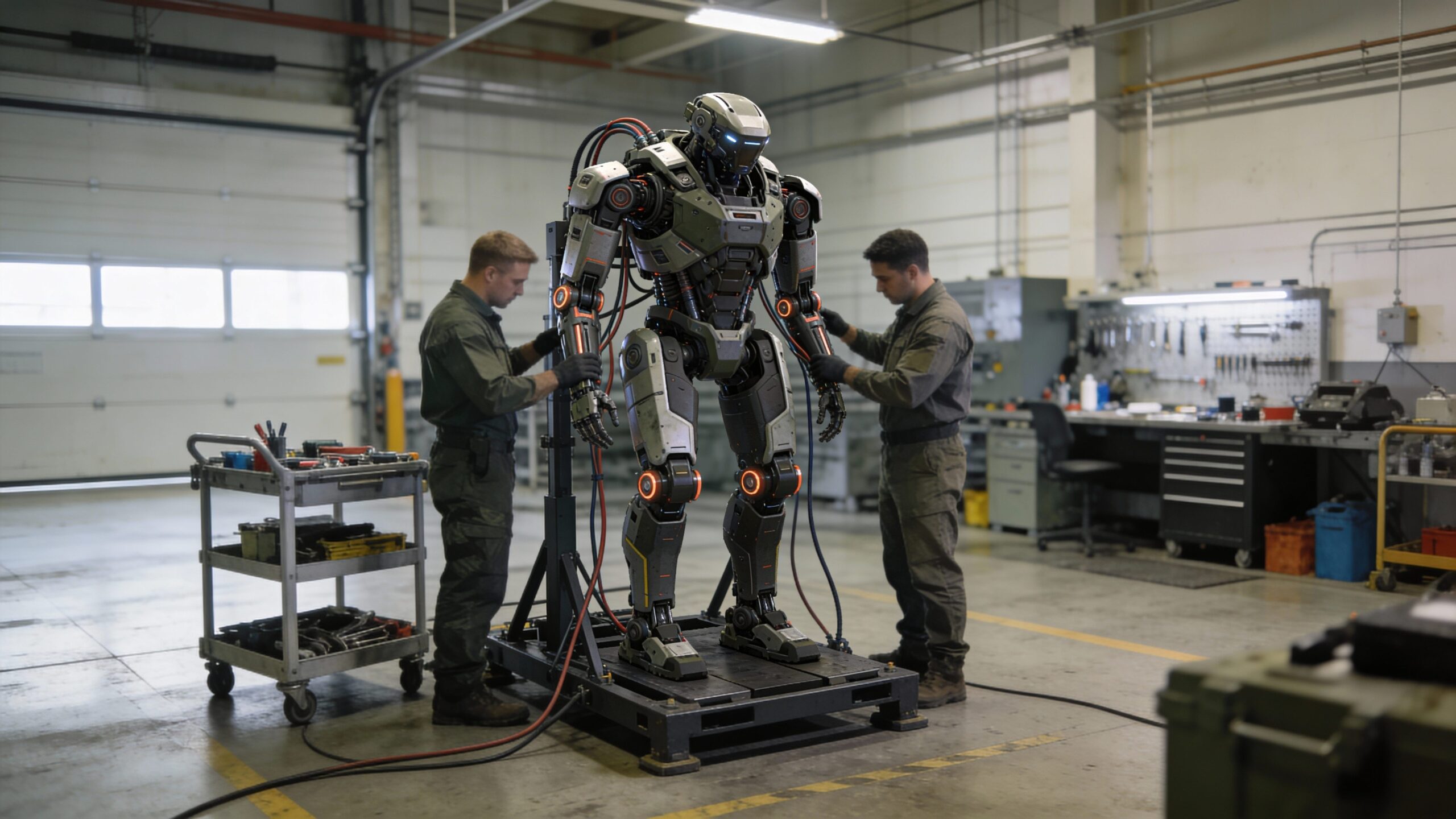
In future defense, power isn’t just a utility—it’s a tactical advantage. On Defense Street, Energy Systems & Power Armor explores the technologies that decide how long forces can move, sense, communicate, and protect themselves when resupply is uncertain and threats are fast. This is where batteries, hybrid generators, microgrids, and advanced thermal management collide with the bold promise of powered exoskeletons and armored augmentation. You’ll find articles that examine how energy density shapes endurance, how silent power changes stealth, and how ruggedized charging ecosystems can keep electronics alive in harsh terrain. We also look at “power armor” as a systems problem: mobility, weight distribution, joint actuation, heat dissipation, control interfaces, and the human factors that determine whether strength becomes strain. Along the way, we spotlight the practical realities—reliability, maintenance, safety, and the limits physics refuses to bend. Dive into the topics below to see how the next leap in defense capability may come not from a bigger weapon, but from smarter power—and the machines built to carry it.
A: Elements exist as exoskeletons and assistive systems; fully integrated concepts are still evolving.
A: Energy and heat—endurance and thermal comfort are hard constraints.
A: No—many focus on reducing fatigue, stabilizing movement, and lowering injury risk.
A: They improve resilience, reduce fuel dependence, and support distributed operations.
A: Through efficient storage, low-noise generation, and smart power management.
A: Ruggedness, safe failure modes, maintainability, and proven performance over long wear periods.
A: They can; careful thermal design and operational discipline help manage risk.
A: With power budgets, rotation schedules, battery swaps, and resilient generation options.
A: Not universally—standardization is a major interoperability goal.
A: Assistive load carriage plus resilient field power—high impact, achievable, and scalable.