
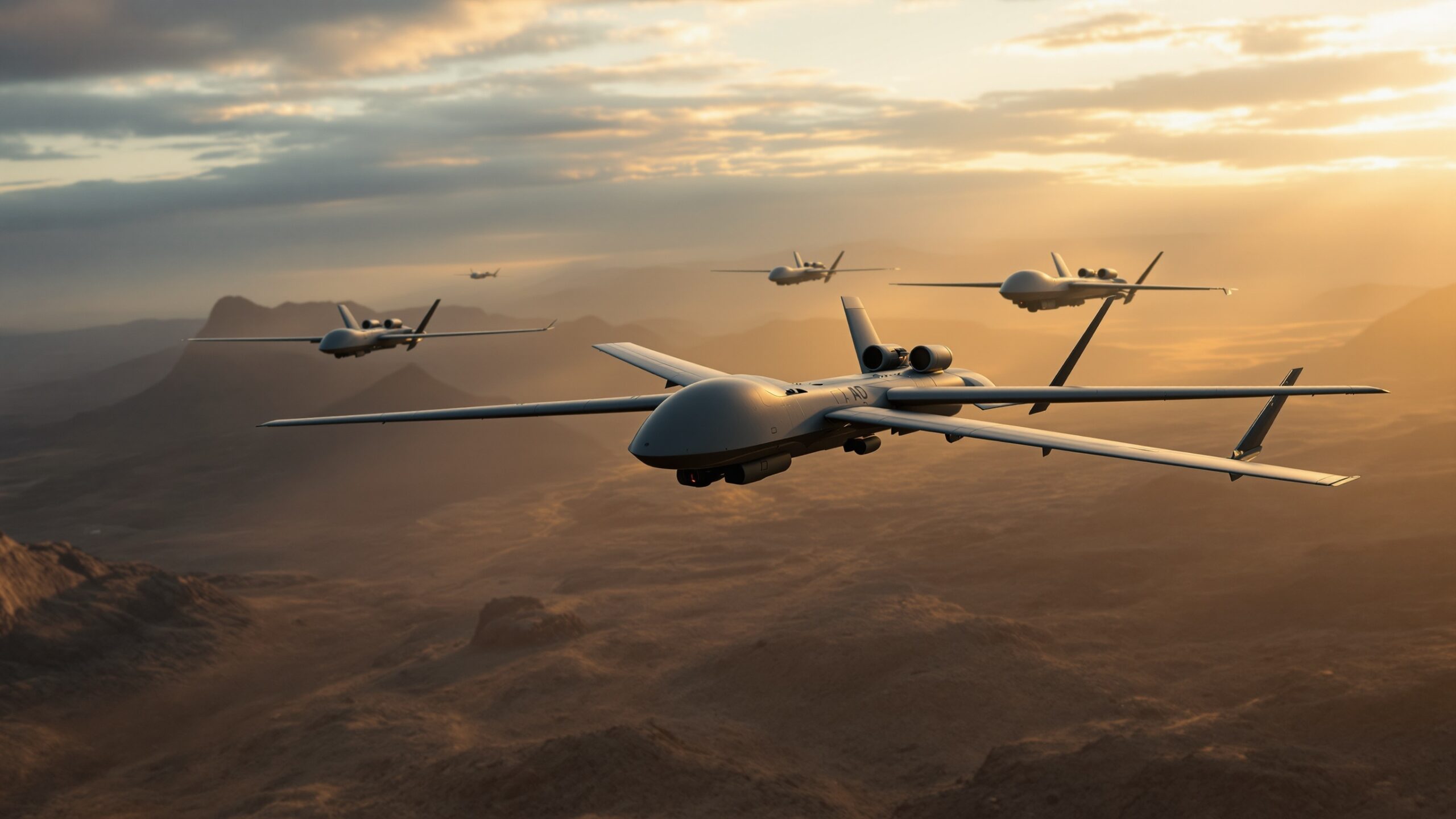
On Defense Street, Drone & Autonomous Weapons is where robotics, data links, and decision-making meet at the edge of what’s possible—and what’s acceptable. This sub-category explores remotely piloted aircraft, ground and maritime systems, and emerging autonomy that can sense, navigate, and act with growing independence. Instead of focusing on “sci-fi swarms,” we walk through how these systems are designed, tested, and governed: from human-on-the-loop control and strict rules of engagement to reliability, communications resilience, and airspace coordination. You’ll find accessible articles that explain sensors and navigation, command-and-control chains, and how drones integrate with air, land, sea, cyber, and space operations. We’ll also cover data security, counter-drone measures, and the ethical debates shaping where to draw the line on machine decision-making. Whether you’re a student, analyst, technologist, or curious observer, Drone & Autonomous Weapons on Defense Street gives you structured context for understanding how robotics is reshaping the modern battlespace—through engineering, oversight, and international norms, not hype. Here, you can map how policy, safety, and innovation intersect in this fast-moving field.
A: A combination of remote or automated platform, sensors, control links, and procedures under defined authority.
A: Operators and commanders maintain oversight, with systems designed to support rather than replace judgment.
A: National laws, policies, and international norms guide planning, deployment, and supervision.
A: Through testing, certification, safeguards, training, and clear procedures for abnormal situations.
A: No—many rely on remote piloting with limited automated assistance for navigation or safety.
A: Coordination with aviation authorities and robust detect-and-avoid capabilities are central.
A: Ethical reviews inform design choices, policies, and limits on where autonomy is appropriate.
A: Advances in sensors, computing, and networking drive continual updates to systems and doctrine.
A: Yes—similar technologies are used for search and rescue, mapping, and disaster assessment.
A: Begin with fundamentals: robotics basics, networking, safety principles, and governance frameworks.