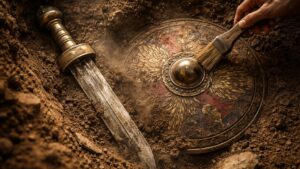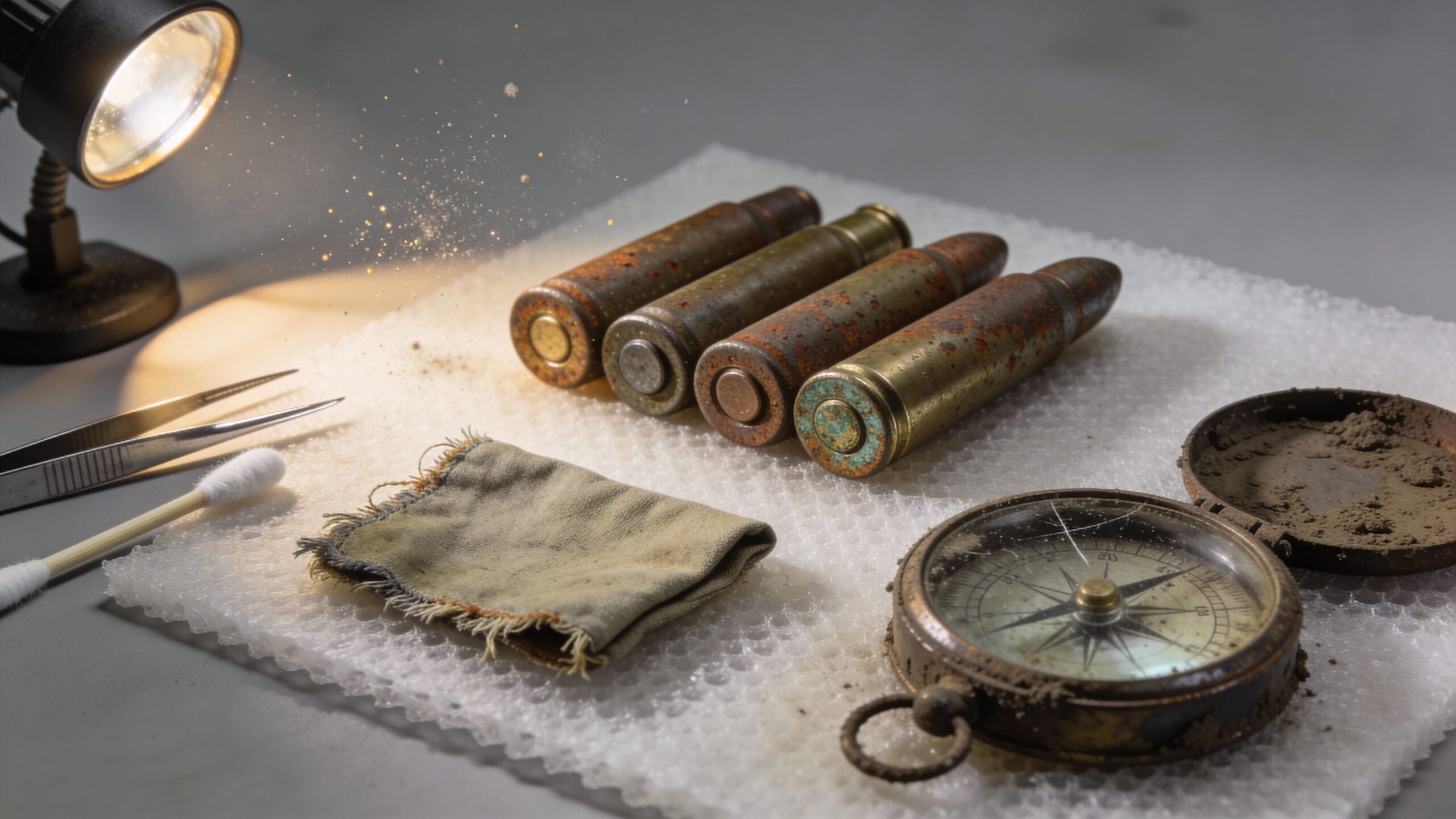
Battlefield Relics & Discoveries dives into the quiet evidence wars leave behind—bent metal, weathered uniforms, field notes, trench maps, and the personal objects that once sat in a pocket or pack. On Defense Street, this category explores how archaeologists, historians, conservators, and responsible researchers uncover artifacts, verify provenance, and rebuild the story of a fight from the ground up. Expect articles on identifying eras and materials, reading unit marks, interpreting terrain, and separating genuine history from modern replicas. We’ll follow the science of battlefield archaeology, the ethics of recovery, and the detective work behind linking a single button or cartridge case to a wider campaign. From forgotten encampments to documented engagement sites, each discovery is a doorway into logistics, technology, tactics, and lived experience. Whether you’re fascinated by the evolution of gear, the human stories hidden in the soil, or the methods that protect heritage for future study, this section is your mission launchpad—curious, careful, and relentlessly fact-driven. Step in, explore responsibly, and learn how fragments become evidence—turning battlefields into classrooms, not trophy cases, today.
A: Document location, condition, and context before moving anything.
A: Compare maker marks, materials, construction methods, and provenance against trusted references.
A: Usually no—stabilize and consult conservation guidance to avoid removing crucial evidence.
A: Context connects an object to an event, a place, and a timeline—turning it into evidence.
A: Small hardware, personal items, packaging, and repair parts often outnumber headline pieces.
A: No—many are protected or restricted; always follow laws, permissions, and site rules.
A: Use dry, padded, inert materials; avoid sealed moisture traps unless professionally advised.
A: Yes—patterns of debris and dated items can support, refine, or challenge written records.
A: Share documentation with researchers or museums and prioritize preservation over possession.
A: Identification, mapping, ethics, conservation basics, and the stories artifacts reveal.