
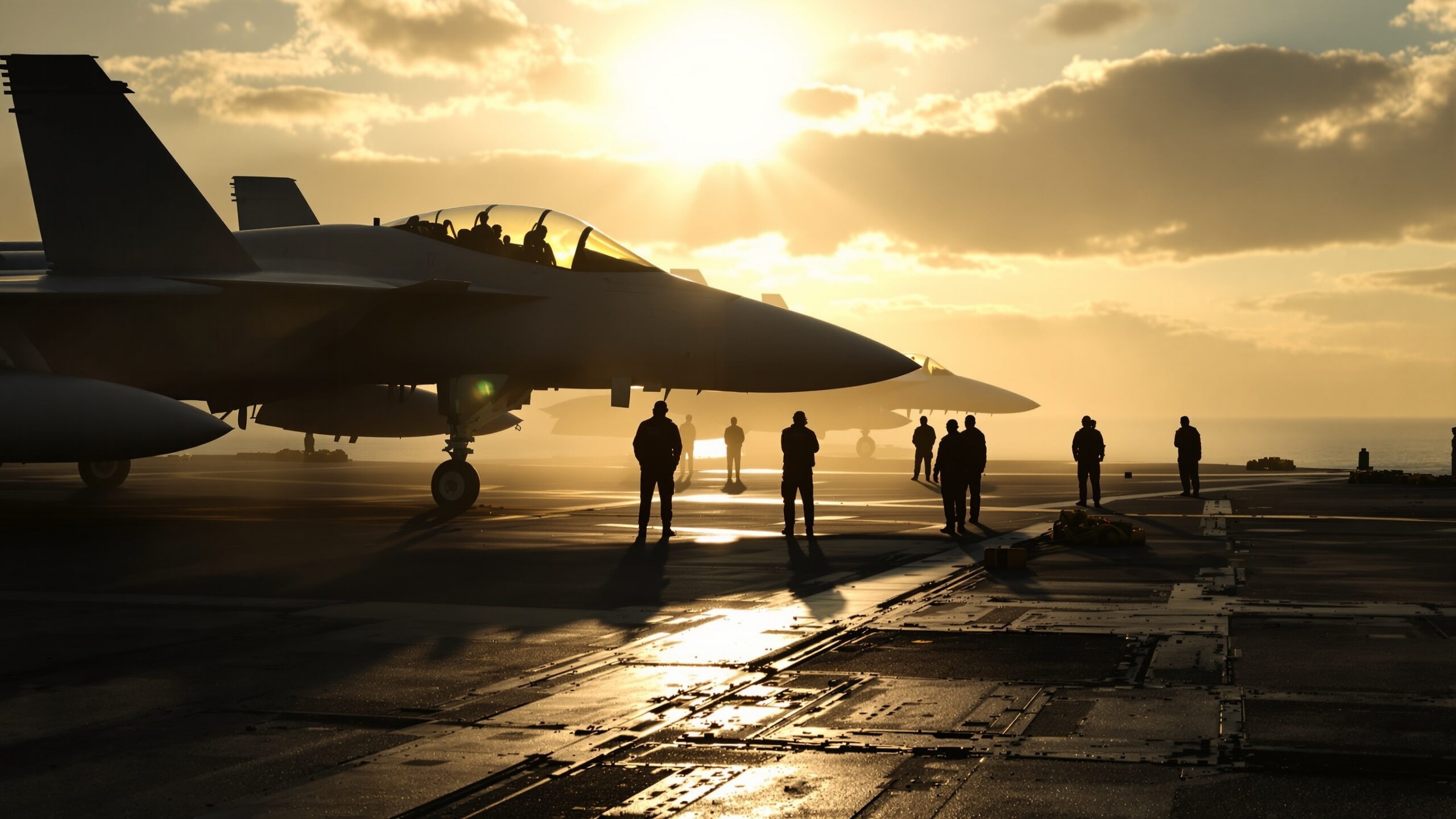
Naval & Air Combat Strategies on Defense Street explores how power moves across oceans and skies—where distance is vast, timelines compress fast, and decisions ripple far beyond the horizon. This hub gathers articles that unpack the big ideas behind maritime and airpower: sea control, air superiority, deterrence, joint operations, and the constant chess match between sensing, striking, defending, and sustaining. You’ll find approachable analysis of concepts like layered defense, carrier and expeditionary operations, anti-access challenges, command-and-control resilience, and how geography—straits, islands, coastlines, and weather—shapes what’s possible. We also look at the role of intelligence and surveillance, electronic warfare in principle, and how logistics and maintenance quietly decide what can fly, sail, and stay on station. Expect historical case studies, doctrinal context, and modern realities such as unmanned systems and contested information environments—always framed as responsible, high-level learning rather than tactical instruction. Whether you’re curious about iconic naval battles, air campaign evolution, or today’s strategic dilemmas, this category focuses on understanding how forces coordinate, adapt, and manage risk when the sea and sky become the decisive domain.
A: The ability to use an area of sea for your purposes while limiting an adversary’s use—discussed here conceptually.
A: A degree of freedom to operate in the air without unacceptable interference.
A: No—this category focuses on strategy, history, doctrine concepts, and responsible analysis.
A: They concentrate traffic and create leverage over routes and timing.
A: It determines endurance, sortie generation, readiness, and sustained presence.
A: It changes visibility, safety, timelines, and what assets can do reliably.
A: Multiple overlapping protective measures that reduce risk rather than eliminate it.
A: They expand capability but add coordination, rules, and interoperability requirements.
A: That technology alone decides outcomes—organization, readiness, and decisions still matter.
A: Strategy at sea and in the air is a systems problem: sensing, timing, coordination, and sustainment.