
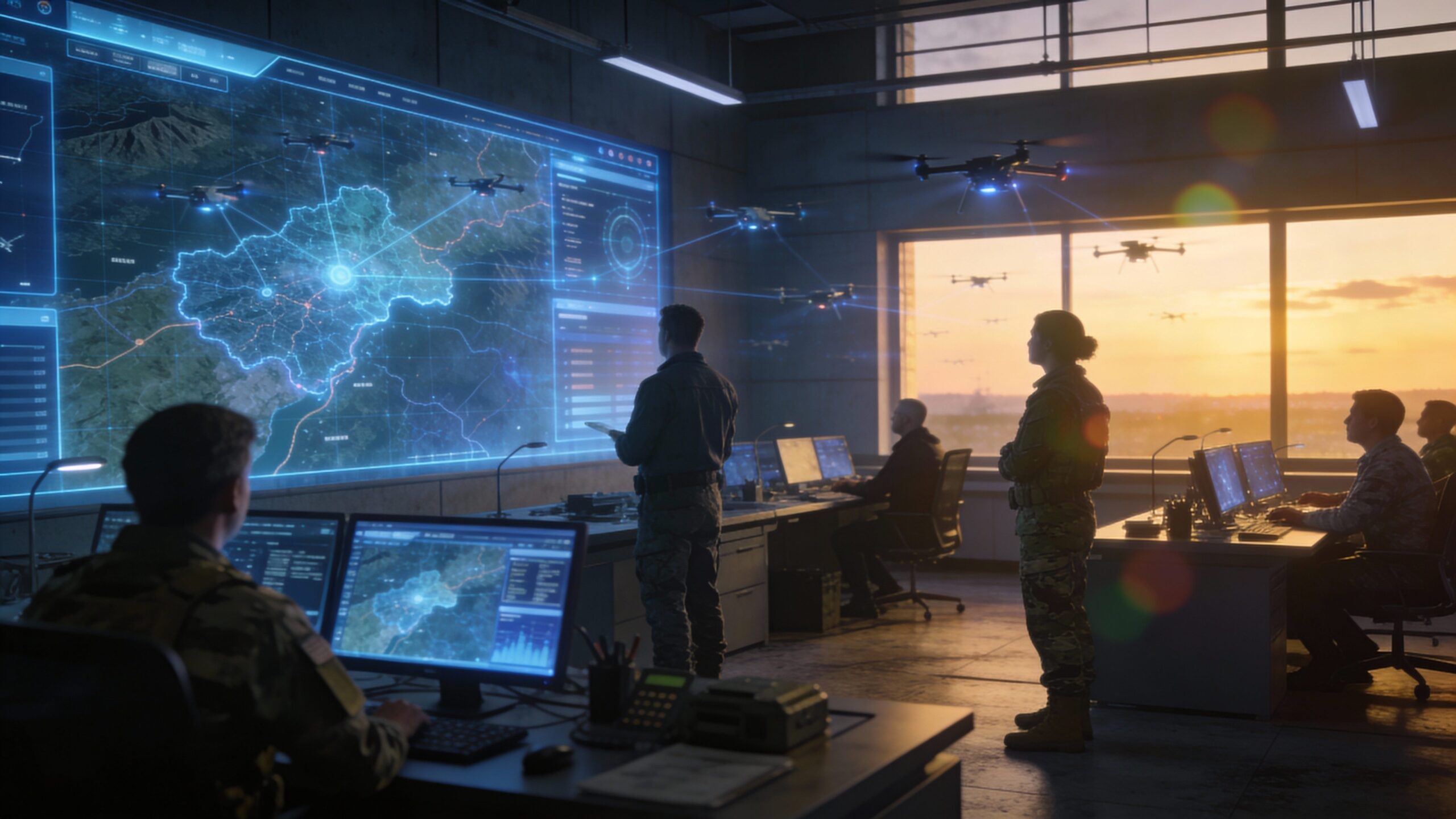
Future warfare isn’t just “more technology”—it’s a shifting contest of speed, perception, resilience, and judgment. On Defense Street, Future Warfare Concepts maps the ideas shaping tomorrow’s battlespace: autonomous swarms that hunt signals, cyber campaigns that blur the meaning of “front lines,” space-enabled sensing that turns shadows into data, and electronic warfare that can silence a system without firing a shot. You’ll explore how commanders might fuse AI decision aids with human intuition, how logistics becomes a targetable network, and how deception evolves when every platform is also a broadcaster. From counter-drone umbrellas and loitering munitions to digital twins, hardened comms, and directed-energy defenses, this hub follows the concepts that shift advantage without warning. We also spotlight the practical side: limits, failure modes, rules of engagement, and the training cultures that keep people ahead of their tools. Step into the articles below to trace scenarios, debate tradeoffs, and see what “prepared” could mean in the next decade. Whether you’re curious about doctrine, hardware, or strategy, each piece is built to spark informed, grounded imagination for readers.
A: No—remote control depends on a link; autonomy can act locally within defined constraints.
A: Because modern forces rely on sensors and networks; disrupting them can neutralize advantage quickly.
A: Coordinating effects across land, sea, air, cyber, and space so each domain amplifies the others.
A: More likely it augments decisions—highlighting patterns and options—while humans keep responsibility and judgment.
A: They trade single-point failure for resilience, overwhelm defenses, and complicate targeting with numbers and motion.
A: A setting where GPS, comms, or sensing is disrupted—forcing forces to operate with degraded tools.
A: The action may be hidden, but the effects can be obvious—outages, data corruption, or loss of control.
A: It sets tempo; without repair, fuel, and parts, even advanced systems lose readiness and initiative.
A: Through verification routines, trusted channels, disciplined briefings, and training for cognitive resilience.
A: Reliability, interoperability, cost curves, and how doctrine and rules adapt to new capabilities.