A Conflict That Redefined Human History
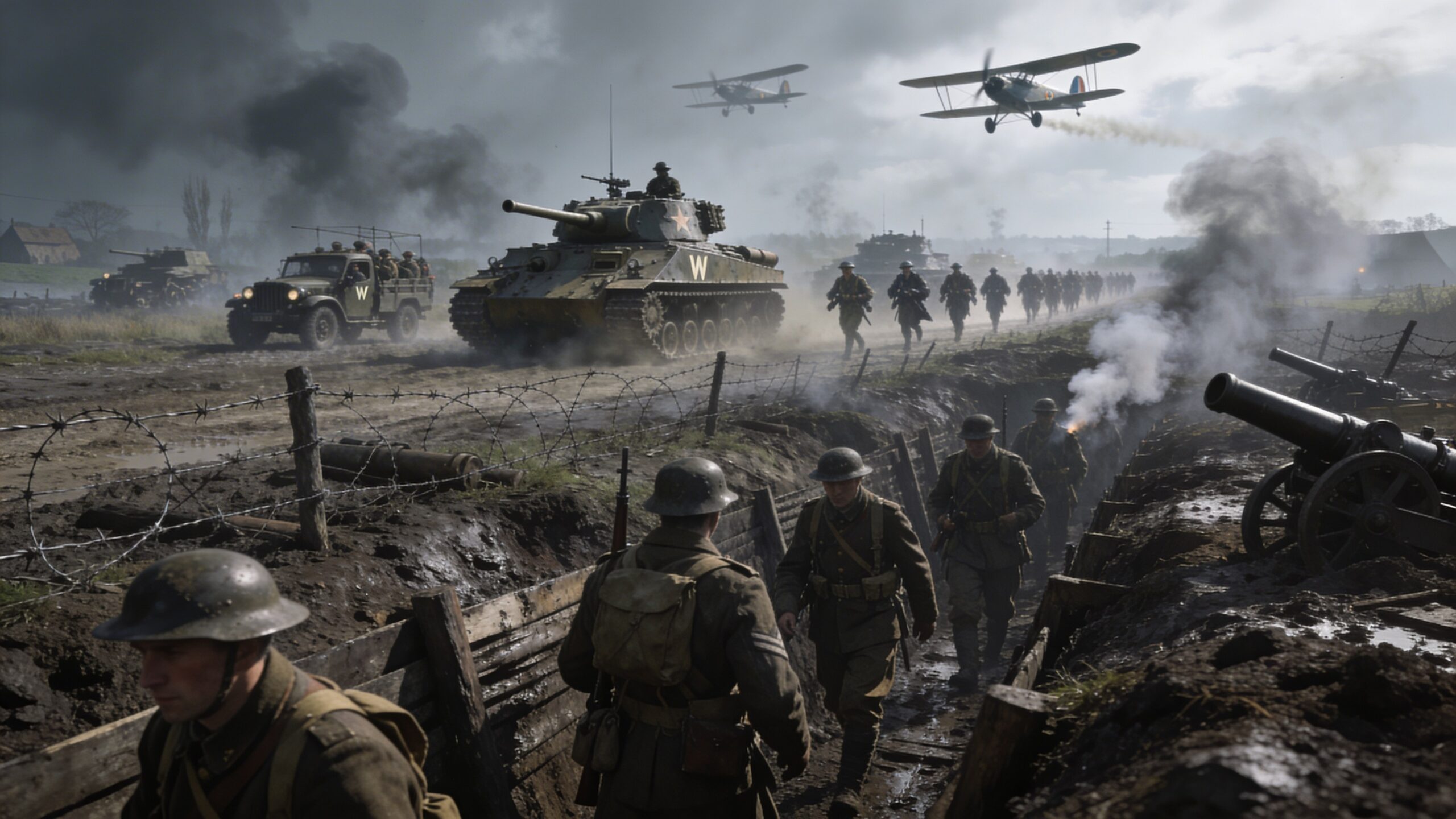
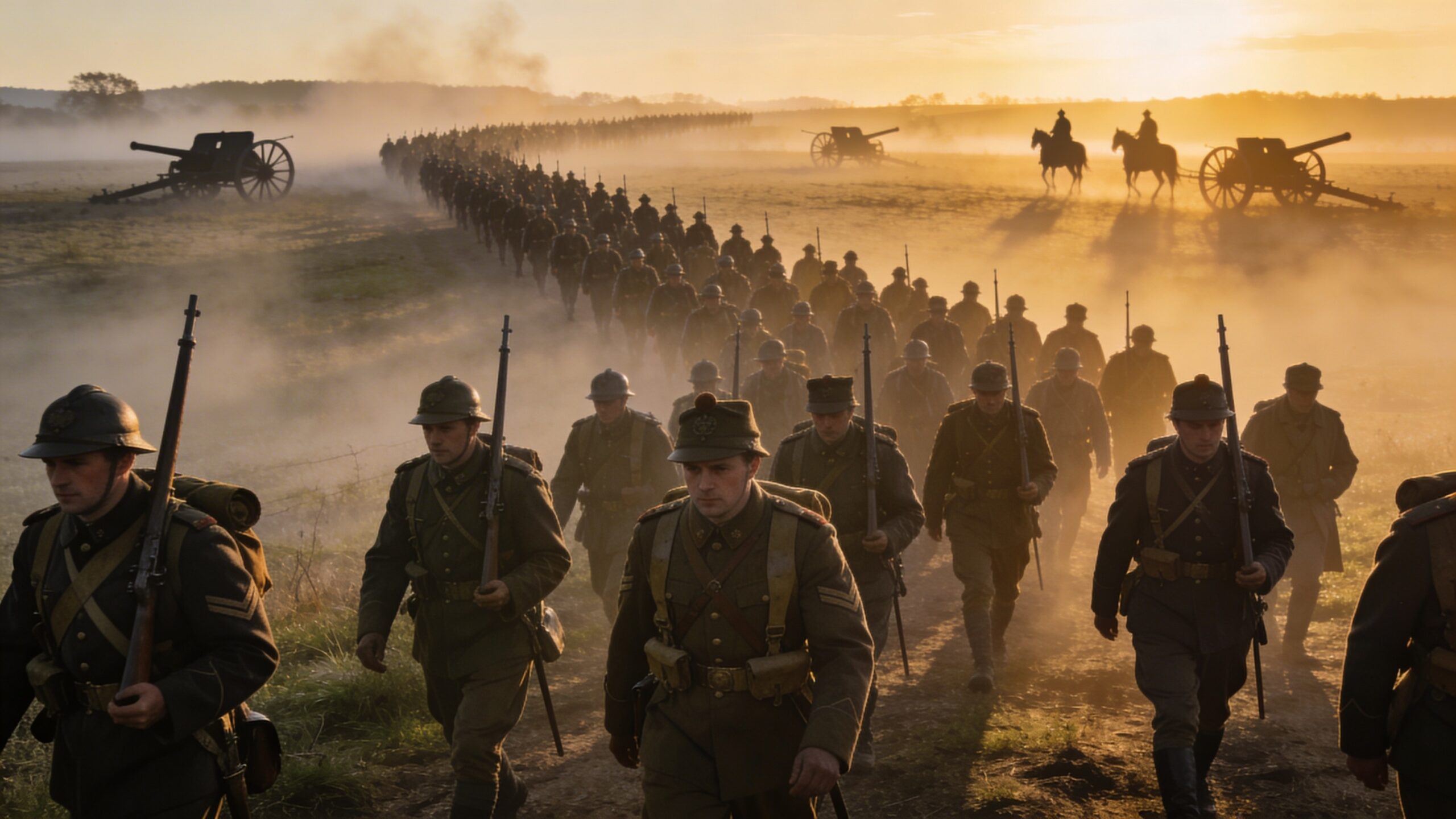
World War II was the most destructive conflict humanity had ever experienced. Between 1939 and 1945, nations across every continent were drawn into a war that mobilized entire populations, transformed economies, and pushed technology to new extremes. More than 70 million people lost their lives, cities were reduced to rubble, and political systems collapsed across much of Europe and Asia. Yet out of the devastation emerged a completely new global order. The war did not merely redraw borders or change leadership—it redefined how nations interacted with each other. It reshaped political alliances, accelerated technological breakthroughs, and transformed the structure of the global economy. Many of the systems that define modern geopolitics today—from international institutions to military alliances—can trace their origins directly to the aftermath of World War II. The war effectively ended the old world and launched the modern one.
A: The conflict weakened traditional empires and elevated new superpowers like the United States and the Soviet Union.
A: The United Nations was formed to promote diplomacy and prevent future global conflicts.
A: Advances such as radar, jet engines, and nuclear weapons transformed modern warfare.
A: Postwar tensions between the United States and the Soviet Union created a long geopolitical rivalry.
A: Mass manufacturing of vehicles, weapons, and supplies determined battlefield endurance.
A: Reconstruction programs and new institutions stabilized international trade and finance.
A: Codebreaking and espionage provided strategic insights that influenced major operations.
A: Its strategies, technologies, and alliances continue to shape modern defense planning.
A: Yes, wartime research drove breakthroughs in aviation, computing, medicine, and engineering.
A: It created the geopolitical, technological, and economic foundations of the modern world.
The Fall of Empires and the Rise of Superpowers
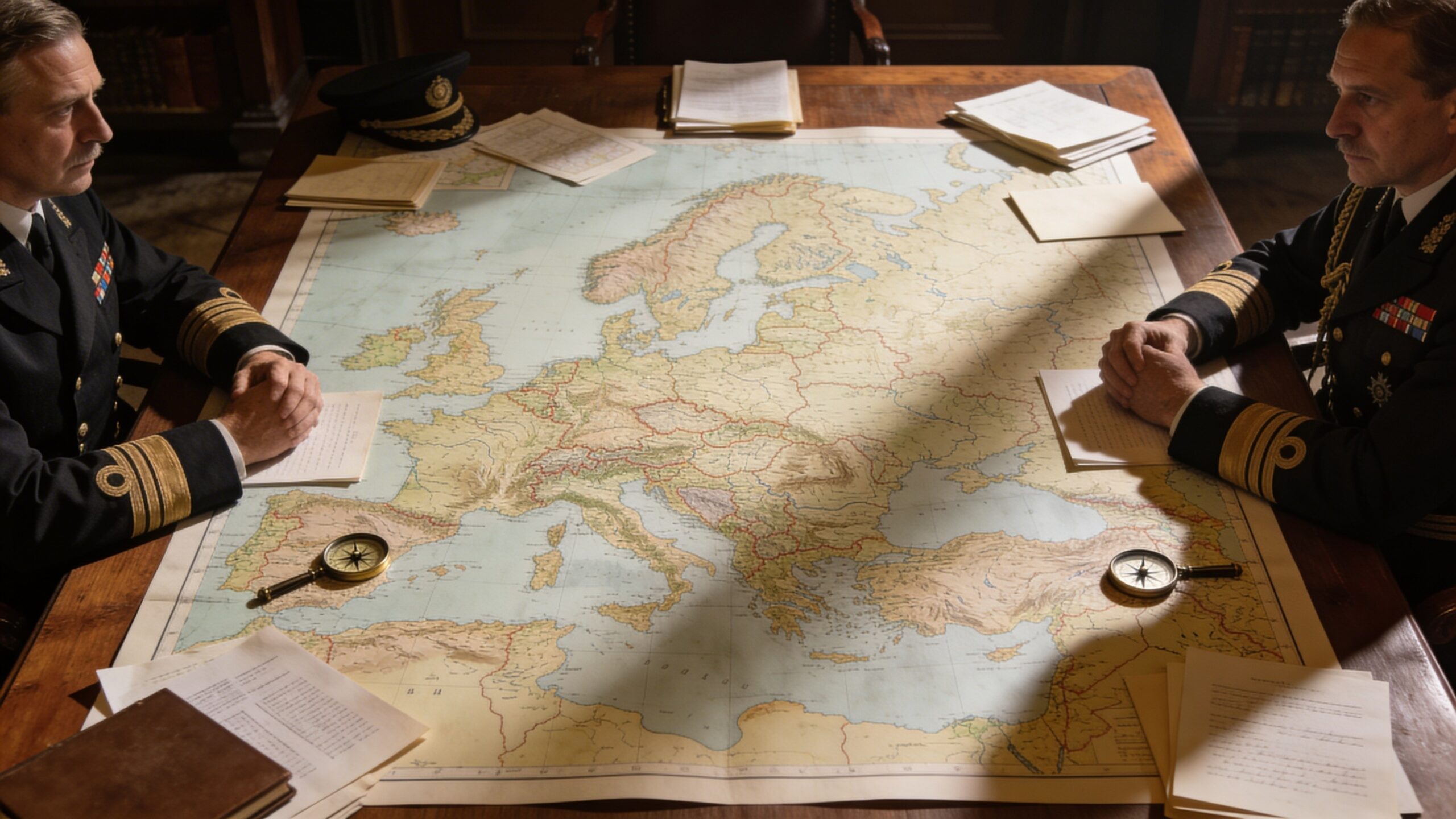
Before World War II, the world was still dominated by powerful colonial empires. Britain, France, and several European nations controlled vast territories across Africa, Asia, and the Middle East. The war, however, drained the resources and political authority of these empires.
Britain and France emerged victorious but economically exhausted. Their ability to maintain overseas colonies rapidly declined, and independence movements across the globe gained momentum. Over the following decades, dozens of new nations emerged as former colonies gained sovereignty.
At the same time, two new superpowers rose to dominate global politics: the United States and the Soviet Union. Unlike the war-ravaged nations of Europe, both countries emerged from the conflict with enormous military capabilities and expanding industrial power.
The United States possessed unmatched economic strength, while the Soviet Union controlled vast territories across Eastern Europe. Their rivalry soon shaped international politics for nearly half a century. This power shift marked the beginning of a new geopolitical era.
The Birth of the Cold War
The end of World War II did not bring lasting peace. Instead, it ushered in a new kind of global tension known as the Cold War. The United States and the Soviet Union quickly found themselves competing for ideological and strategic influence across the globe.
The Cold War was defined by political rivalry, military competition, and proxy conflicts fought through allied nations. While the two superpowers rarely fought directly, their competition influenced conflicts in Europe, Asia, Africa, and Latin America.
This geopolitical struggle shaped military strategy, intelligence operations, technological development, and diplomacy for decades. Nuclear weapons, espionage networks, and global alliances all became defining features of the Cold War environment. The political divisions created in the aftermath of World War II would influence international relations well into the twenty-first century.
The Creation of the United Nations
One of the most important outcomes of World War II was the establishment of the United Nations. Leaders across the Allied nations believed that preventing future global conflicts required a new international organization capable of encouraging diplomacy and cooperation. The United Nations was officially formed in 1945, with the goal of maintaining international peace, supporting humanitarian efforts, and encouraging dialogue between nations.
Unlike earlier international institutions, the United Nations was structured to give major global powers a direct role in decision-making through the Security Council. This structure allowed the organization to serve as a central forum for resolving disputes and coordinating global responses to crises. Although it has faced many challenges, the United Nations remains one of the most influential international institutions created in the twentieth century.
The Atomic Age Begins
World War II also introduced one of the most profound technological shifts in human history: nuclear weapons. The Manhattan Project, a massive scientific effort led by the United States, resulted in the development of the first atomic bombs. In August 1945, nuclear weapons were used against the Japanese cities of Hiroshima and Nagasaki, demonstrating a destructive power never before seen in warfare.
The arrival of nuclear weapons fundamentally changed military strategy. Nations now possessed the ability to destroy entire cities in moments, forcing governments to rethink how wars were fought and prevented. The nuclear age created a paradox in global politics. While nuclear weapons represented immense destructive capability, their existence also encouraged caution. The fear of mutually assured destruction became a central factor in preventing direct war between nuclear-armed nations. This balance of power continues to shape international security today.
Technological Innovation Accelerates
World War II accelerated technological development at an unprecedented pace. Governments poured enormous resources into research and innovation in order to gain advantages on the battlefield. Many technologies that define modern life were either invented or significantly advanced during the war. Radar systems dramatically improved detection and navigation capabilities. Jet engines revolutionized aviation. Early computers were developed to break enemy codes and perform complex calculations.
Medical advancements also expanded rapidly. Improved surgical techniques, antibiotics such as penicillin, and advances in trauma treatment dramatically improved survival rates for wounded soldiers. After the war, many of these innovations transitioned into civilian applications. Radar technology influenced air traffic control systems, early computing technology laid the groundwork for modern digital computing, and jet propulsion transformed global transportation. The war accelerated the technological foundations of the modern world.
The Reconstruction of Europe and Japan
In the aftermath of the war, much of Europe and Asia lay in ruins. Cities had been bombed extensively, infrastructure was destroyed, and economies had collapsed. To rebuild Western Europe, the United States launched the Marshall Plan in 1948. This ambitious economic program provided billions of dollars in financial assistance to help rebuild industries, restore infrastructure, and stabilize governments.
The Marshall Plan helped accelerate Europe’s recovery while strengthening economic cooperation among Western nations.
Japan experienced a different but equally transformative reconstruction process. Under American occupation, Japan adopted a new constitution, implemented democratic reforms, and rebuilt its economy around advanced manufacturing and technology. Both Europe and Japan eventually emerged as powerful economic centers, demonstrating how recovery efforts reshaped global economic dynamics.
The Emergence of Modern Military Alliances
The security concerns that followed World War II led to the creation of several major military alliances designed to deter future aggression. The North Atlantic Treaty Organization (NATO), formed in 1949, brought together the United States, Canada, and numerous European nations in a collective defense agreement. The alliance was designed to ensure that an attack on one member would be considered an attack on all.
In response, the Soviet Union and its allies formed the Warsaw Pact in 1955. These opposing alliances became central pillars of Cold War military strategy. Even after the Cold War ended, many of these alliances remained influential in global security operations, demonstrating the lasting impact of wartime geopolitical shifts.
The Rise of Global Economic Institutions
World War II also led to the creation of international financial institutions designed to stabilize the global economy and prevent economic crises from escalating into political conflicts. Organizations such as the International Monetary Fund and the World Bank were established to promote financial cooperation, support economic development, and assist nations facing financial instability. These institutions played a crucial role in rebuilding economies after the war and continue to influence global economic policy today. The economic framework built in the aftermath of World War II laid the foundation for decades of global economic expansion.
Social Transformation and Cultural Change
Beyond politics and economics, World War II also triggered major social transformations. During the war, millions of women entered the workforce to support industrial production and wartime logistics. This shift challenged traditional gender roles and contributed to long-term changes in employment patterns and social expectations.
Civil rights movements also gained momentum in several countries as soldiers returned home questioning inequality and discrimination. The experiences of the war helped fuel broader demands for political rights and social reforms. The cultural impact of World War II extended into literature, film, and collective memory, shaping how societies understand conflict, sacrifice, and resilience.
The Lasting Legacy of World War II
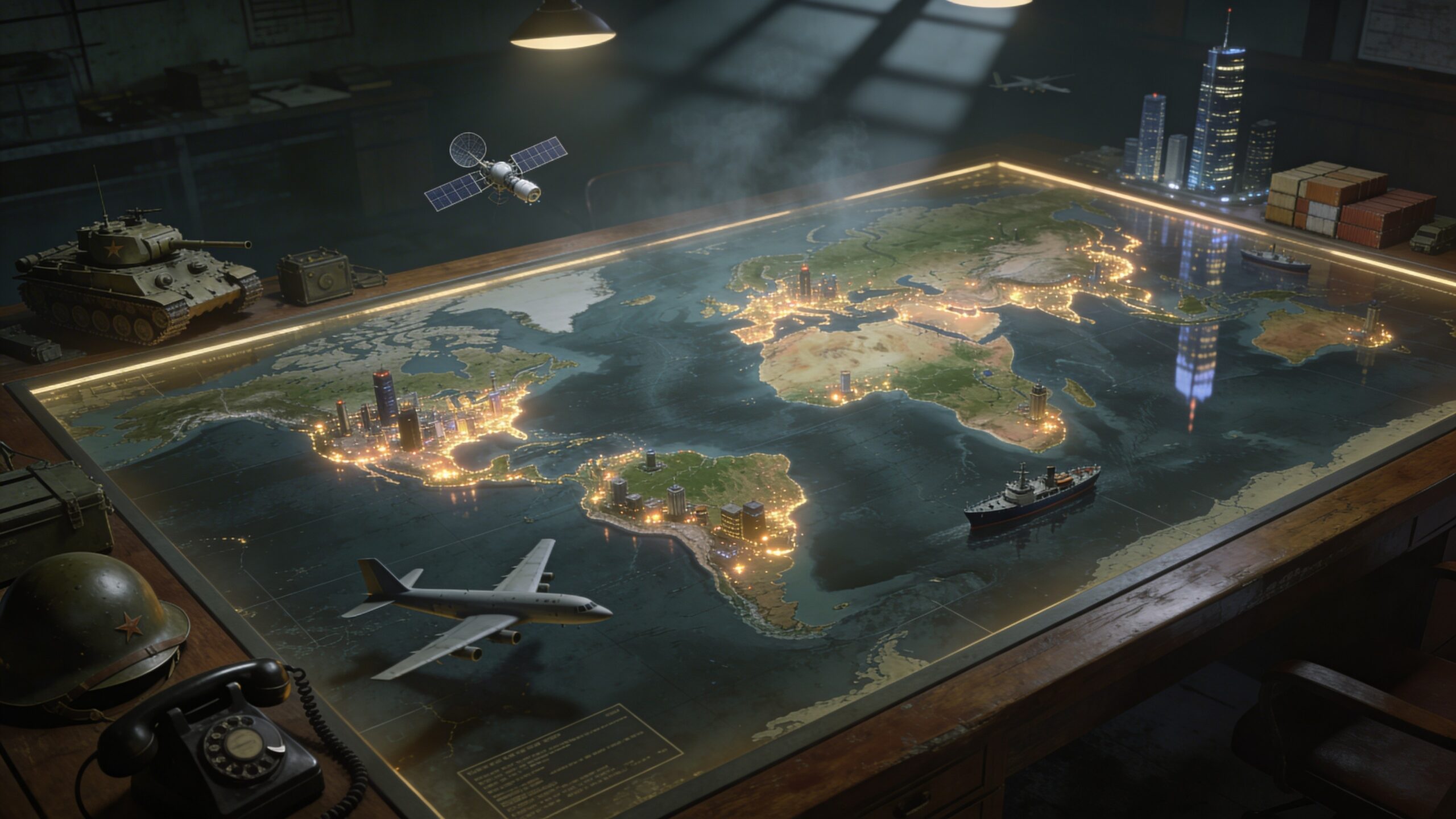
World War II reshaped the modern world in ways that are still visible today. The geopolitical structure of international alliances, the development of nuclear deterrence, the creation of global institutions, and the acceleration of technological innovation all emerged from the aftermath of the war. The conflict forced nations to confront the devastating consequences of total war while also inspiring efforts to build a more cooperative international system.
While the world continues to face new challenges, the political structures, technological advances, and economic institutions created after World War II remain central to modern global stability. The war was one of humanity’s darkest chapters—but it also served as the turning point that shaped the world we live in today.