The Tank Myth—and the Tank Reality
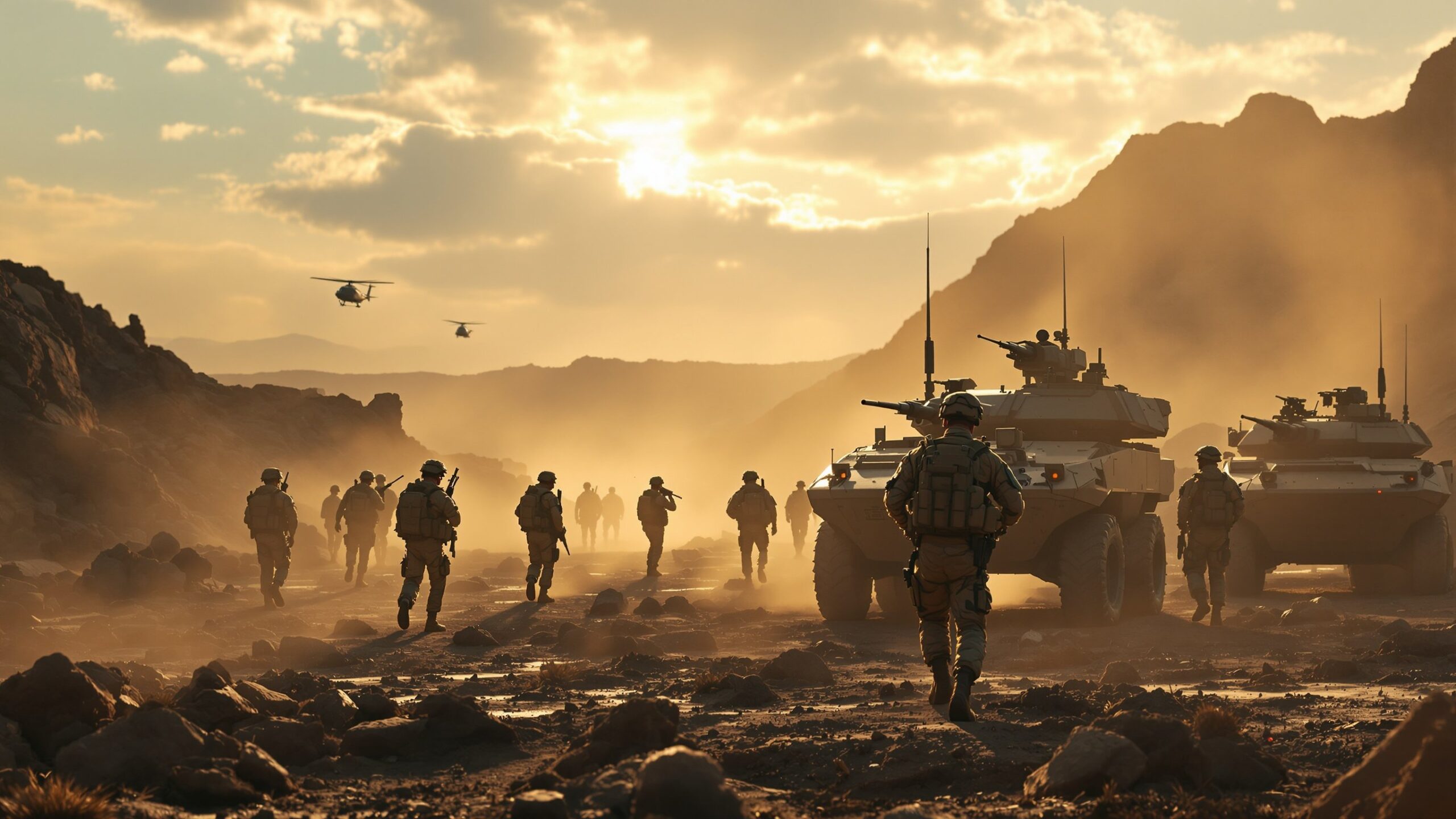
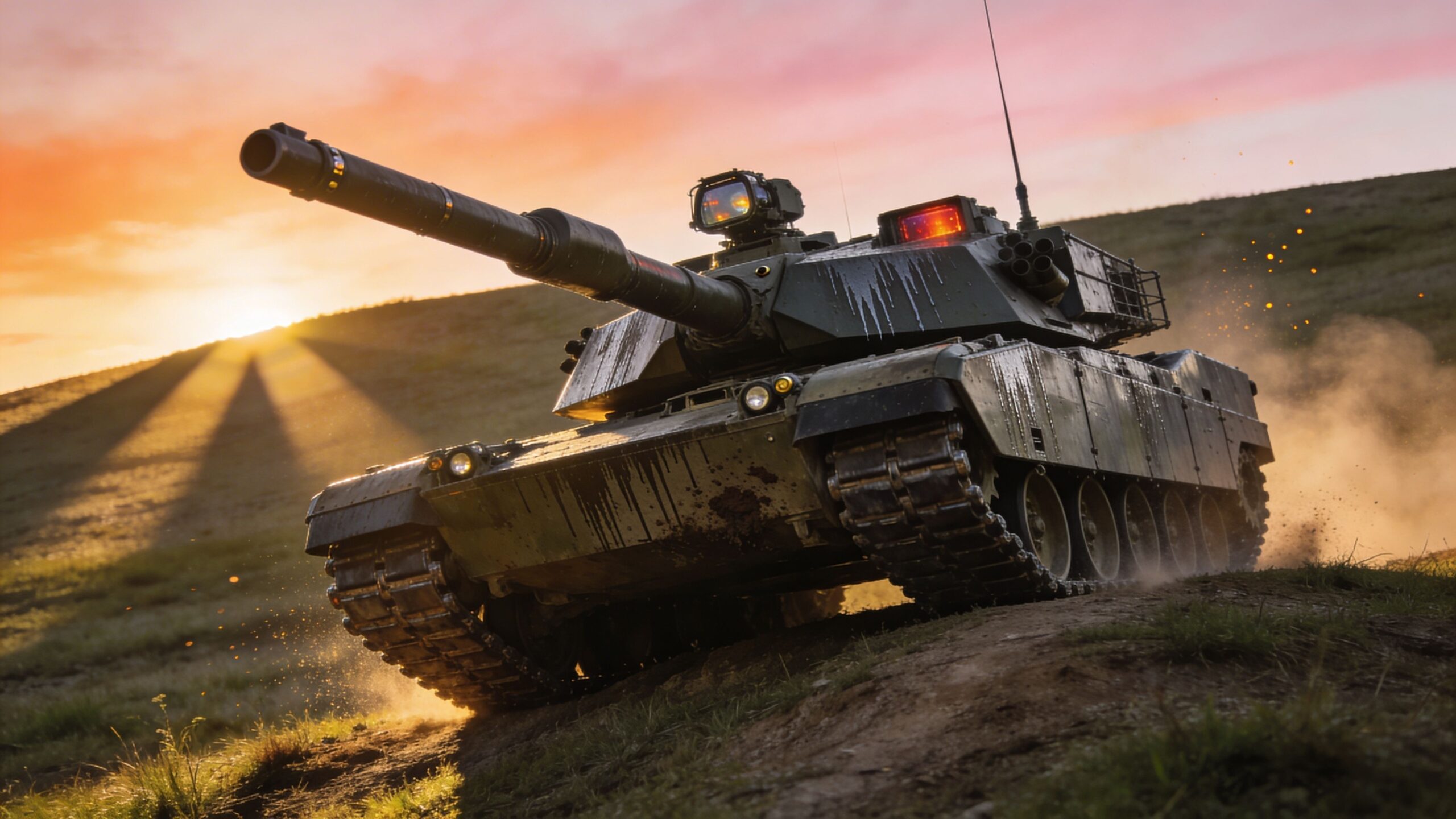
The modern main battle tank lives in a strange place in the public imagination. It’s seen as a steel monster that wins wars through brute force, a rolling fortress that shrugs off bullets and blasts while its cannon decides arguments with one thunderous sentence. That image isn’t completely wrong—but it’s incomplete. A main battle tank is less a single weapon than a compact battlefield ecosystem: sensors that hunt, computers that calculate, armor that absorbs and redirects, and a crew that turns all of it into momentum. If you want to understand why tanks still matter—despite drones, anti-tank missiles, and precision artillery—you have to look at what tanks really provide. Not invincibility. Not unstoppable charges. What tanks provide is protected, mobile, high-confidence firepower: the ability to move into dangerous space, deliver accurate violence on demand, and survive long enough to do it again. Modern battlefield dominance isn’t about being indestructible. It’s about winning the decision cycle—seeing first, shooting first, surviving the answer, and repositioning before the next threat completes its own kill chain.
A: Yes—when used with combined arms support, awareness, and disciplined movement.
A: Often optics and first-hit probability—because the first effective shot tends to decide duels.
A: A workflow where the commander searches for targets while the gunner engages, speeding tempo.
A: No—it's one layer that can help against certain warheads, but tactics and APS also matter.
A: A system that detects and disrupts or intercepts incoming anti-armor threats before impact.
A: Infantry protects tanks from close ambushes and threats hidden in complex terrain.
A: Becoming predictable—stopping in exposed lanes or lingering after firing.
A: Often no—many missions involve supporting infantry and defeating fortified positions.
A: Controlling space by combining protected mobility, accurate fire, and survivable tempo.
A: More sensors, tighter networking, better countermeasures, and faster engagement cycles.
What Makes a Tank a “Main Battle Tank”?
A main battle tank (MBT) is designed to do multiple armored jobs at once. Earlier eras separated tank roles into heavy tanks (thick armor), medium tanks (balanced), and light tanks (fast and deployable). MBTs replaced that menu with a single core concept: one tank that can fight other tanks, support infantry, and spearhead maneuver while carrying enough protection to stay alive in the worst parts of the battlefield.
That “one tank to do it all” idea comes with tradeoffs. MBTs are heavy because protection and firepower are heavy. They demand fuel, maintenance, trained crews, and logistical discipline. But when properly supported, they become the ground force’s most intimidating negotiation tool: a system that can enter contested space, endure chaos, and impose order.
Firepower: It’s Not Just a Big Gun
Every tank has a main gun, but modern MBT firepower is not defined by barrel length alone. Firepower is the kill chain inside the tank: spotting, identifying, ranging, stabilizing, firing, and correcting—under motion, dust, smoke, and stress. A tank with a powerful gun but weak optics might lose to a tank with slightly less gun but better target acquisition, because the second tank lands the first effective hit.
The main gun matters because it gives the tank the ability to destroy hard targets at distance. Modern MBTs typically use high-velocity cannons designed to fire armor-piercing rounds that defeat enemy armor and multi-purpose rounds that handle fortifications, light vehicles, and infantry positions. But the larger story is how quickly and reliably the tank can translate a target into a hit.
In modern combat, “first-round hit probability” is a kind of invisible superpower. If a tank can land the first shot reliably, it can end a duel before it becomes a duel.
Ammunition: The Tank’s Personality in Metal Form
A tank’s gun is only as versatile as what it can fire. In broad terms, modern tank ammunition tends to fall into two practical categories: kinetic energy rounds for armored targets and explosive or multi-purpose rounds for everything else. Kinetic rounds are designed to focus energy into a small impact area at extreme speed, maximizing penetration through armor. Multi-purpose rounds create blast and fragments, or use programmable settings to detonate at the right moment for different target types.
This matters because most tank engagements are not cinematic tank-versus-tank duels. Many real missions involve supporting infantry, smashing hardened points, and knocking down obstacles that stop movement. A tank that can switch ammunition types quickly—and a crew that can choose the right round instinctively—turns the tank into a flexible battlefield problem solver.
Fire Control: The Hidden Engine of Lethality
Modern tanks are lethal because they calculate faster than humans can think. Fire control systems combine laser rangefinders, stabilized sights, ballistic computers, and environmental inputs to produce firing solutions that would have taken entire teams with paper charts in earlier decades. The result is a gun that can hit accurately while the tank is moving, while the target is moving, and while the battlefield itself is trying to confuse the shot. Stabilization is a quiet miracle in this story. Without stabilization, a tank’s gun is a wild instrument on rough ground. With it, the gun becomes a disciplined tool that can fire precisely during movement. This creates a huge tactical advantage. A tank that can shoot accurately without stopping is harder to hit, harder to predict, and more capable of exploiting brief windows of exposure.
The “Hunter-Killer” Advantage: Two Brains, One Trigger
One of the defining traits of modern MBTs is the ability to operate in a hunter-killer mode. While the gunner engages one target, the commander searches for the next. This division of labor compresses time: the next engagement can begin the moment the first ends, and the tank maintains momentum rather than pausing to re-acquire.
Hunter-killer capability is not only technology. It’s also crew choreography. Tanks are at their best when crews communicate with short, precise language and practiced rhythms—when the system’s speed is matched by human coordination. In modern combat, that coordination is often the difference between dominance and vulnerability.
Armor: Not a Wall, a Layer Cake
Armor is often described as “thick” or “thin,” but modern tank protection is more like a layered strategy than a single wall. Tanks use a mix of sloped surfaces, composite layers, and add-on packages to manage multiple threat types. The goal is not absolute immunity. The goal is to make hits less likely to penetrate, to reduce damage when they do, and to protect the crew long enough to escape, fight, or be recovered. Armor is also shaped by expectation. The front arc tends to be heavily protected because that’s where the tank is most likely to face threats. Side and rear areas are typically less armored because protecting everything equally would make the tank too heavy to move and too costly to field. This creates a tactical truth: tanks want to fight facing forward, and they want to avoid being caught exposed on the flanks or roof.
Reactive Armor and Add-On Protection: Modern Armor’s Quick-Change Outfit
Because threats evolve quickly, many tanks use modular add-on protection. Reactive armor tiles are designed to disrupt certain types of incoming warheads by detonating outward and interfering with the attack mechanism. Other add-ons create spacing, disrupt fuzing, or reduce the effectiveness of shaped charges. These packages turn tank protection into a customizable system—more like a loadout than a single immutable design.
The value of modular armor is adaptability. A tank can be configured for a specific mission environment, threat profile, or operational plan. The limitation is that no add-on is magic. Each defense is a tradeoff in weight, maintenance, and effectiveness across different angles and munitions.
Active Protection Systems: When the Tank Shoots Back at the Missile
One of the most dramatic evolutions in tank survivability is the rise of active protection systems (APS). Instead of relying only on armor to absorb impacts, APS aims to detect incoming threats and defeat them before they hit. Some systems focus on soft-kill measures—obscuring, confusing, or disrupting guidance. Others attempt hard-kill interception, physically engaging the incoming projectile.
APS changes the battlefield conversation because it shortens the enemy’s window of success. It forces missile teams to think about timing, angles, and saturation. It also changes tank tactics, because tanks can operate with a slightly different risk calculus when interception is possible.
Still, APS is not a force field. It can be overwhelmed, misled, or constrained by environment and rules of engagement. It is best seen as another layer—one that can save lives and vehicles, but not one that replaces good tactics.
Mobility: The Tank’s Survival Trait Disguised as Speed
Mobility is often framed as “how fast a tank goes,” but on a modern battlefield, mobility is more about where a tank can go and how quickly it can change the problem. A tank that can reposition quickly can break line-of-sight, avoid being fixed by drones, and escape counterfire zones. Mobility is also critical for maintaining pressure—tanks can exploit breakthroughs and keep an enemy from stabilizing a defense.
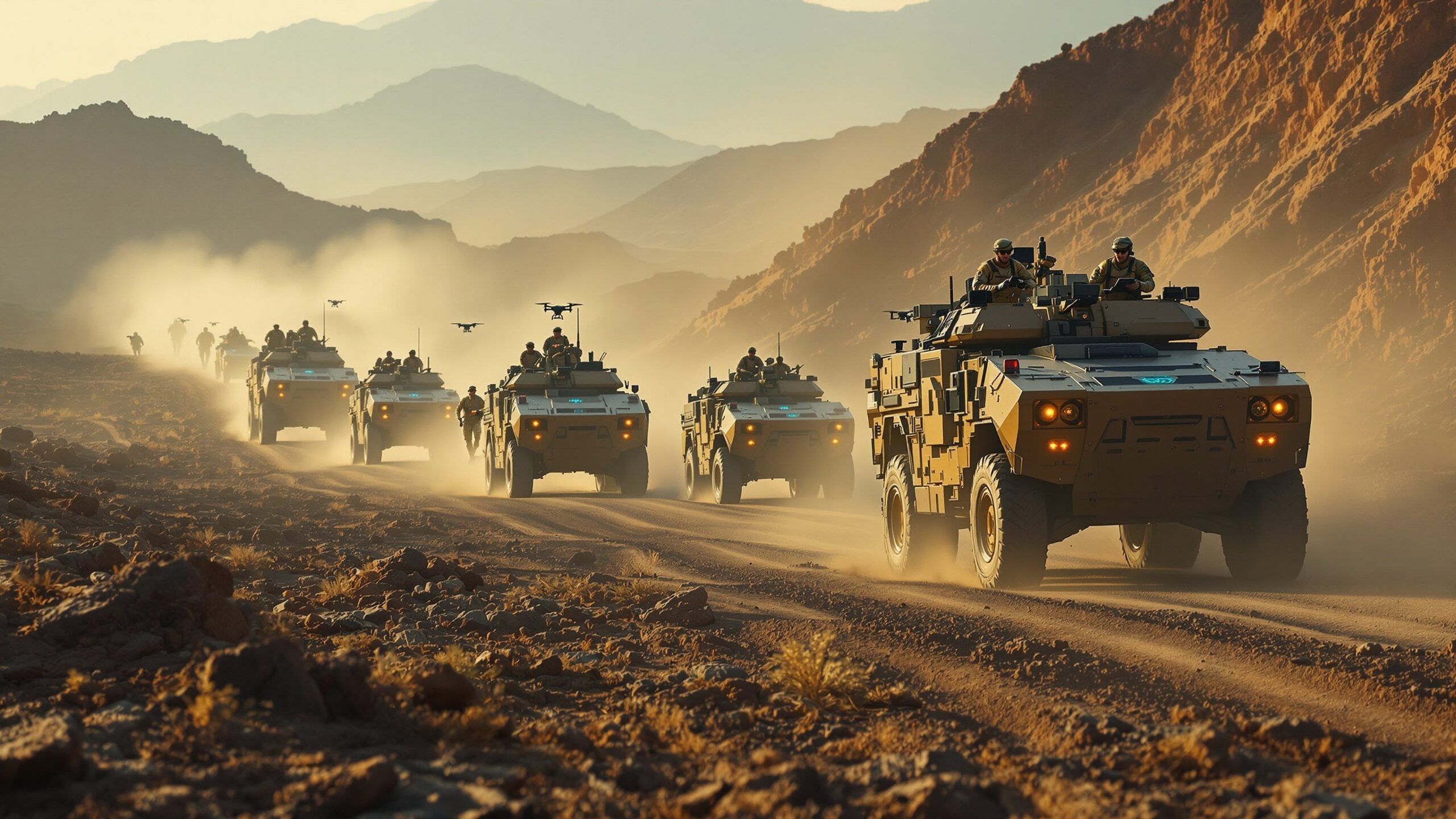
Terrain turns mobility into strategy. Mud, snow, urban rubble, and narrow roads can constrain a tank’s options, forcing predictable movement that anti-tank teams love. This is why tanks rarely operate alone. Engineers, infantry, and reconnaissance assets help tanks avoid being funneled into traps. In practical terms, the most mobile tank is often the tank with the best support—because the battlefield rarely rewards lone speed.
Battlefield Dominance: The Tank as a Shock System
Tank dominance is not only about killing. It’s about creating effects that force the enemy to react. A tank’s presence can freeze movement, disrupt morale, and collapse plans. Even if the tank never fires, it shapes enemy behavior simply by existing in the fight. This “shock effect” is why tanks remain relevant: they combine survivability and firepower in a way that changes how ground combat unfolds.
However, shock effect only works when the tank is credible. If the enemy believes the tank is isolated, unsupported, or easily ambushed, the psychological advantage collapses. This is why modern tank dominance is built on combined arms. The tank is the fist, but the rest of the force is the arm and the nervous system.
The Threats Tanks Fear Most (And What They Do About Them)
Modern tanks face threats that don’t always look like tank battles. Anti-tank guided missiles can strike from long distances or from top-attack angles. Drones can spot and cue fires, compressing reaction time. Artillery can punish predictable positions. Mines and improvised explosive devices can immobilize vehicles and turn them into stationary targets. Tanks survive these threats through layered solutions: better awareness, better countermeasures, smarter movement, and tighter coordination with infantry and air defense. A tank’s best defense is often not its armor; it’s its ability to avoid being targeted in the first place. That means concealment, disciplined positioning, and rapid displacement after firing. Survivability today is about escaping kill chains. The tank that stays alive is often the tank that doesn’t give the enemy enough time to complete the sequence of detect, track, target, and strike.
Why Tanks Still Matter in the Drone Age
The drone age has changed everything about visibility. But it hasn’t erased the need for protected firepower. Tanks still matter because ground forces still need to take and hold terrain, and taking terrain means entering places where bullets, shrapnel, and explosions are waiting. Infantry can do that, but infantry pays a higher price without armored support. Tanks reduce that price by bringing armor and a decisive main gun into the fight.
The role of tanks is evolving. They are more connected, more cautious, and more reliant on combined arms than the old “steel tide” myths suggest. Yet their core value remains: a modern MBT is one of the few systems that can push into danger and remain effective when the battlefield is trying to break everything.
The Future Tank: More Sensing, More Networking, Smarter Survival
Future tank dominance is likely to come from integration more than sheer size. Better sensors, stronger networking, improved counter-drone measures, and smarter ammunition will all matter. Automation may reduce workload and speed engagement cycles. Active protection will likely become more common and more layered. Some designs may shift toward optional crew arrangements or improved survivability compartments, but the underlying logic persists: a tank that can see first and survive long enough to shoot again is a tank that controls the fight. Modern main battle tanks are not relics. They are evolving responses to the truth that ground warfare still comes down to controlling space—street by street, ridge by ridge, road by road. Tanks remain the most concentrated form of land power that can move and fight under pressure.
Dominance Is a System, Not a Vehicle
A modern MBT’s dominance is not a single statistic. It is the sum of firepower, armor, mobility, and the crew’s ability to turn those traits into decision advantage. Tanks win when they fight as part of a combined arms organism—supported, informed, and disciplined. They lose when they become isolated, predictable, or blind.
If you understand one thing about modern main battle tanks, let it be this: they are not invulnerable, but they are still uniquely capable. In the right hands, with the right support, they don’t just survive the battlefield—they shape it.