Inside the Engine of Modern Warfare
Warfare has transformed more in the last twenty years than in the previous two centuries. Gone are the days when mass formations, limited intelligence, and rigid command structures shaped the battlefield. Today, conflicts unfold at breakneck speed, across multiple domains, and under the constant presence of real-time surveillance, cyber operations, and high-precision weaponry. At the center of this new age stands the modern Army—an adaptable, technologically advanced, strategically minded force capable of operating anywhere on Earth. Understanding how the Army fights requires stepping inside the decision cycles, tools, and tactics that shape combat. It means examining how soldiers move from planning to execution, how leaders synchronize strategy with real-time data, and how units turn complex missions into seamless operations. Modern war is no longer a single fight; it is a synchronized dance between land forces, cyber specialists, drone pilots, logisticians, intelligence analysts, and commanders who guide it all. This article takes you deep inside that world, showing exactly how the Army operates when the stakes are highest.
A: Political leaders set objectives; senior military commanders design and direct operations.
A: Ready forces, pre-positioned equipment, and airlift assets enable rapid deployment worldwide.
A: Joint commands integrate Army, Navy, Air Force, Marines, and allies under a unified plan.
A: Strict procedures, identification systems, and constant communication reduce fratricide risk.
A: Targeting teams review intel, legality, and strategic impact before approving strikes.
A: Sensors and data tools inform commanders, but human judgment ultimately drives choices.
A: Units shift to alternate plans, reposition forces, and adjust tactics based on real-time feedback.
A: Yes, units practice operating with jammed signals, GPS disruption, and cyber interference.
A: Intelligence, precision weapons, and strict targeting rules aim to minimize civilian harm.
A: Forces transition to stabilization, support local partners, and capture lessons for future conflicts.
The Strategic Foundation: How Modern Armies Prepare for War
War rarely begins with the first shot. It begins with strategy—months or even years before combat ever starts. Strategic preparation involves far more than training soldiers or purchasing equipment. It involves understanding the geopolitical landscape, predicting adversary intentions, and positioning forces so that when conflict arises, the Army is already ahead.
Strategists evaluate terrain, local politics, the strength of allies, and the weaknesses of opponents. They study past conflicts, run simulations, and work with intelligence communities to identify what may happen long before it does. Modern armies don’t guess; they plan with overwhelming precision.
Preparation also includes forward presence—stationing units across the globe so that rapid response is possible. Soldiers train for multiple climates, altitudes, and conditions because the Army must be ready for deserts, mountains, jungles, or urban warfare without hesitation. This global posture ensures that when war breaks out, the Army isn’t reacting; it’s executing a plan already in motion.
Command and Control: The Brain Behind the Battlefield
Behind every maneuver, every raid, every artillery strike, and every drone mission is a command structure designed to make decisions faster than the enemy. The Army’s command and control network acts as the nervous system of war, coordinating thousands of moving parts at once.
In modern operations, commanders rely on real-time intelligence from satellites, aircraft, ground sensors, and drones. They monitor troop positions, enemy behavior, and environmental changes as they unfold. Decisions once made over hours now occur in minutes or seconds. At every level, from platoon leaders to theater commanders, the goal is the same: maintain situational awareness and outpace the enemy’s decision cycle.
Technology drives this capability. Digital maps, secure communication systems, and AI-enhanced prediction tools enable leaders to understand not just what is happening, but what is likely to happen next. This predictive advantage is one of the Army’s most powerful assets, allowing leaders to anticipate threats before soldiers encounter them.
Intelligence Operations: Seeing the Battlefield Before It’s Real
Modern warfare hinges on information. Intelligence gathering is not a separate function—it is the heartbeat of every military operation. Today’s Army integrates human intelligence, signals intelligence, satellite imagery, cyber data, and drone reconnaissance to build a living picture of the battlefield.
Before troops ever arrive, analysts study enemy positions, supply routes, weapon capabilities, social media chatter, and even weather patterns. This ensures that commanders understand the environment better than the enemy does. Once combat begins, intelligence feeds flow back continuously. Drones provide overhead views, patrols report ground truth, and sensors track movement miles away.
The advantage this provides cannot be overstated. Knowing the enemy’s location, intent, and vulnerabilities reduces risk, speeds operations, and allows forces to strike with precision. Intelligence is the difference between a blind advance and a coordinated assault that neutralizes threats before they materialize.
Technology on the Battlefield: The Digital Warrior Age
No part of Army operations has evolved as dramatically as battlefield technology. Today’s soldier fights with more data, tools, and support than any previous generation.
Advanced radios and encrypted communication allow squads to coordinate seamlessly across vast distances. Night vision and thermal imaging turn darkness into daylight, giving soldiers unmatched advantage during nighttime missions. Unmanned aircraft provide eyes in the sky that never tire, allowing commanders to watch enemy movement second by second.
Precision weapons have also changed battlefield tempo. Artillery guided by GPS can hit targets miles away with pinpoint accuracy. Anti-armor weapons that once required direct line-of-sight now strike from concealed positions. Even logistics has modernized, with automated systems tracking fuel, ammunition, and supplies to keep soldiers equipped regardless of terrain.
This tech ecosystem doesn’t replace the soldier—it empowers them. Every piece of gear, every digital tool, every network connection serves one purpose: increasing effectiveness while reducing risk.
Combined Arms Warfare: Coordinating Units for Maximum Impact
Modern armies never rely on a single type of force. Instead, they synchronize infantry, armor, aviation, artillery, engineers, cyber units, and intelligence elements into cohesive, fast-moving formations. This is the essence of combined arms warfare.
Infantry clear buildings and hold terrain. Armor advances to break enemy lines. Artillery softens defenses or provides protective fire. Helicopters transport troops, deliver supplies, or strike high-value targets. Engineers build fortifications, clear obstacles, or create breaches. Cyber teams disrupt enemy communications or disable radar systems.
Individually, each element is powerful. Together, they become nearly unstoppable.
Combined arms tactics create dilemmas for the enemy—no matter how they respond, they expose themselves to another threat. If they fortify against tanks, infantry exploit the weakness. If they defend against infantry, airpower strikes from above. The goal is overwhelming pressure from every direction, forcing the enemy into collapse.
Urban Warfare: Fighting in the World’s Most Complex Terrain
Cities represent one of the most challenging environments for military operations. They are crowded, vertical, unpredictable, and full of hiding places. Yet modern armies must be ready to fight in them, as urban areas are often strategic centers of conflict.
Urban warfare blends strategy, precision, and caution. Soldiers clear buildings room by room, moving slowly and deliberately to avoid traps or ambushes. Snipers may operate from rooftops while engineers breach walls to create safer routes. Drones hover between buildings, scouting ahead where soldiers cannot see.
Communication becomes critical, as radio signals bounce unpredictably off concrete and steel. Leaders must coordinate movements to prevent friendly forces from becoming isolated. Civilians complicate operations, requiring precision to avoid unintended damage.
Despite these challenges, modern armies train extensively for urban combat, using large-scale mock cities built specifically to replicate real-world conditions. Mastering this domain ensures readiness for the conflicts most likely to occur in the decades ahead.
Logistics and Sustainment: The Hidden Power Behind Victory
Wars are not won only by strategy or firepower—they are won by keeping soldiers supplied, healthy, and operational. Logistics is the invisible backbone of modern warfare, ensuring that every mission has the fuel, ammunition, food, water, and medical support it requires.
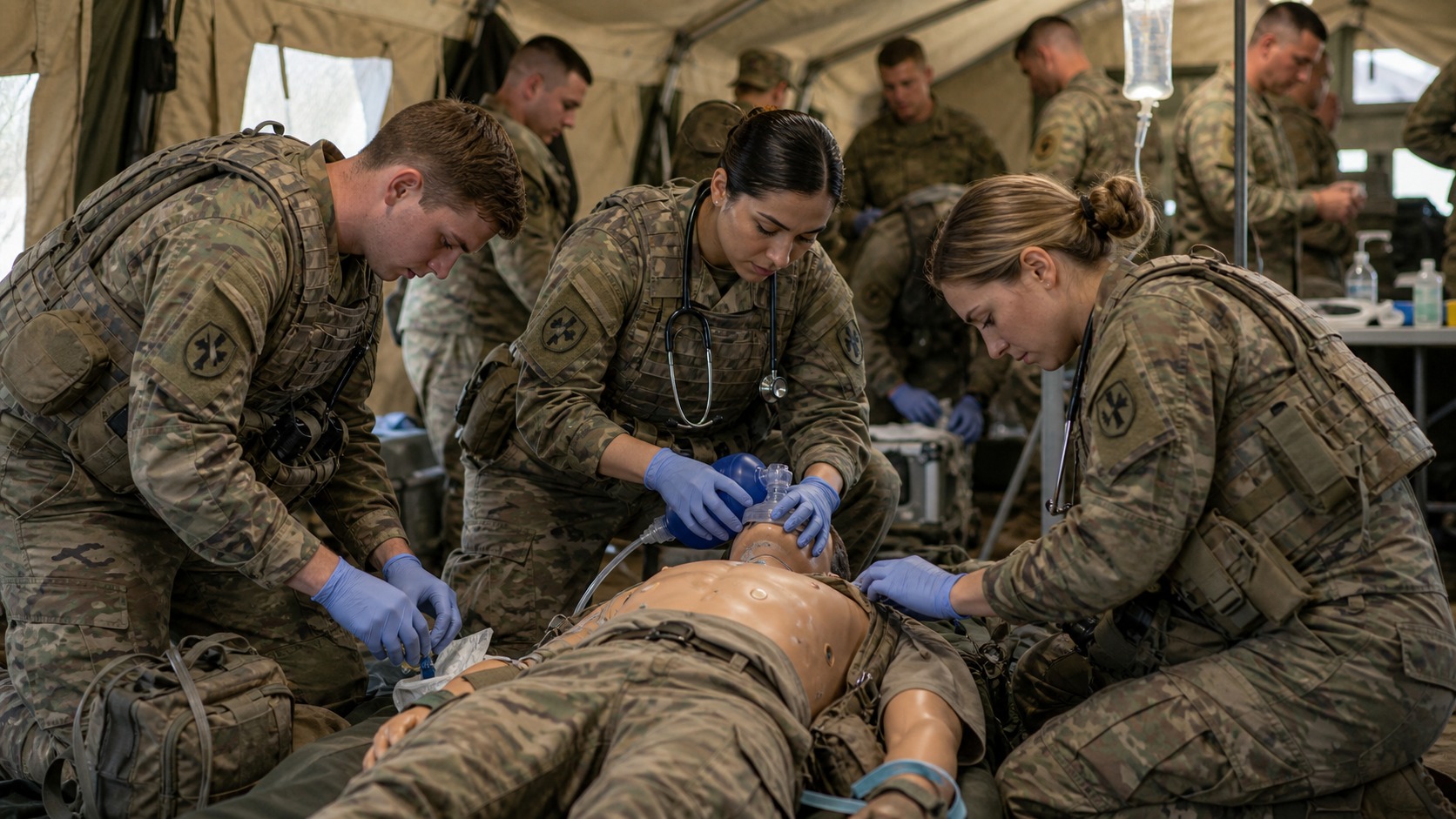
Transport aircraft move supplies across continents. Trucks navigate dangerous routes to deliver essentials. Medical teams establish forward surgical stations to preserve life in the minutes after injury. Engineers build roads, bridges, and landing zones under fire to keep the flow of resources steady.
A single infantry company can burn through astonishing amounts of ammunition during heavy fighting. Tanks consume fuel rapidly. Artillery requires constant resupply to maintain pressure. Without logistics, even the strongest force grinds to a halt.
Modern armies invest heavily in sustainment technology—automated inventory systems, GPS tracking for convoys, armored transport vehicles—to maintain momentum. Logistics is the silent engine that keeps victory within reach.
Cyber and Electronic Warfare: The New Battlefield
In twenty-first-century war, the battlefield extends into cyberspace and the electromagnetic spectrum. Modern armies fight not only with bullets but with data, code, and frequency waves.
Cyber teams defend networks, disrupt enemy systems, and protect communication channels. Electronic warfare units jam enemy signals, interfere with drones, and disable targeting systems. These capabilities can shape entire battles without a single shot fired.
A well-executed cyber operation may shut down enemy power grids or intercept communications. Electronic warfare may blind radar stations or mislead enemy drones. Winning these invisible battles often determines the outcome of physical combat.
In the modern Army, cyber and electronic specialists stand shoulder to shoulder with infantry and armor. Their work is essential to maintaining dominance in every domain.
Adaptation Under Fire: How the Army Overcomes Battlefield Chaos
Even the best plans must survive contact with reality. Once battle begins, conditions change rapidly—weather shifts, equipment breaks, enemy tactics evolve, and unexpected obstacles appear. This is where adaptability becomes the Army’s greatest strength.
Soldiers are trained to assess, adjust, and react faster than their opponents. Leaders learn to make decisions with incomplete information, using judgment shaped by experience and training. Units communicate constantly, sharing updates, shifting positions, and reorganizing on the fly.
Adaptation is most visible in dynamic environments. A reconnaissance patrol may spot enemy reinforcements, forcing commanders to change an entire plan. A sudden sandstorm may ground aircraft, requiring troops to fight without air support. Yet through discipline, communication, and improvisation, the Army continues to drive toward mission success.
This flexibility—combined with preparation, technology, and teamwork—is what separates modern armies from those of the past.
The Role of Soldiers: The Human Element Behind Every Victory
Amid all the advanced technology and complex strategies, the most important factor in warfare remains the soldier. Training, discipline, courage, and endurance form the backbone of every operation. The Army invests heavily in developing soldiers who can perform under intense stress, think clearly in chaos, and work as part of a unified team.
Physical fitness prepares troops for intense combat operations. Mental toughness helps them push through exhaustion. Tactical training ensures they can execute complex missions with precision. Camaraderie and trust bind them together, making the unit stronger than any individual.
No technology replaces the soldier’s judgment. No machine replicates the moral decisions troops must make in combat. The human element—courage under fire, loyalty to teammates, commitment to mission—is the foundation of Army success.
Strategy, Technology, and Tactics in Perfect Alignment
Modern warfare is a symphony of intelligence, logistics, firepower, cyber capability, and human resilience. The Army operates in war by aligning strategy, technology, and tactics into a unified force capable of defeating any adversary. From preparation to execution, from frontline soldiers to intelligence analysts, from cyber specialists to logisticians, every component plays a vital role.
The Army of today is faster, smarter, and more adaptable than ever before. It thrives in complexity, evolves with every challenge, and shapes the future of warfare through innovation and relentless training. Understanding how it operates reveals not only how wars are fought—but how nations remain secure in an unpredictable world.