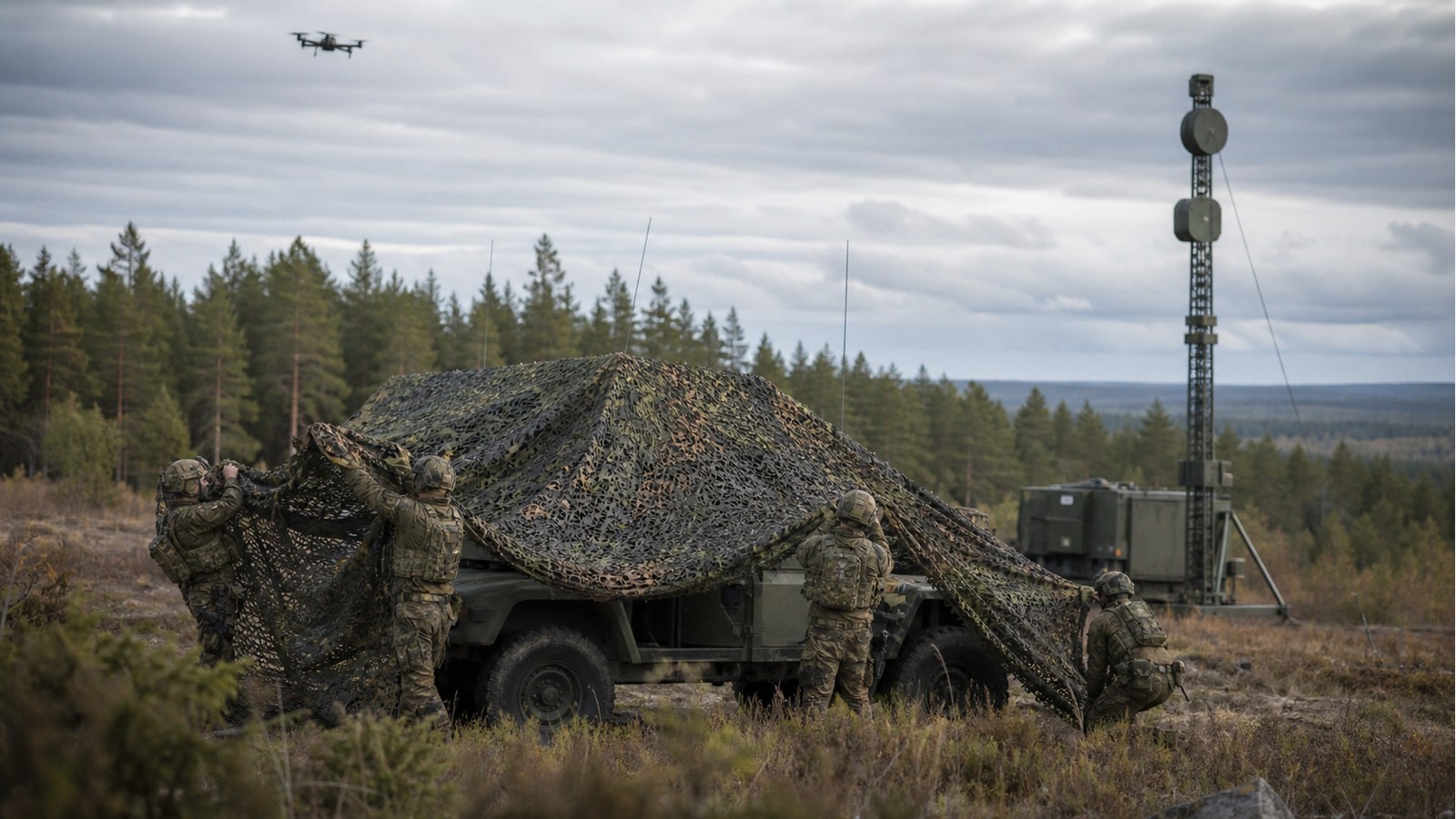
Stealth & Camouflage Technologies 101: How Militaries Hide from Modern Sensors
Stealth & Camouflage Technologies 101: How Militaries Hide from Modern Sensors is best read as a practical explainer, not a slogan or a ranking. The useful version of the topic starts with purpose, organization, limits, and the details that make the topic useful, then connects those pieces to people, equipment, geography, and command judgment. For Defense Street readers, Stealth & Camouflage Technologies matters because it shows how modern defense work depends on systems that must perform under pressure, not just on the part that looks most dramatic from the outside.
What the Topic Really Means
Stealth and camouflage technologies reduce the chance that people, vehicles, aircraft, ships, or positions will be detected, identified, tracked, or targeted.
The broader concept is signature management. Forces try to manage visual, thermal, radar, acoustic, electromagnetic, and behavioral signatures so sensors receive less useful information.
For Stealth & Camouflage Technologies 101: How Militaries Hide from Modern Sensors, the what the topic really means angle is strongest when it connects signature management to organization, training, logistics, and accountability. Defense topics are rarely explained by one impressive number, because the result depends on people, doctrine, maintenance, communications, and support systems working together.
In the what the topic really means section, signature management also needs plain context. A capability can look powerful on paper while still depending on readiness, terrain, policy, command judgment, and the mission it is assigned to support.
The what the topic really means view also helps separate public fascination from military reality. Readers get a clearer picture when signature management is tied to disciplined training, lawful authority, maintenance cycles, and the larger unit that turns an individual capability into useful defense power.
A strong explanation of what the topic really means keeps the focus on judgment rather than spectacle. The useful questions are what the capability is for, who is responsible for it, what limits shape its use, and how it supports a mission without becoming the whole story.
Why It Matters in Defense
Stealth and camouflage matter because modern sensors make the battlefield more transparent. Drones, satellites, radar, thermal cameras, acoustic sensors, and electronic surveillance can reveal forces that once felt hidden.
They also matter because survival often depends on time. If detection is delayed or targeting quality is reduced, a force gains options.
For Stealth & Camouflage Technologies 101: How Militaries Hide from Modern Sensors, the why it matters in defense angle is strongest when it connects signature management to organization, training, logistics, and accountability. Defense topics are rarely explained by one impressive number, because the result depends on people, doctrine, maintenance, communications, and support systems working together.
In the why it matters in defense section, signature management also needs plain context. A capability can look powerful on paper while still depending on readiness, terrain, policy, command judgment, and the mission it is assigned to support.
The why it matters in defense view also helps separate public fascination from military reality. Readers get a clearer picture when signature management is tied to disciplined training, lawful authority, maintenance cycles, and the larger unit that turns an individual capability into useful defense power.
A strong explanation of why it matters in defense keeps the focus on judgment rather than spectacle. The useful questions are what the capability is for, who is responsible for it, what limits shape its use, and how it supports a mission without becoming the whole story.
The Main Parts to Understand
The main parts include camouflage patterns, multispectral nets, low-observable shaping, heat reduction, emissions control, decoys, concealment discipline, terrain use, and movement timing.
Modern camouflage is no longer only about matching colors. It may need to reduce infrared, radar, and electronic signatures as well as visual contrast.
For Stealth & Camouflage Technologies 101: How Militaries Hide from Modern Sensors, the the main parts to understand angle is strongest when it connects signature management to organization, training, logistics, and accountability. Defense topics are rarely explained by one impressive number, because the result depends on people, doctrine, maintenance, communications, and support systems working together.
In the the main parts to understand section, signature management also needs plain context. A capability can look powerful on paper while still depending on readiness, terrain, policy, command judgment, and the mission it is assigned to support.
The the main parts to understand view also helps separate public fascination from military reality. Readers get a clearer picture when signature management is tied to disciplined training, lawful authority, maintenance cycles, and the larger unit that turns an individual capability into useful defense power.
A strong explanation of the main parts to understand keeps the focus on judgment rather than spectacle. The useful questions are what the capability is for, who is responsible for it, what limits shape its use, and how it supports a mission without becoming the whole story.
How to Read the Claims
Claims about stealth and camouflage should avoid promising invisibility. Every method works against some sensors better than others and can fail under different angles, distances, or weather.
A useful explanation asks which sensor is being defeated, how long the concealment must last, and what tradeoff the method creates.
For Stealth & Camouflage Technologies 101: How Militaries Hide from Modern Sensors, the how to read the claims angle is strongest when it connects signature management to organization, training, logistics, and accountability. Defense topics are rarely explained by one impressive number, because the result depends on people, doctrine, maintenance, communications, and support systems working together.
In the how to read the claims section, signature management also needs plain context. A capability can look powerful on paper while still depending on readiness, terrain, policy, command judgment, and the mission it is assigned to support.
The how to read the claims view also helps separate public fascination from military reality. Readers get a clearer picture when signature management is tied to disciplined training, lawful authority, maintenance cycles, and the larger unit that turns an individual capability into useful defense power.
A strong explanation of how to read the claims keeps the focus on judgment rather than spectacle. The useful questions are what the capability is for, who is responsible for it, what limits shape its use, and how it supports a mission without becoming the whole story.
Where People Get Confused
One confusion is treating camouflage as clothing only. Vehicles, bases, antennas, heat sources, tracks, shadows, and radio transmissions can reveal a force.
Another confusion is assuming stealth aircraft and field camouflage are unrelated. Both are forms of signature management, although they use different methods.
For Stealth & Camouflage Technologies 101: How Militaries Hide from Modern Sensors, the where people get confused angle is strongest when it connects signature management to organization, training, logistics, and accountability. Defense topics are rarely explained by one impressive number, because the result depends on people, doctrine, maintenance, communications, and support systems working together.
In the where people get confused section, signature management also needs plain context. A capability can look powerful on paper while still depending on readiness, terrain, policy, command judgment, and the mission it is assigned to support.
The where people get confused view also helps separate public fascination from military reality. Readers get a clearer picture when signature management is tied to disciplined training, lawful authority, maintenance cycles, and the larger unit that turns an individual capability into useful defense power.
A strong explanation of where people get confused keeps the focus on judgment rather than spectacle. The useful questions are what the capability is for, who is responsible for it, what limits shape its use, and how it supports a mission without becoming the whole story.
Real-World Context
Modern wars have shown how small drones and thermal sensors can make careless movement, heat, and exposed equipment dangerous.
NATO and defense research communities have long studied camouflage, concealment, and deception because sensor denial remains central to survival.
For Stealth & Camouflage Technologies 101: How Militaries Hide from Modern Sensors, the real-world context angle is strongest when it connects signature management to organization, training, logistics, and accountability. Defense topics are rarely explained by one impressive number, because the result depends on people, doctrine, maintenance, communications, and support systems working together.
In the real-world context section, signature management also needs plain context. A capability can look powerful on paper while still depending on readiness, terrain, policy, command judgment, and the mission it is assigned to support.
The real-world context view also helps separate public fascination from military reality. Readers get a clearer picture when signature management is tied to disciplined training, lawful authority, maintenance cycles, and the larger unit that turns an individual capability into useful defense power.
A strong explanation of real-world context keeps the focus on judgment rather than spectacle. The useful questions are what the capability is for, who is responsible for it, what limits shape its use, and how it supports a mission without becoming the whole story.
Limits, Risks, and Tradeoffs
The limits include weather, maintenance, sensor fusion, movement, heat buildup, damaged materials, human error, and the difficulty of hiding logistics activity.
Concealment can also slow operations. More protection may mean more time, weight, planning, and discipline.
For Stealth & Camouflage Technologies 101: How Militaries Hide from Modern Sensors, the limits, risks, and tradeoffs angle is strongest when it connects signature management to organization, training, logistics, and accountability. Defense topics are rarely explained by one impressive number, because the result depends on people, doctrine, maintenance, communications, and support systems working together.
In the limits, risks, and tradeoffs section, signature management also needs plain context. A capability can look powerful on paper while still depending on readiness, terrain, policy, command judgment, and the mission it is assigned to support.
The limits, risks, and tradeoffs view also helps separate public fascination from military reality. Readers get a clearer picture when signature management is tied to disciplined training, lawful authority, maintenance cycles, and the larger unit that turns an individual capability into useful defense power.
A strong explanation of limits, risks, and tradeoffs keeps the focus on judgment rather than spectacle. The useful questions are what the capability is for, who is responsible for it, what limits shape its use, and how it supports a mission without becoming the whole story.
How the Topic Is Changing
Stealth and camouflage are changing through multispectral materials, decoys, electronic emission control, adaptive concepts, better thermal management, and AI-assisted sensor analysis.
Future forces may need to treat every movement, signal, heat source, and pattern of behavior as part of their signature.
For Stealth & Camouflage Technologies 101: How Militaries Hide from Modern Sensors, the how the topic is changing angle is strongest when it connects signature management to organization, training, logistics, and accountability. Defense topics are rarely explained by one impressive number, because the result depends on people, doctrine, maintenance, communications, and support systems working together.
In the how the topic is changing section, signature management also needs plain context. A capability can look powerful on paper while still depending on readiness, terrain, policy, command judgment, and the mission it is assigned to support.
The how the topic is changing view also helps separate public fascination from military reality. Readers get a clearer picture when signature management is tied to disciplined training, lawful authority, maintenance cycles, and the larger unit that turns an individual capability into useful defense power.
A strong explanation of how the topic is changing keeps the focus on judgment rather than spectacle. The useful questions are what the capability is for, who is responsible for it, what limits shape its use, and how it supports a mission without becoming the whole story.
A Clear Way to Remember It
A simple memory hook is see, sense, signal, pattern. Camouflage has to account for what sensors see, what they sense, what signals are emitted, and what patterns stand out.
When reading about stealth or camouflage, ask what detection method is being reduced and what the force gives up to reduce it.
For Stealth & Camouflage Technologies 101: How Militaries Hide from Modern Sensors, the a clear way to remember it angle is strongest when it connects signature management to organization, training, logistics, and accountability. Defense topics are rarely explained by one impressive number, because the result depends on people, doctrine, maintenance, communications, and support systems working together.
In the a clear way to remember it section, signature management also needs plain context. A capability can look powerful on paper while still depending on readiness, terrain, policy, command judgment, and the mission it is assigned to support.
The a clear way to remember it view also helps separate public fascination from military reality. Readers get a clearer picture when signature management is tied to disciplined training, lawful authority, maintenance cycles, and the larger unit that turns an individual capability into useful defense power.
A strong explanation of a clear way to remember it keeps the focus on judgment rather than spectacle. The useful questions are what the capability is for, who is responsible for it, what limits shape its use, and how it supports a mission without becoming the whole story.
Bottom Line on Stealth and Camouflage
Stealth and camouflage technologies help militaries manage signatures in a sensor-rich environment. They do not create invisibility; they buy time, uncertainty, and survival when used with discipline.