The New Shape of Combat at Sea
Modern naval warfare is no longer defined by lines of battleships trading heavy gunfire across the horizon. Today’s fight at sea is faster, more technical, and far more layered. Warships now operate in a world shaped by long-range missiles, stealthy submarines, carrier aircraft, satellites, cyber systems, electronic warfare, and constant sensor competition. The side that sees first, understands first, and acts first often gains the decisive advantage. In that environment, naval power is about much more than size. It is about coordination, survivability, reach, and the ability to fight across the surface, the air, the undersea domain, and the electromagnetic spectrum at the same time. That shift has made modern fleets both more powerful and more vulnerable. A warship may carry advanced missiles, radar arrays, helicopters, and networked command systems, but it also operates in an era where a single well-placed missile, torpedo, or drone attack can change the course of a battle in minutes. As a result, modern naval warfare is built on a careful balance between offense and defense. Ships must detect threats early, share data quickly, strike accurately, and protect themselves through layered defensive systems. The ocean remains vast, but the battlefield has become more crowded with information, weapons, and risk.
A: It is a multi-domain fight involving ships, submarines, aircraft, missiles, sensors, and electronic warfare.
A: They let ships and aircraft strike at long range with high speed and precision.
A: Yes, they still support close defense, limited bombardment, and lower-cost engagements.
A: Their stealth makes them difficult to detect and highly dangerous in ambush situations.
A: It means ensuring friendly forces can operate while restricting enemy freedom of movement.
A: Because modern ships protect, detect, and fight more effectively when networked together.
A: Naval aircraft expand detection range, strike targets, and help defend the fleet.
A: It involves detecting, jamming, deceiving, and protecting communications and sensor systems.
A: Because fires, flooding, and system failures can sink a ship even after a limited hit.
A: Early awareness combined with fast, coordinated decision-making across the fleet.
Why Warships Still Matter
Even in an age of satellites and long-range aircraft, warships remain central to military power. They can move across international waters without depending on host nations, remain on station for extended periods, and bring their own weapons, sensors, aircraft, and command capabilities with them. That mobility gives navies a unique role in deterrence and crisis response. A fleet can appear offshore as a warning, a shield, or a strike force, often without the political complications that come with deploying ground forces on foreign soil.
Warships also matter because control of the sea still shapes the global economy and the global balance of power. Major trade routes, chokepoints, and undersea infrastructure remain critically important. Navies protect shipping lanes, monitor adversaries, escort convoys, and enforce blockades when necessary. In wartime, naval forces can isolate an enemy, pressure coastal targets, and deny access to entire maritime regions. In peacetime, they signal resolve, support allies, and maintain presence in contested waters. That combination of flexibility and endurance helps explain why modern naval warfare remains one of the most important dimensions of national security.
The Main Types of Modern Warships
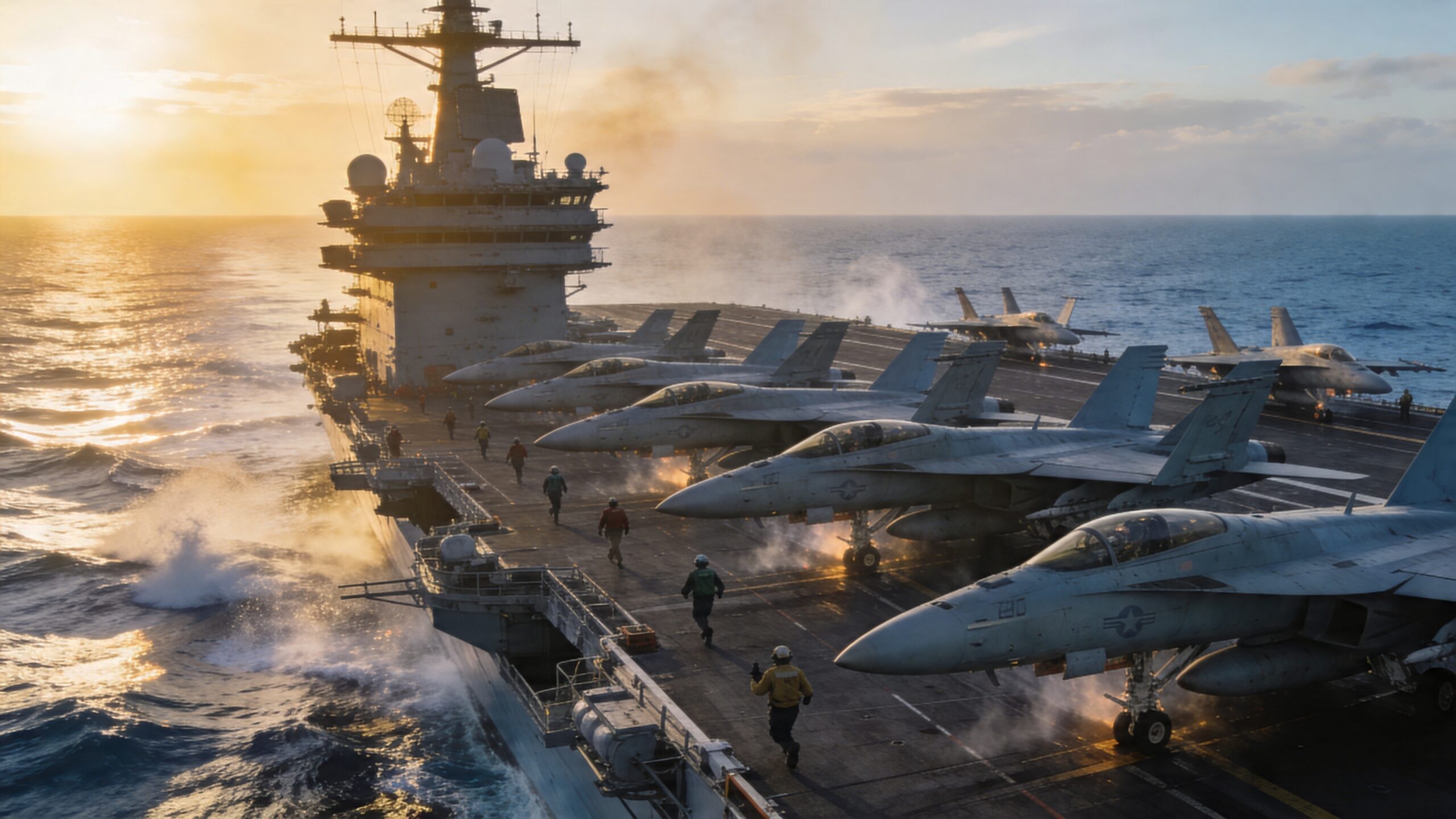
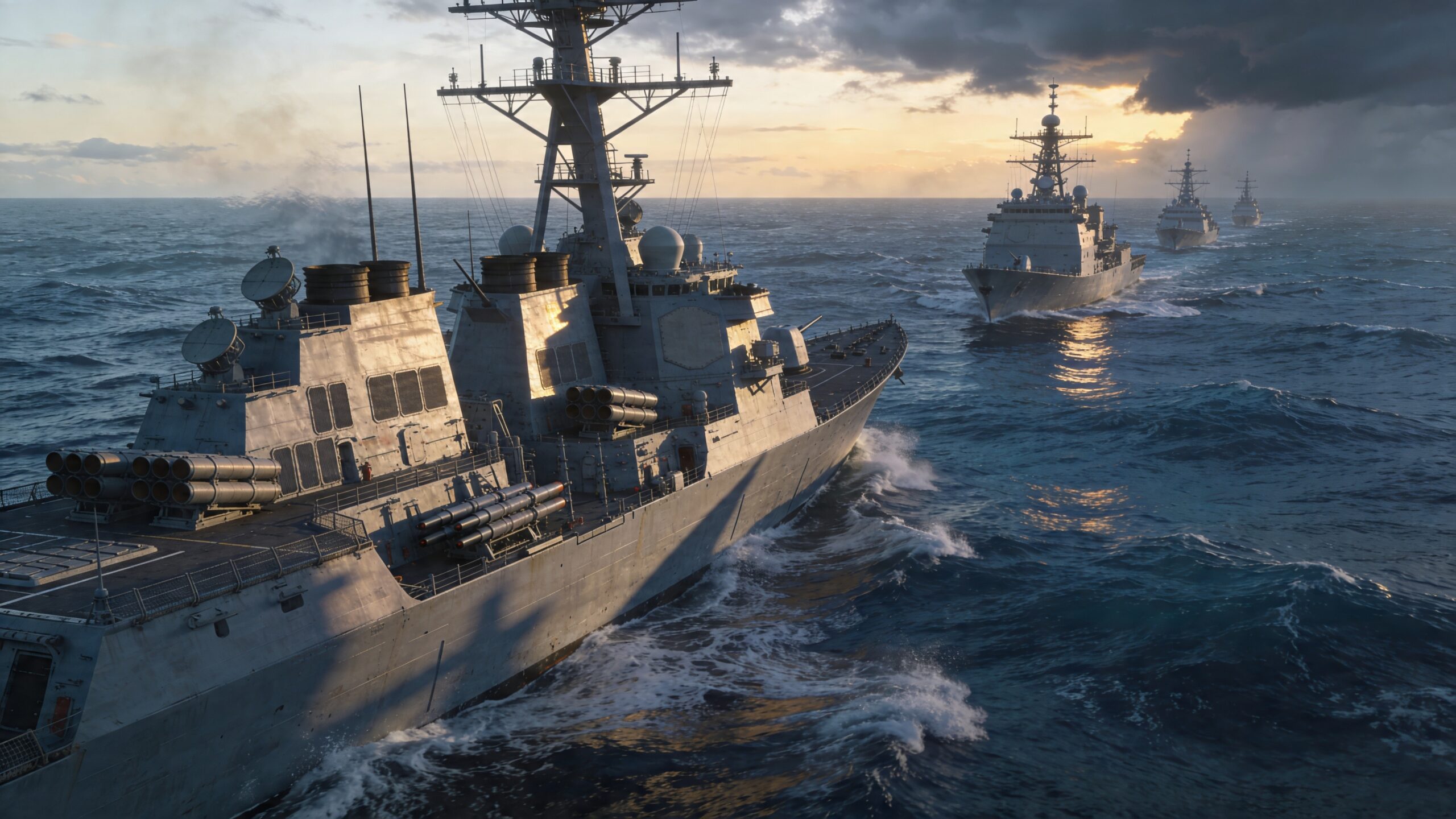
Modern fleets are made up of specialized warships, each built for a distinct but overlapping role. Aircraft carriers serve as floating airbases, projecting air power far from home. Destroyers are among the most versatile combatants, equipped for anti-air warfare, missile defense, anti-submarine operations, and surface combat. Frigates are generally smaller and often emphasize escort duties, patrol missions, and anti-submarine warfare. Amphibious assault ships support landings and expeditionary operations, while support ships keep fleets fueled, supplied, and sustained over long distances. Submarines add another dimension entirely. Attack submarines hunt ships and submarines, gather intelligence, and threaten enemy sea lanes. Ballistic missile submarines, meanwhile, serve as one of the most powerful elements of nuclear deterrence. Corvettes, patrol vessels, mine countermeasure ships, and unmanned systems fill additional roles closer to shore or in specialized missions. Together, these platforms form a networked fleet rather than a collection of isolated hulls. Each type of ship contributes to a broader strategy designed to control space, detect threats, and deliver force when needed.
The Sensor Battle Comes First
Before missiles fly or torpedoes run, modern naval warfare begins with detection. This is one of the most important truths of sea combat today. The fleet that finds the enemy first often gains the initiative, and the fleet that remains hidden the longest improves its chance of survival. That is why modern warships invest heavily in radar, sonar, infrared sensors, electronic support measures, airborne early warning assets, and data links that merge information from many sources into one operating picture.
This sensor battle is especially intense because the ocean is both open and deceptive. Radar can detect aircraft and missiles over long distances, but sea clutter, weather, terrain near coastlines, and enemy jamming can complicate the picture. Sonar helps search below the surface, but water temperature, salinity, depth, and background noise all affect performance. Electronic surveillance can reveal enemy emitters, but it can also expose one’s own position if used carelessly. Modern naval commanders must interpret all of this in real time. Winning at sea increasingly means winning an invisible contest of awareness before the first visible explosion ever occurs.
Missiles Changed Naval Combat Forever
If there is one weapon family that defines modern naval warfare, it is the missile. Anti-ship missiles allow warships, aircraft, submarines, and even coastal batteries to strike targets far beyond visual range. Surface-to-air missiles provide fleets with layered protection against aircraft, cruise missiles, and other threats. Land-attack missiles extend naval influence inland, allowing ships to hit command centers, infrastructure, and strategic targets from offshore positions. Missiles changed the rhythm of naval combat by making engagements faster and more lethal. In earlier eras, warships often had to close distance to use their main guns effectively. Today, a target can be engaged from scores or even hundreds of miles away, depending on the weapon and the launch platform. That long reach forces modern fleets to think constantly about emission control, deception, spacing, and defensive readiness. The side that launches first does not always win, but the side that fails to detect or counter an incoming missile strike can lose ships with alarming speed. Modern naval warfare therefore revolves around both missile offense and missile defense in equal measure.
Guns Still Have a Role
Although missiles dominate headlines, naval guns have not disappeared. Modern warships still carry deck guns for surface engagements, warning shots, shore bombardment in limited contexts, and close-range defense against smaller threats. They also offer a lower-cost option compared with firing expensive missiles at targets that may not justify them. In operations near coastlines, guns can provide responsive fire support and remain useful in scenarios where missile saturation is unnecessary or inefficient.
Close-in weapon systems take the gun concept even further by acting as the last defensive shield against incoming missiles and drones. These systems use rapid-fire guns or short-range missiles to intercept threats that get through outer defensive layers. Their existence underscores a key reality of modern naval combat: no single weapon wins the fight alone. Ships rely on a defensive stack that begins with early detection, continues with long-range intercepts, and ends with desperate close-range protection if needed. Guns remain part of that layered logic, even in a missile-centric age.
Submarines and the Hidden Threat Below
Few threats in naval warfare are more feared than submarines. A well-handled submarine can remain hidden for long periods, gather intelligence without warning, and launch torpedoes or missiles against ships that may never know it is nearby. That stealth makes submarines ideal for ambush, sea denial, and strategic deterrence. Even the possibility that a submarine is operating in an area can slow a fleet, alter routes, and force the diversion of resources into anti-submarine protection. Anti-submarine warfare has therefore become one of the most demanding parts of naval operations. Surface ships use hull-mounted sonar and towed arrays, helicopters deploy dipping sonar and sonobuoys, maritime patrol aircraft scan broad regions, and submarines themselves hunt enemy boats below the surface. The challenge is immense because undersea detection is influenced by physics as much as technology. Layers in the water can bend sound in unexpected ways, noise from shipping can mask contacts, and even advanced sensors may produce uncertainty. Modern naval warfare at sea is therefore also a contest of patience and acoustics, where silence can be more powerful than firepower.
Naval Aviation Extends the Fleet’s Reach
Aircraft remain essential to how warships fight at sea. Carrier-based fighters defend the fleet, strike enemy ships, and attack land targets. Helicopters support anti-submarine warfare, search and rescue, logistics, and over-the-horizon targeting. Maritime patrol aircraft based on land can survey immense areas of ocean, drop sonobuoys, and coordinate with fleet units. Unmanned aircraft are also expanding the reach of naval operations by adding surveillance, targeting, and reconnaissance without putting pilots directly at risk.
Naval aviation matters because ships cannot rely solely on what they can see from their own decks. The horizon limits line-of-sight detection, and threats now move too fast and strike too far away for ships to operate blind. Aircraft push the sensor and weapons envelope outward, giving fleets time and information. In modern warfare, the ship and the aircraft no longer operate as separate tools. They are part of one integrated combat system, each extending the other’s effectiveness across the battlespace.
Electronic Warfare and the Fight for the Spectrum
Modern naval warfare is not only fought with steel and explosives. It is also fought with signals. Electronic warfare includes jamming, deception, interception, and protection of communications and radar systems. A ship that can confuse an incoming missile’s seeker, disrupt enemy targeting, or conceal its own signature gains a major advantage before any physical hit occurs. At the same time, a fleet that loses its communications or becomes too dependent on vulnerable networks can quickly find itself blind, fragmented, or delayed. This makes the electromagnetic spectrum a battlefield in its own right. Modern ships use electronic support measures to detect hostile emissions, electronic attack systems to interfere with enemy systems, and electronic protection methods to preserve their own functions under stress. Decoys, signature management, and disciplined emissions control all play a role. In many cases, naval commanders must decide when to radiate and when to stay quiet, when to network widely and when to reduce exposure. That constant tension helps define modern sea combat, where invisibility and confusion can be just as decisive as kinetic force.
How Fleets Fight as a System
One of the biggest differences between historic naval warfare and today’s version is the degree of integration across the fleet. Modern warships do not fight as isolated units. They fight as connected nodes in a larger system of ships, submarines, aircraft, satellites, shore-based intelligence, and command networks. A destroyer may detect a threat, another ship may track it, an aircraft may confirm it, and a different unit may launch the intercept. This level of coordination allows fleets to extend defensive coverage and offensive reach well beyond the capacity of any single platform.
Carrier strike groups and surface action groups are built around this systems approach. Escorts defend high-value units, submarines screen ahead or operate independently, aircraft expand surveillance and strike capability, and logistics vessels sustain operations. The fleet becomes a layered, mobile combat web rather than a line of ships. This is why training, doctrine, communication, and interoperability matter so much. Modern naval warfare rewards forces that can integrate quickly, adapt under pressure, and keep functioning even when parts of the network are damaged or denied.
The Coastal Challenge
Open-ocean warfare is only part of the modern naval picture. Coastal and littoral zones present some of the most dangerous conditions for warships. These regions are crowded with commercial traffic, fishing vessels, islands, narrow channels, shore-based radar, missile batteries, sea mines, drones, and fast attack craft. A ship operating near land loses some of the visibility and maneuvering freedom it would enjoy in the open sea. Threats can appear with less warning, and the defender may use terrain, clutter, and proximity to complicate detection. That is why littoral warfare demands specialized tactics and careful risk management. Ships must coordinate closely with aircraft, intelligence assets, and mine countermeasure forces. Smaller vessels and unmanned systems often become more important in these areas. Anti-ship missile threats from shore can make certain waters highly dangerous even without a major fleet engagement. In many ways, the modern coastal fight is one of the clearest examples of how naval warfare has evolved. Control of the sea is no longer just about defeating enemy ships. It is also about surviving in missile-rich environments where geography can be as dangerous as the enemy.
Survival at Sea Means Layered Defense
Modern warships survive by combining many forms of defense rather than relying on armor alone. Detection is the outer layer. If the ship or fleet identifies a threat early enough, it can reposition, launch aircraft, cue missile defenses, or use electronic warfare to complicate the attack. The next layers include long-range interceptors, medium-range defenses, point-defense systems, decoys, maneuver, damage control, and redundancy throughout the ship’s design. Each layer exists because no defense is perfect.
Damage control remains one of the least glamorous but most important parts of naval warfare. Fires, flooding, structural damage, power loss, and system failures can kill a ship even if the initial hit was limited. Modern navies invest heavily in compartmentalization, firefighting capability, crew drills, and repair procedures because the fight often continues after the first strike lands. A ship that can absorb damage, isolate it, and remain operational has a far better chance of surviving a contested environment. In that sense, the modern naval battlefield still rewards discipline and seamanship as much as advanced technology.
The Future of Naval Warfare
Naval warfare continues to change as new technologies mature. Unmanned surface vessels, underwater drones, artificial intelligence, and increasingly sophisticated missile systems are already reshaping how fleets scout, strike, and defend. Hypersonic weapons may reduce reaction time even further. Directed-energy systems could strengthen close-range defense. Network resilience and cyber protection will become even more critical as fleets rely on shared data across wider and more contested theaters. Even with these changes, the central logic of modern naval warfare is likely to remain familiar. Fleets will still compete for awareness, position, reach, and survivability. They will still need to protect trade routes, support allies, deter adversaries, and fight across multiple domains at once. The ships may evolve, and the weapons may become faster and smarter, but the struggle for control of the sea will continue to shape strategy in every major region of the world.
Final Thoughts
Modern naval warfare is a contest of precision, coordination, stealth, and layered force. Today’s warships fight not just with guns or missiles, but with sensors, networks, aviation, underwater capability, electronic warfare, and constant adaptation. The sea remains a harsh and uncertain battlefield, yet it is also one of the most strategically important arenas in the modern world. That is why navies continue to invest in powerful ships, integrated fleets, and advanced technologies that can fight and survive in contested waters.
Understanding how today’s warships fight at sea means understanding that no single ship wins alone and no single weapon defines the battle by itself. Modern victory at sea comes from combining platforms, systems, tactics, and training into one coherent fighting force. In that way, naval warfare has become more complex than ever, but also more revealing. It shows how modern military power works at its highest level: connected, mobile, lethal, and always competing for control of the next horizon.