The Floating Fortress of Modern Warfare
Aircraft carriers are among the most powerful and complex machines ever built, serving as mobile military bases that project air power across vast distances. Unlike land-based airfields, carriers bring their own runway wherever they go, allowing nations to operate fighter jets, surveillance aircraft, and helicopters far from home territory. This mobility gives them unmatched strategic flexibility, making them central to modern naval dominance. At their core, aircraft carriers are designed to control the seas not just with weapons, but with reach. By extending a nation’s air force into international waters, they enable rapid response to threats, humanitarian crises, and military conflicts. Their presence alone can alter geopolitical dynamics, often acting as both deterrent and symbol of power.
A: They project air power globally without relying on land bases.
A: Typically between 60 and 90 depending on design.
A: Yes, but they are heavily protected by escort ships and defenses.
A: Most exceed 30 knots under optimal conditions.
A: Nuclear carriers can operate for years without refueling.
A: Many use nuclear reactors for propulsion and energy.
A: No, they are part of larger strike groups.
A: A group of aircraft assigned to the carrier.
A: Yes, with onboard weapons and layered defenses.
A: Mobility and global reach of air power.
A Brief Evolution of Aircraft Carriers
The concept of launching aircraft from ships emerged in the early 20th century, but it was during World War II that aircraft carriers proved their true value. Battles such as Midway demonstrated that air power, not battleship guns, would define naval supremacy. From that point forward, carriers became the centerpiece of major naval fleets.
Modern carriers have evolved far beyond their early counterparts. Today’s ships feature advanced radar systems, nuclear propulsion, and highly coordinated flight operations. They are no longer just platforms for aircraft—they are fully integrated command centers capable of directing complex military operations across multiple domains.
How Aircraft Carriers Work
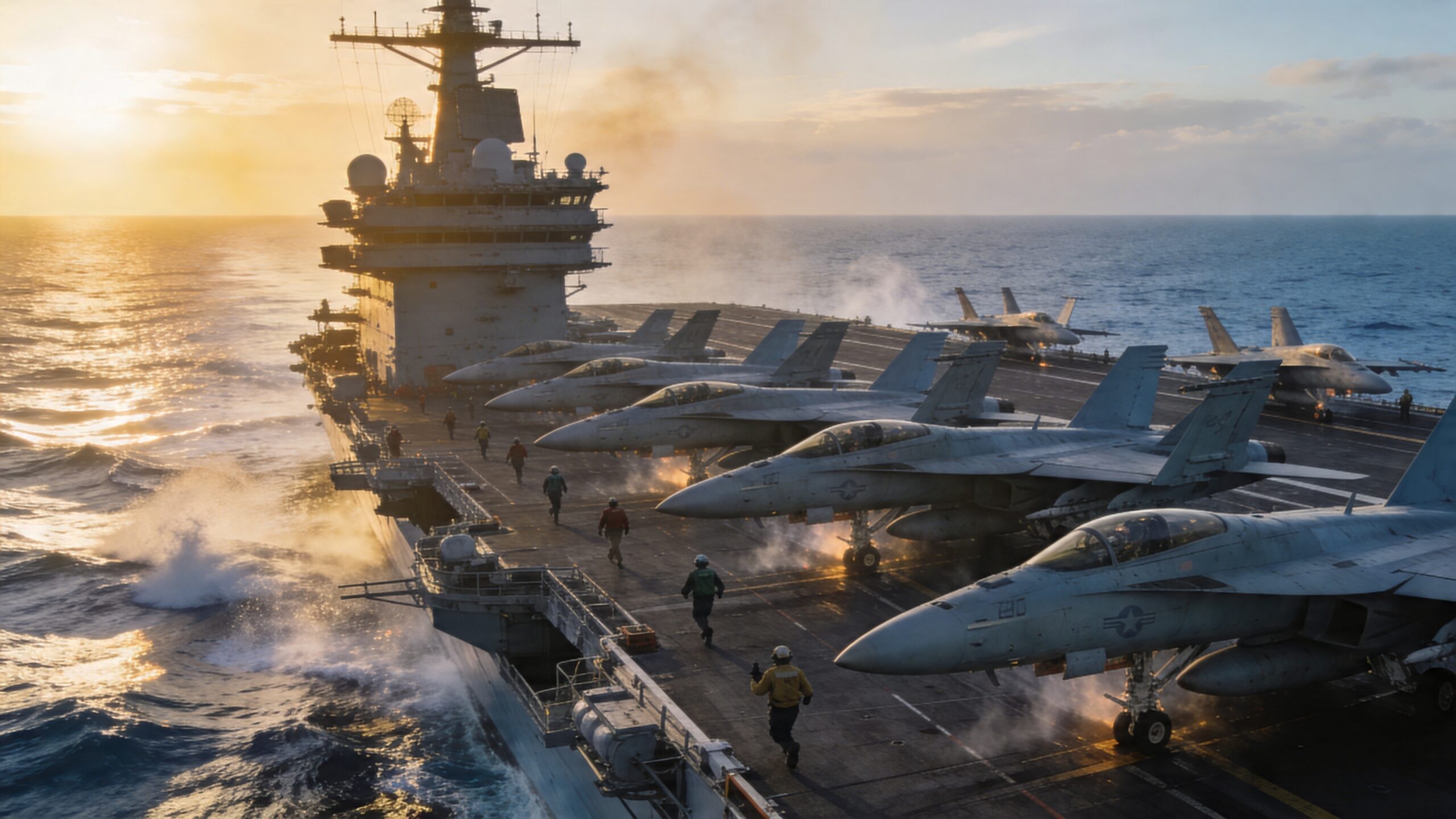
At a fundamental level, an aircraft carrier functions as a floating airport. Its expansive flight deck is designed to handle takeoffs and landings in a confined space, often under challenging sea conditions. Specialized systems such as catapults and arresting wires make this possible, allowing jets to launch and recover safely. Below the deck lies a vast internal structure housing hangars, maintenance areas, fuel storage, and living quarters. Aircraft are moved between these spaces using powerful elevators, ensuring a continuous cycle of launch, recovery, refueling, and rearming. This constant motion keeps the carrier’s air wing operational around the clock.
Launching and Recovering Aircraft at Sea
One of the most remarkable aspects of carrier operations is the ability to launch and recover aircraft in the middle of the ocean. Catapult systems accelerate jets to takeoff speed in just a few seconds, overcoming the limited runway length. Meanwhile, landing requires pilots to catch a series of arresting wires using a tailhook, bringing the aircraft to a stop almost instantly.
These operations demand extraordinary precision and coordination. Pilots must account for wind, ship movement, and limited landing space, while deck crews manage the choreography of aircraft movements. Every launch and recovery is a carefully executed operation where timing and communication are critical.
The Role of the Carrier Air Wing
The true power of an aircraft carrier lies in its air wing, a collection of aircraft tailored for multiple missions. Fighter jets provide air superiority and strike capabilities, while early warning aircraft extend radar coverage far beyond the ship. Helicopters handle search-and-rescue missions, anti-submarine warfare, and logistical support. This combination allows carriers to operate as self-contained air forces. They can conduct surveillance, enforce no-fly zones, deliver precision strikes, and defend against incoming threats. The versatility of the air wing makes the carrier a central tool in both offensive and defensive operations.
Carrier Strike Groups: Power in Formation
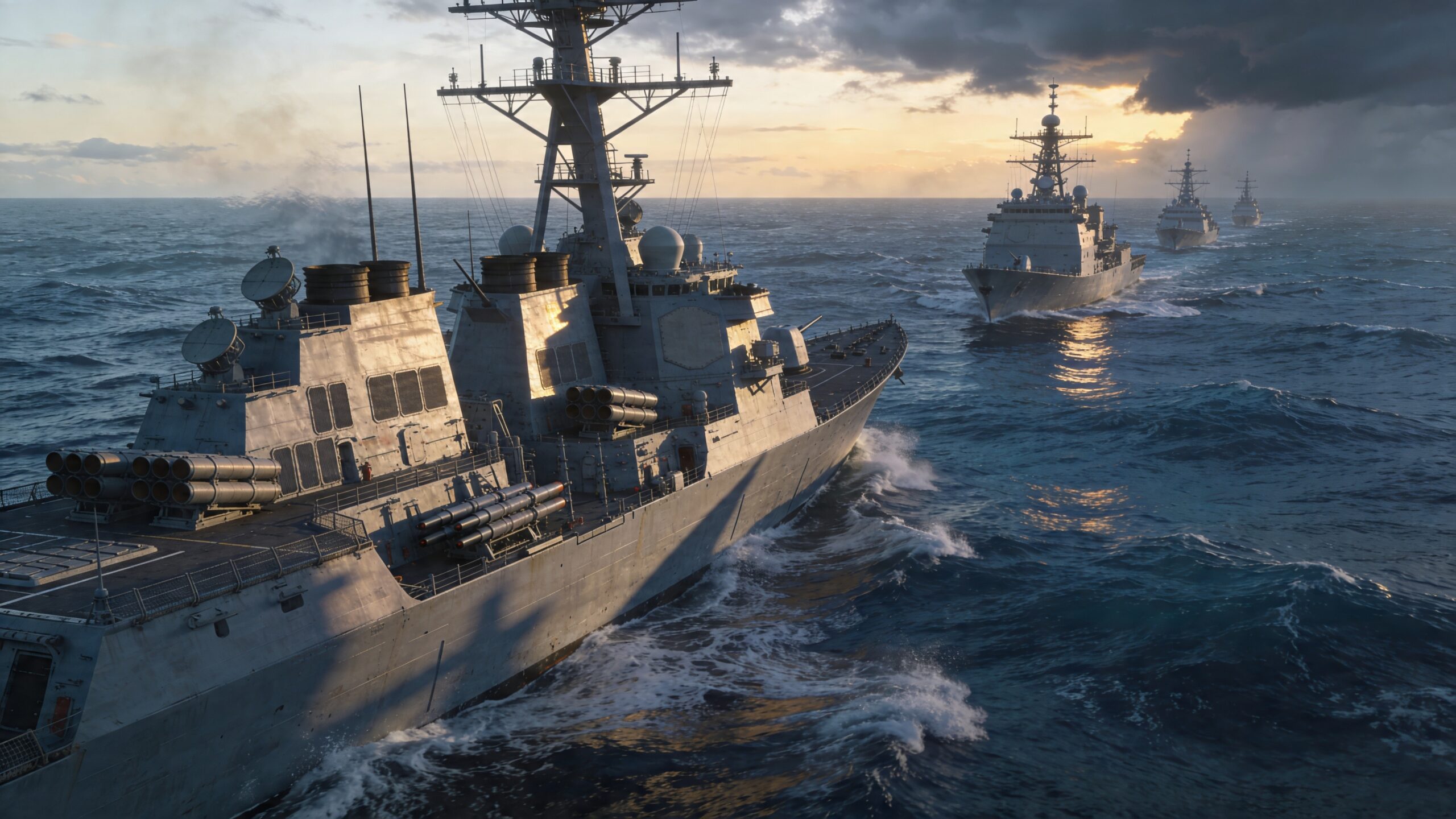
Aircraft carriers rarely operate alone. Instead, they are the centerpiece of a carrier strike group, a formation that includes destroyers, cruisers, submarines, and supply ships. Each vessel plays a specific role, from missile defense to anti-submarine protection.
This layered defense system ensures the carrier remains protected while projecting power outward. Destroyers and cruisers intercept incoming threats, submarines patrol unseen beneath the surface, and support ships provide fuel and supplies. Together, they create a mobile fortress capable of sustained operations in hostile environments.
Nuclear Propulsion and Global Reach
Many modern aircraft carriers are powered by nuclear reactors, allowing them to operate for years without refueling. This capability dramatically extends their range and endurance, enabling continuous deployment across the globe. Nuclear propulsion also supports the immense energy demands of carrier operations. From powering catapults to running advanced radar systems, the ship requires vast amounts of energy. This self-sufficiency makes carriers uniquely capable of long-term missions far from logistical support.
Advanced Technology on Modern Carriers
Today’s aircraft carriers are equipped with cutting-edge technology that enhances their effectiveness on the battlefield. Advanced radar systems provide early detection of threats, while electronic warfare systems disrupt enemy communications and targeting.
Automation and digital systems streamline operations, allowing crews to manage complex tasks with greater efficiency. Modern carriers are also increasingly integrated into network-centric warfare, sharing data with satellites, aircraft, and other ships to create a comprehensive picture of the battlefield.
Why Aircraft Carriers Dominate the Battlefield
Aircraft carriers dominate because they combine mobility, versatility, and firepower in a single platform. They can respond quickly to emerging threats, operate independently or as part of a larger force, and deliver a wide range of capabilities. Their ability to project air power without relying on foreign bases gives them a strategic advantage. In regions where access to land bases is limited or politically sensitive, carriers provide an immediate and flexible solution. This independence makes them invaluable tools for global military operations.
Challenges and Vulnerabilities
Despite their power, aircraft carriers are not invincible. They face threats from advanced missiles, submarines, and emerging technologies such as hypersonic weapons. Protecting these massive ships requires constant vigilance and a robust support network.
The cost of building and maintaining carriers is also significant. These ships require thousands of personnel and extensive resources to operate effectively. As warfare evolves, navies must continuously adapt their strategies to ensure carriers remain relevant and protected.
The Future of Aircraft Carriers
The future of aircraft carriers is shaped by technological innovation and changing warfare dynamics. Unmanned aircraft, artificial intelligence, and advanced defense systems are expected to play increasingly important roles. These developments will enhance the carrier’s capabilities while addressing emerging threats. At the same time, debates continue over the role of carriers in modern warfare. Some argue that new technologies may reduce their dominance, while others believe they will remain essential for decades to come. Regardless of these debates, carriers continue to evolve, adapting to meet the challenges of a rapidly changing world.
The Ultimate Symbol of Naval Power
Aircraft carriers represent the pinnacle of naval engineering and strategic capability. They are more than just warships; they are floating embodiments of national power, capable of influencing events across the globe. Their ability to project force, provide security, and respond to crises ensures their continued importance in modern warfare.
As technology advances and global dynamics shift, aircraft carriers will remain at the forefront of naval operations. Their dominance of the ocean battlefield is not just a product of their size or strength, but of their unmatched ability to bring air power to any corner of the world.