The Battlefield Has Entered the Algorithm Age
Modern warfare in 2026 is no longer defined only by tanks, fighter jets, warships, and troop formations. It is increasingly shaped by algorithms, machine learning, autonomous systems, and real-time data fusion. Artificial intelligence has moved from the margins of defense research into the center of military planning, execution, and strategy. What once seemed futuristic now influences how armed forces detect threats, interpret intelligence, allocate resources, defend networks, and conduct operations across land, sea, air, space, and cyberspace. This transformation is not just technical. It is strategic, political, and deeply human. AI is revolutionizing modern warfare because it changes the pace of conflict, expands the reach of surveillance, improves the precision of military action, and alters how decisions are made under pressure. In 2026, military power is increasingly measured not only by firepower and troop strength, but by a nation’s ability to collect data, train intelligent systems, and deploy AI faster and more effectively than its rivals. The result is a new era of warfare where speed, adaptability, and information dominance matter as much as traditional force. Nations that master AI are gaining an operational edge. Those that fall behind risk being outmaneuvered before they can even respond.
A: It means using artificial intelligence to enhance defense decisions, surveillance, targeting, logistics, and cyber operations.
A: Not entirely; AI is mainly augmenting human forces and taking over selected high-risk or repetitive tasks.
A: They are systems that can identify, track, or engage targets with varying degrees of independence.
A: It processes vast data quickly, improves speed, boosts precision, and supports better situational awareness.
A: Key risks include bias, misidentification, cyber attacks, escalation, and reduced human control.
A: Yes, it can detect intrusions, flag abnormal behavior, and automate rapid responses.
A: Yes, it helps forecast demand, optimize routes, and maintain equipment more efficiently.
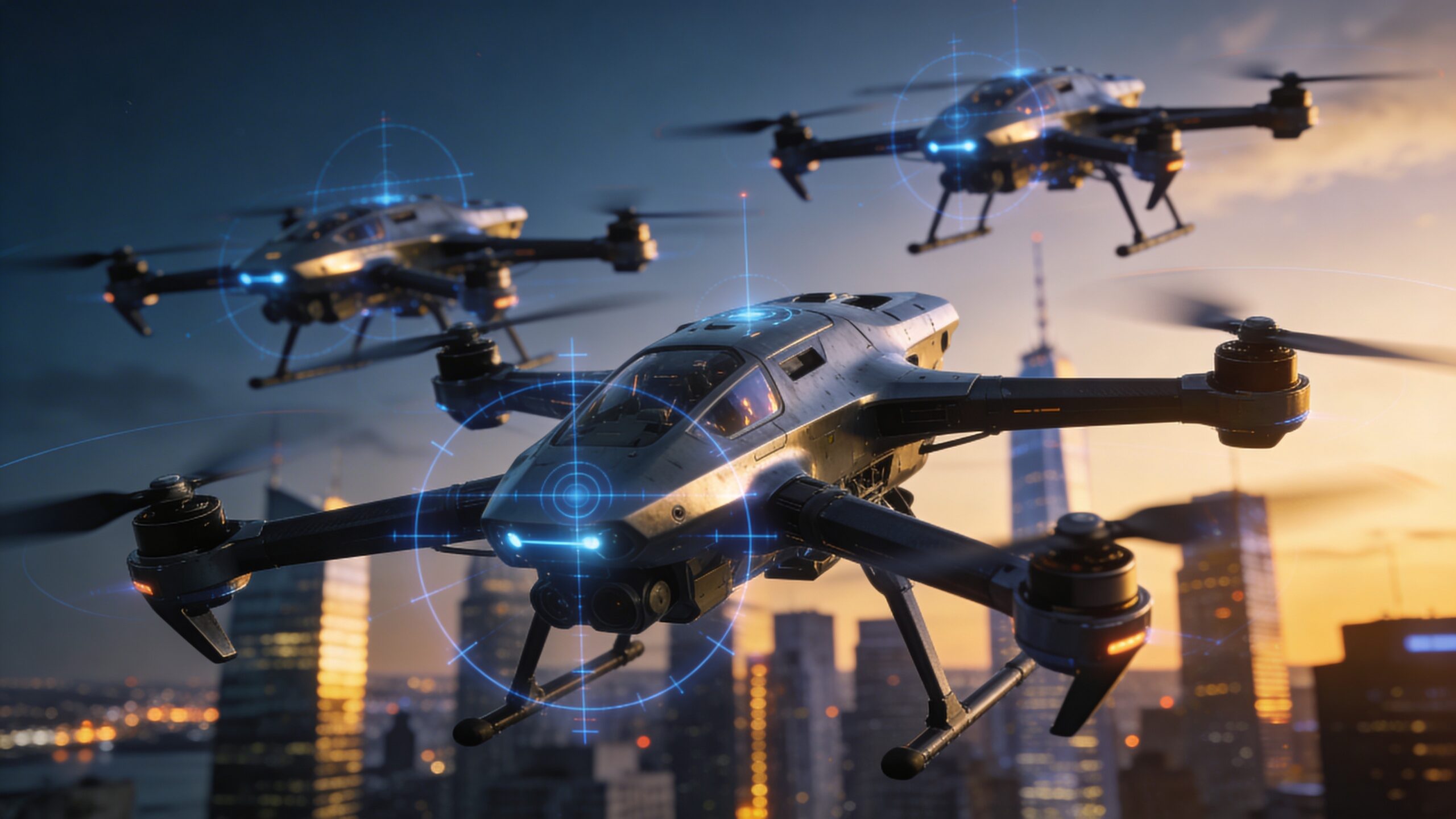
A: Yes, coordinated swarms are one of the most visible and disruptive AI-enabled military developments.
A: Human judgment is essential for ethics, accountability, and reducing unintended escalation.
A: The balance between autonomy, control, speed, and strategic restraint will define the next era.
From Human-Led Combat to Human-Machine Teaming
One of the most important developments in modern warfare is the rise of human-machine teaming. AI is not simply replacing people; it is changing how people fight, command, and make decisions. Military commanders are increasingly supported by software that can process satellite feeds, drone footage, electronic signals, terrain data, and logistics reports in real time. Instead of drowning in information, leaders can receive prioritized insights, predicted outcomes, and recommended courses of action in seconds.
This shift matters because modern battlefields are saturated with data. A human analyst alone cannot keep up with the speed and volume of incoming information. AI can. It can flag anomalies, identify movement patterns, detect probable threats, and generate tactical assessments faster than a traditional command structure ever could. That acceleration gives militaries a decisive advantage, especially in environments where seconds matter.
At the same time, human judgment remains essential. Commanders still define objectives, weigh political consequences, and apply ethical reasoning. AI is most powerful not when it acts alone, but when it enhances the capabilities of trained professionals. In 2026, the most effective armed forces are not those that remove humans entirely, but those that successfully combine machine speed with human judgment.
Autonomous Systems Are Changing the Shape of Combat
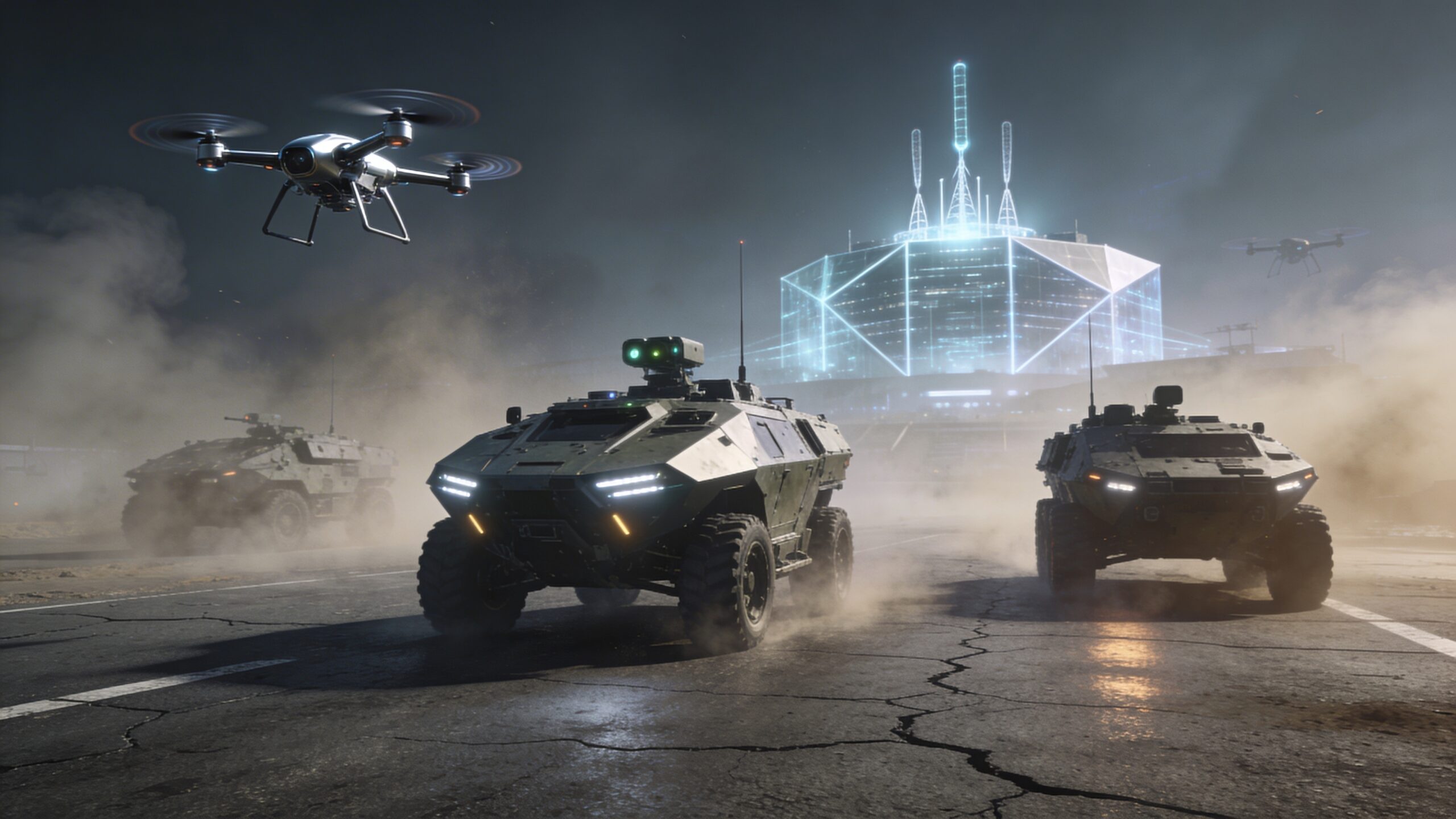
Autonomous systems are among the most visible signs of how AI is transforming warfare. Drone swarms, robotic ground vehicles, unmanned surface vessels, and smart reconnaissance platforms are changing the geometry of conflict. These systems can scout dangerous areas, track hostile movement, conduct surveillance, and in some cases support or carry out strikes with limited direct input.
The strategic appeal is obvious. Autonomous systems reduce risk to personnel, extend operational reach, and can remain active far longer than human crews. A swarm of AI-enabled drones can saturate defenses, confuse radar systems, and pressure adversaries in ways that conventional platforms cannot. Robotic vehicles can move supplies through contested zones where ambushes or artillery threats would make manned convoys extremely vulnerable. Unmanned maritime systems can patrol coastlines, detect mines, and monitor shipping lanes with persistence and efficiency. In 2026, the key advantage of these systems is not just autonomy itself. It is adaptive autonomy. AI allows these platforms to react to changing conditions, re-route around threats, coordinate with other assets, and perform with greater resilience when communications are jammed or degraded. That makes them especially valuable in contested environments, where traditional command links may be unreliable.
AI Is Compressing the Speed of War
If there is one phrase that defines AI in modern warfare, it is decision advantage. Warfare has always rewarded the side that can observe, orient, decide, and act faster than the enemy. AI drastically compresses that cycle. It transforms sensor data into actionable intelligence at remarkable speed, enabling armed forces to detect threats, classify targets, predict likely enemy behavior, and initiate responses with minimal delay.
In past conflicts, valuable time was often lost as information moved through multiple layers of command. In 2026, AI systems can instantly fuse inputs from drones, satellites, ground sensors, communications intercepts, and radar platforms. This creates a more complete operational picture and allows units to respond much more quickly.
That speed can be decisive in missile defense, air defense, naval engagements, and cyber warfare. It can also be destabilizing. When the pace of conflict accelerates, the time available for human reflection shrinks. A system that acts quickly may save lives in one scenario and trigger escalation in another. That is why AI is not simply making war faster; it is changing the risk profile of conflict itself.
Battlefield Intelligence Has Become Predictive
Military intelligence in 2026 is no longer only about seeing what is happening now. With AI, it is increasingly about anticipating what is likely to happen next. Predictive analytics has become one of the most powerful tools in defense. By analyzing historical patterns, live feeds, logistical activity, weather conditions, communications behavior, and movement trends, AI can estimate probable enemy actions before they fully unfold.
This predictive capability is transforming modern warfare. It helps commanders move forces earlier, strengthen vulnerable areas, pre-position supplies, and avoid surprises. It also improves strategic planning by revealing hidden patterns in large and complex datasets. A buildup of logistics traffic, a shift in digital communications, or a subtle change in drone behavior may all signal an impending operation. AI can detect those patterns long before human teams would see the full picture. Predictive intelligence is especially important in a world where conflicts can emerge quickly and spread across domains. It enhances deterrence, because awareness itself can shape adversary calculations. When a military knows more, sooner, it can act with greater confidence and less guesswork.
Cyber Warfare Has Become an AI Battleground
Modern warfare in 2026 is fought not only with physical platforms but with digital attacks that target infrastructure, communications, logistics, and command networks. AI is now central to cyber defense and increasingly influential in cyber offense. Defensive systems use machine learning to monitor networks, detect unusual behavior, identify probable intrusions, and launch rapid containment measures. Instead of waiting for analysts to manually recognize a breach, AI can isolate suspicious activity in near real time.
This matters because cyber conflict moves at machine speed. A human-only response is often too slow. AI helps close that gap. It can analyze patterns across enormous volumes of traffic, distinguish false alarms from real threats, and strengthen the resilience of critical defense systems.
At the same time, adversaries can also use AI to automate reconnaissance, exploit vulnerabilities, and tailor malicious operations more effectively. This creates a constant contest between offensive and defensive intelligence. In this environment, superiority depends not only on stronger firewalls or bigger budgets, but on who can learn, adapt, and respond faster. Cyber warfare has become one of the clearest examples of how AI is revolutionizing military competition.
Logistics and Maintenance Are Becoming Smarter
Public discussion often focuses on autonomous weapons and drone swarms, but one of the most powerful military applications of AI in 2026 is less dramatic and equally important: logistics. Armies do not operate on courage alone. They run on fuel, ammunition, spare parts, transport, communications, and maintenance. AI is transforming this backbone of military power.
Machine learning systems can predict equipment failures before they happen, allowing crews to repair aircraft, ships, and vehicles before breakdowns disrupt missions. Supply chains can be optimized through real-time analysis of demand, distance, threat conditions, and weather. Convoy routes can be re-planned on the fly to reduce exposure to ambushes or bottlenecks. Warehousing, refueling, and distribution are becoming more efficient, more responsive, and more resilient. In prolonged or high-intensity conflict, these gains matter enormously. A force that can sustain itself better is often more effective than one with more advanced weapons but weaker support. AI is helping militaries become faster not only in battle, but in preparation, repair, and endurance.
The Ethics of AI Warfare Are Getting Harder to Ignore
As AI becomes more deeply woven into military operations, ethical questions are becoming impossible to avoid. Who is accountable when an autonomous system makes a catastrophic mistake? How much authority should a machine have in selecting or engaging targets? Can speed and efficiency ever justify reducing human control over lethal force?
These are not abstract questions. They sit at the center of defense policy in 2026. AI promises precision, persistence, and reduced risk to troops, but it also raises the possibility of misidentification, software bias, accidental escalation, and blurred responsibility. A machine may act according to code, but warfare unfolds in morally ambiguous environments where context matters.
The challenge is not just technical. It is legal and political. International rules are still struggling to keep pace with emerging autonomy. Some defense planners argue that meaningful human control must remain central to any lethal decision. Others believe greater autonomy is unavoidable in high-speed conflict. The debate is likely to intensify as systems become more capable and more widely deployed.
Global Security Is Being Rewritten by AI Competition
AI is not changing warfare in isolation. It is reshaping global security competition. Nations now view artificial intelligence as a strategic resource, much like nuclear capability, industrial power, or cyber infrastructure. Investments in military AI are tied to broader concerns about deterrence, influence, readiness, and technological independence.
This competition is accelerating innovation, but it is also increasing instability. When rivals believe they are falling behind in AI, they may feel pressure to deploy systems quickly, sometimes before doctrines, safeguards, or verification standards are mature. That creates risks. A faster arms race can produce more capable systems, but also more uncertainty and less room for restraint. Smaller states and non-state actors also complicate the picture. Commercial AI tools, cheap drone hardware, and widely available software lower the barrier to entry. This means powerful capabilities are no longer limited to a handful of major militaries. The democratization of advanced tools is making the global security environment more crowded, more unpredictable, and potentially more dangerous.
What Modern Warfare Will Look Like Next
The future of warfare after 2026 will not be defined by a single platform or breakthrough. It will be shaped by integration. The most successful military forces will be those that connect intelligence, autonomy, cyber defense, logistics, and command systems into a coherent whole. AI will be the connective tissue that links these functions together.
Future battlefields will likely feature constant sensing, automated analysis, adaptive platforms, and highly distributed operations. Human operators will remain central, but they will increasingly work alongside systems that can learn, recommend, and act. Victory may depend less on who has the most hardware and more on who can create the smartest, fastest, and most resilient network of people and machines.
That shift will demand new training, new legal standards, and new concepts of strategic stability. It will also require humility. AI can amplify human capability, but it can also amplify human error when systems are trusted too quickly or deployed without sufficient oversight.
The Revolution Is Already Here
AI is revolutionizing modern warfare in 2026 not as a distant possibility, but as a present reality. It is changing how militaries see, decide, move, defend, and fight. It is making operations faster, intelligence sharper, logistics smarter, and autonomy more central to the conduct of war. It is also raising urgent questions about ethics, control, accountability, and escalation. The real significance of this transformation lies in its scale. AI is not one more tool in the arsenal. It is becoming an organizing force across the entire defense ecosystem. Nations that adapt well may gain a profound strategic edge. Those that ignore the shift may find themselves outpaced in the most critical moments.
Modern warfare in 2026 is being rewritten by artificial intelligence. The algorithms are already in the loop, the systems are already deployed, and the consequences are already unfolding. The central question now is not whether AI will shape the future of war. It is how wisely the world will manage that power.