Power Above the Battlefield
An air force is one of the most visible and technologically advanced branches of a nation’s military. To many people, the phrase immediately brings to mind fighter jets roaring across the sky, pilots in flight helmets, and aircraft lifting off from long runways under the pressure of a national crisis. But an air force is much more than combat aircraft. It is a complete military system built to control the skies, defend national territory, support troops on the ground and at sea, gather intelligence, move people and equipment, and strike threats with speed and precision. In modern defense strategy, air power is often the first signal of military readiness. Aircraft can arrive faster than ships, cover more territory than ground units, and respond to threats before they reach a nation’s borders. An air force gives leaders options. It can deter aggression without firing a shot, deliver humanitarian aid after disasters, protect allies, evacuate civilians, monitor hostile movements, and conduct combat operations across vast distances. When a crisis begins, the air force is frequently among the first forces placed on alert. Understanding what an air force does requires looking beyond the aircraft themselves. Pilots may capture the spotlight, but air power depends on engineers, radar operators, intelligence analysts, cyber specialists, air traffic controllers, maintenance crews, logisticians, medics, security forces, and commanders who connect every mission into a larger defense plan. The result is a branch built around speed, reach, technology, and precision.
A: Its main purpose is to defend national airspace, control the skies, and support military operations from the air.
A: No. It includes bombers, tankers, transports, drones, helicopters, surveillance aircraft, bases, crews, and command systems.
A: Air superiority means friendly forces can operate in the air while enemy air threats are limited or controlled.
A: It provides close air support, reconnaissance, transport, medical evacuation, resupply, and battlefield awareness.
A: Tankers refuel aircraft in flight, allowing missions to travel farther and remain airborne longer.
A: Drones can conduct surveillance, relay communications, identify targets, and sometimes perform strike missions.
A: Bases provide runways, fuel, weapons storage, maintenance facilities, command centers, and personnel support.
A: Strategic air power is the use of aircraft and missiles to affect major enemy capabilities, infrastructure, or decision-making.
A: Yes. They patrol airspace, train, deter threats, deliver aid, evacuate civilians, and support allies.
A: A powerful air force combines advanced aircraft, skilled personnel, strong logistics, secure networks, and high readiness.
What Is an Air Force?
An air force is the military branch responsible for conducting operations in the air and, increasingly, across space, cyberspace, and networked battle systems. Its core purpose is to protect a nation’s airspace, gain control of the skies during conflict, and use aircraft and advanced systems to support national security objectives. While every country organizes its military differently, the air force usually focuses on aircraft operations, air defense, strategic strike, reconnaissance, transport, and command-and-control missions.
At its simplest level, an air force exists to make sure friendly forces can use the sky while denying that same advantage to an enemy. This concept is called air superiority. Without it, ground troops, naval forces, bases, supply lines, and cities can become vulnerable to attack from above. With it, a military gains freedom of movement, stronger battlefield awareness, and the ability to strike targets at great range.
Modern air forces operate far beyond traditional dogfights. They manage surveillance networks, operate satellites or space-linked systems, fly drones, coordinate missile defense, provide emergency rescue, transport troops, refuel aircraft in flight, and support joint operations with armies, navies, marines, coast guards, and allied forces. They are not simply a collection of aircraft. They are a national instrument of military power.
The Core Role of an Air Force
The central role of an air force is to defend the nation by controlling and using the air domain. Airspace is a strategic environment. Whoever controls it can observe more, move faster, and strike deeper. This is why air forces are designed around rapid reaction. When an unknown aircraft approaches a border, fighter jets may be launched to identify and intercept it. When a hostile missile threat emerges, air defense systems and airborne sensors may be activated. When conflict begins, aircraft may be tasked to suppress enemy defenses, protect friendly forces, and prevent hostile aircraft from gaining the advantage. Air forces also extend national influence. A country with long-range aircraft, tanker support, and overseas access can respond far from home. This ability is known as power projection. It allows a government to reassure allies, deter rivals, and participate in international security operations. Even when combat is not taking place, the presence of air force assets can send a powerful message.
Another major role is support. Ground forces often rely on aircraft for close air support, intelligence, transport, medical evacuation, and emergency resupply. Naval forces benefit from maritime patrol aircraft, airborne surveillance, and long-range strike capability. Special operations units depend on precise aviation support to insert, extract, and protect teams in dangerous environments. In this sense, the air force acts as both an independent combat branch and a force multiplier for the entire military.
Air Defense and Protection of National Airspace
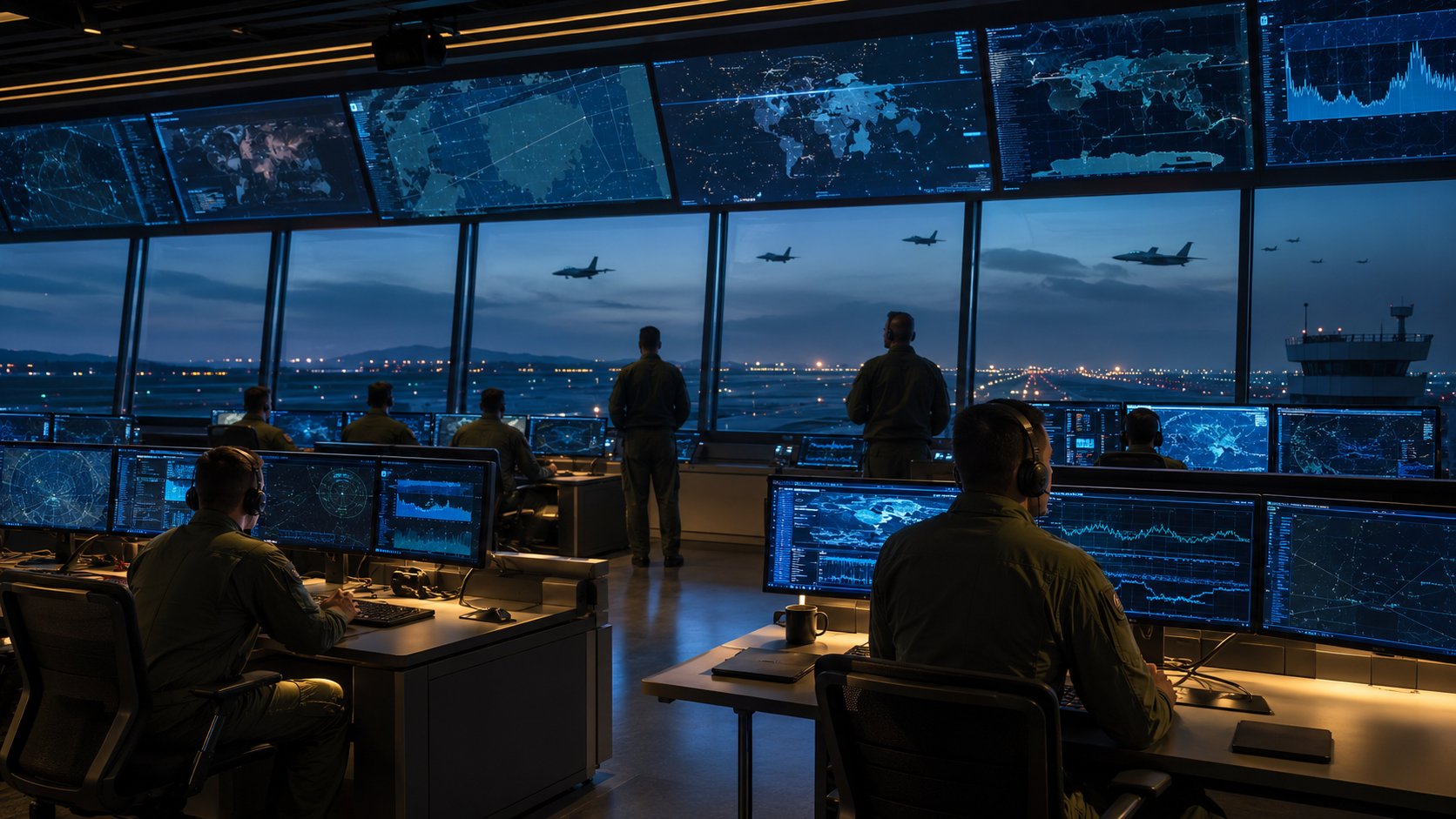
One of the most important missions of an air force is air defense. A nation’s airspace must be monitored continuously for possible threats, including hostile aircraft, drones, cruise missiles, and other airborne systems. Air defense is not just about fighter jets waiting on runways. It includes radar stations, command centers, communications networks, missile batteries, early warning aircraft, and trained personnel who can identify and respond to suspicious activity.
When an aircraft violates protected airspace or approaches without proper identification, air force units may scramble interceptors. These aircraft can visually identify the target, escort it away, or, in extreme circumstances, prepare for combat. This mission requires speed, discipline, and clear rules of engagement. The goal is to protect national sovereignty while avoiding unnecessary escalation.
Modern air defense has become more complex because threats now include small drones, low-flying cruise missiles, hypersonic weapons, and electronic attacks designed to confuse sensors. Air forces must therefore integrate traditional aviation with advanced radar, cyber defense, electronic warfare, and missile defense systems. The sky is no longer protected by aircraft alone. It is defended by a layered network.
Combat Missions and Air Superiority
In wartime, one of the first objectives of an air force is often to win air superiority. This means reducing or eliminating the enemy’s ability to use aircraft and air defense systems effectively. Air superiority does not always mean total control of every inch of sky at every moment. It means friendly forces can operate with acceptable risk while the enemy faces major restrictions.
Fighter aircraft play a major role in this mission. They can intercept enemy aircraft, escort bombers, protect transport planes, and patrol contested airspace. But fighters are only part of the equation. Electronic warfare aircraft may jam enemy radar. Intelligence aircraft may identify hostile missile sites. Strike aircraft may attack runways, command centers, and air defense systems. Tankers may keep aircraft in the air longer. Command-and-control platforms may coordinate the entire operation. Once air superiority is achieved, other military operations become easier. Ground forces can move with less fear of enemy air attack. Ships can operate with better protection. Supply routes become safer. Strategic targets can be reached more effectively. This is why air superiority is often described as a gateway mission. It opens the door for everything else.
Strategic Strike and Deterrence
Air forces also provide strategic strike capability. Strategic strike refers to the ability to attack high-value targets that can affect the enemy’s ability or willingness to continue fighting. These targets may include command centers, military infrastructure, weapons facilities, logistics hubs, air bases, and communication networks. Strategic strike is not just about destruction. It is about shaping the enemy’s decisions.
Bombers, stealth aircraft, long-range missiles, and precision-guided weapons have transformed this mission. Modern air forces can strike with greater accuracy than in previous eras, reducing the need for large formations of aircraft and allowing commanders to focus on specific objectives. Precision has become a defining feature of modern air power.
Deterrence is closely connected to strategic strike. A capable air force can discourage aggression by making the cost of attack too high. Potential adversaries must consider whether they can survive or withstand a rapid air response. In some countries, the air force also plays a role in nuclear deterrence, operating bombers or supporting systems that form part of a broader strategic defense posture.
Intelligence, Surveillance, and Reconnaissance
Not every air force mission involves weapons. Some of the most important missions involve information. Intelligence, surveillance, and reconnaissance, often called ISR, allow military leaders to understand what is happening before making decisions. Aircraft, drones, satellites, and sensors can monitor borders, track enemy movements, map terrain, detect missile launches, and observe activity in remote areas. ISR missions are essential because modern warfare moves quickly. Commanders need accurate information in near real time. A fighter pilot needs to know where threats are located. A ground commander needs to understand enemy positions. A national leader needs reliable intelligence before responding to a crisis. Air forces help provide that awareness.
Drones have greatly expanded ISR capabilities. They can remain airborne for long periods, watch specific areas, and transmit video or sensor data to analysts and commanders. Manned aircraft still play a major role, especially for missions requiring large sensors, complex crews, or operations in difficult environments. Together, these systems make the air force one of the most important sources of military intelligence.
Air Mobility: Moving Forces at Speed
Air mobility is one of the most practical and powerful functions of an air force. Military transport aircraft can move troops, vehicles, supplies, medical teams, and equipment across a country or around the world. During war, airlift can sustain forces in remote areas. During disasters, it can deliver food, water, shelters, generators, and rescue teams when roads or ports are damaged.
Airlift gives governments speed. A ship may carry more cargo, but an aircraft can arrive much faster. This matters when civilians need evacuation, allies need immediate support, or troops must deploy quickly. Transport aircraft are often the unsung workhorses of an air force. They may not have the glamour of fighter jets, but they are essential to national readiness.
Aerial refueling adds another layer of mobility. Tanker aircraft allow fighters, bombers, surveillance aircraft, and transports to stay airborne longer and travel farther. Without tankers, many long-range missions would require more stops, more bases, and more time. With tankers, an air force can project power across oceans and continents.
Close Air Support and Help for Ground Forces
Close air support is one of the most demanding air force missions because it requires aircraft to support friendly troops near enemy forces. The goal is to attack hostile positions, vehicles, or threats that are endangering ground units. This mission requires careful coordination to avoid friendly fire and to deliver effects at the right moment. Close air support can be provided by fighter aircraft, attack aircraft, bombers, drones, and helicopters depending on the country and situation. Pilots and ground controllers must communicate clearly, identify targets, understand friendly positions, and adjust to changing battlefield conditions. Weather, terrain, enemy air defenses, and civilian presence can all complicate the mission.
For soldiers on the ground, the arrival of friendly aircraft can be decisive. It can break an enemy attack, protect a convoy, destroy a fortified position, or give friendly forces time to maneuver. This is one reason air forces are deeply integrated into joint operations. Air power is not separate from the battlefield. It is part of the battlefield.
Special Operations, Rescue, and Humanitarian Missions
Air forces often maintain specialized units for missions that require exceptional training and precision. Air force special operations may include infiltration and extraction of special operations teams, low-level night flying, rescue missions, psychological operations support, and precision aviation in hostile environments. These missions are complex because they often happen far from secure bases and under strict time pressure.
Combat search and rescue is another critical mission. When pilots, troops, or civilians are isolated in dangerous territory, air force rescue teams may be sent to recover them. These missions combine aircraft, pararescue specialists, intelligence support, and command coordination. They demand courage and technical skill because rescue crews may fly into contested or unstable areas to bring people home.
Air forces also play a major role in humanitarian assistance. After earthquakes, floods, fires, storms, and conflicts, airlift and rescue aircraft can reach areas cut off from normal transportation. Medical evacuation aircraft can move injured people to care. Helicopters can rescue civilians from isolated locations. In these moments, the air force becomes a lifeline.
Aircraft and Systems That Define Air Power
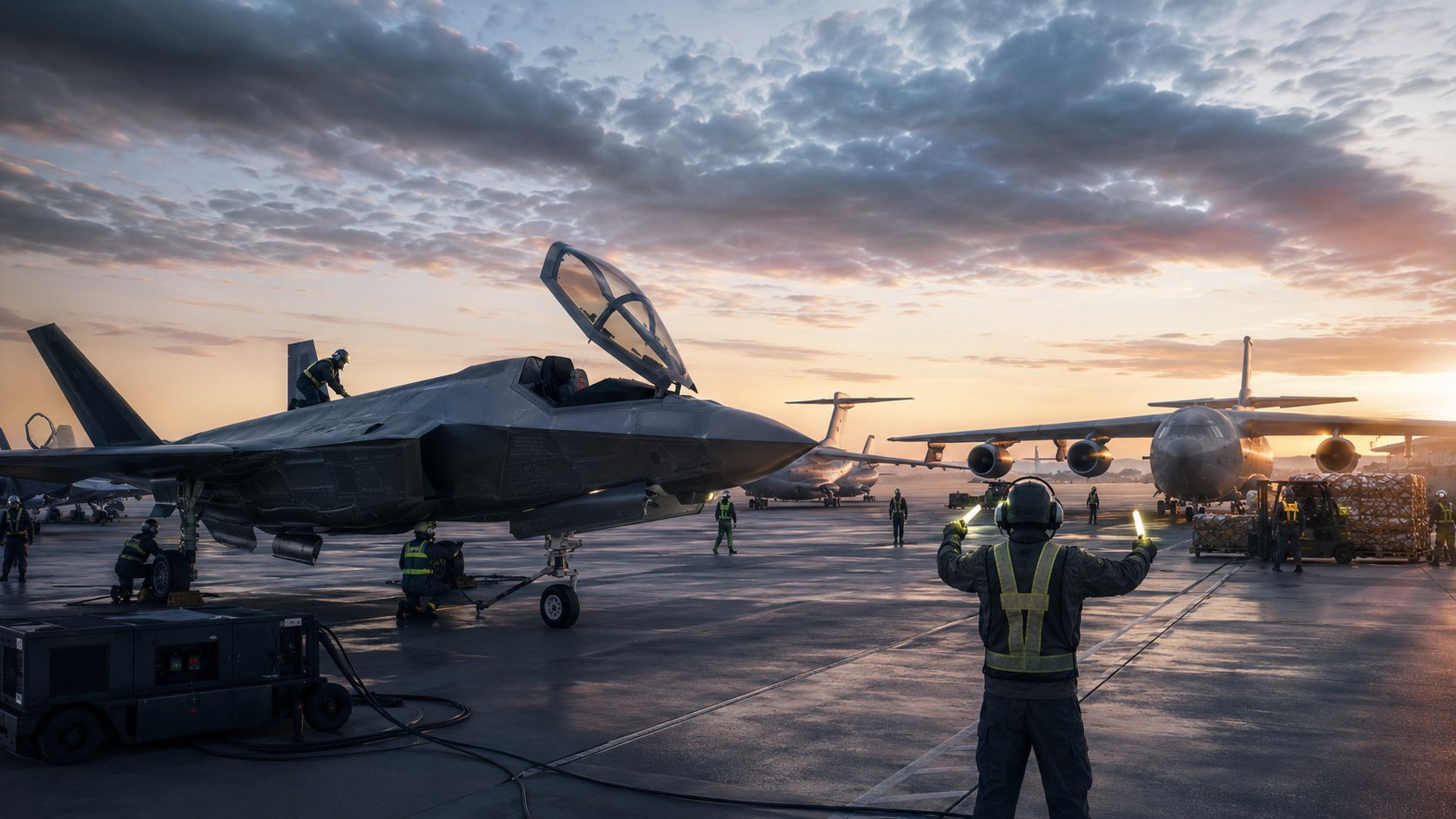
An air force is built around many types of aircraft and systems, each designed for a specific purpose. Fighter jets protect airspace and engage enemy aircraft. Bombers deliver long-range strike capability. Transport aircraft move personnel and cargo. Tankers refuel other aircraft. Surveillance aircraft collect intelligence. Training aircraft prepare new pilots. Helicopters support rescue, transport, and special operations. Drones provide surveillance and, in some cases, strike capability. But aircraft alone do not create air power. Modern air forces depend on networks. Radar systems detect threats. Satellites support navigation and communication. Cyber teams defend digital infrastructure. Maintenance units keep aircraft mission-ready. Weapons specialists prepare munitions. Weather teams analyze conditions. Command centers connect sensors, aircraft, and decision-makers.
The strength of an air force is measured not only by how many aircraft it owns, but by how well it can train people, maintain equipment, integrate technology, and sustain operations under pressure. A smaller, highly trained, well-supported air force may be more effective than a larger force with poor readiness.
Training, Discipline, and the Human Element
Technology is central to air power, but people remain the foundation of every air force. Pilots must master aircraft performance, tactics, navigation, weapons employment, emergency procedures, and teamwork. Maintenance crews must understand complex machines where small errors can have serious consequences. Controllers must manage crowded airspace. Intelligence analysts must turn raw data into useful assessments. Commanders must make decisions quickly with incomplete information.
Training is constant because aviation is unforgiving. Air force personnel must prepare for combat, bad weather, equipment failure, cyber threats, electronic interference, and fast-changing orders. Simulators help crews practice dangerous scenarios without risking aircraft. Live exercises test coordination across units and allied forces. Repetition builds confidence, but discipline keeps missions safe.
The culture of an air force often emphasizes precision, accountability, and readiness. Aircraft must launch on time. Maintenance records must be accurate. Mission plans must be detailed. Communications must be clear. In air operations, seconds matter and mistakes can travel at the speed of sound.
Air Forces in the Modern Battlespace
Modern air forces operate in a battlespace that is more connected and contested than ever before. Enemy radar, surface-to-air missiles, drones, cyberattacks, electronic jamming, and anti-satellite threats can all challenge air operations. The old assumption that advanced aircraft can operate freely is no longer guaranteed. Air forces must now fight for access.
Stealth technology, electronic warfare, long-range weapons, artificial intelligence, and unmanned systems are shaping the future. Air forces are also learning to operate with drones as partners, not just tools. In the future, manned aircraft may direct groups of unmanned aircraft that scout, jam, distract, or strike targets. Data will be as important as speed. The force that can collect, process, protect, and act on information fastest will gain a major advantage. Space is also becoming more important. Navigation, missile warning, communications, weather forecasting, and surveillance often depend on space-linked systems. As a result, many air forces are increasingly connected to space operations, either directly or through separate space branches and joint commands.
Why Air Forces Matter to National Power
An air force matters because it gives a nation reach, speed, awareness, and flexibility. It can defend cities, protect borders, support allies, respond to disasters, and strike threats before they grow. It can operate at home or across the globe. It can act alone or as part of a joint military campaign. It can reassure friends and warn enemies.
Air power also carries political weight. Deploying aircraft can signal commitment without deploying large ground formations. Conducting air patrols can show resolve. Sending transport aircraft after a disaster can build goodwill. Participating in allied exercises can strengthen partnerships. In peace and war, air forces are instruments of national influence.
For modern militaries, the air force is not optional. It is a central branch of defense. Without control of the sky, armies and navies face greater risk. Without air mobility, rapid response becomes harder. Without ISR, leaders may act blindly. Without air defense, national airspace becomes vulnerable. The air force connects technology, strategy, and action in a way few institutions can.
The Sky as a Strategic Frontier
An air force is far more than a fleet of aircraft. It is a complex military branch designed to defend airspace, control the skies, gather intelligence, move forces, support troops, conduct precision strikes, rescue people in danger, and project national power. Its missions range from high-speed combat to humanitarian relief, from silent surveillance to strategic deterrence.
In the modern world, military power is measured not only by what happens on land and sea, but by what can be seen, moved, protected, and achieved from the air. Air forces give nations the ability to respond quickly, act decisively, and shape events before threats reach home. As technology advances, the role of air forces will continue to expand across drones, cyber systems, artificial intelligence, and space-connected operations. The air force remains one of the clearest symbols of modern defense: fast, disciplined, technical, and powerful. It is the branch that turns the sky into a shield, a pathway, a sensor network, and, when necessary, a battlefield.