The War Above the War
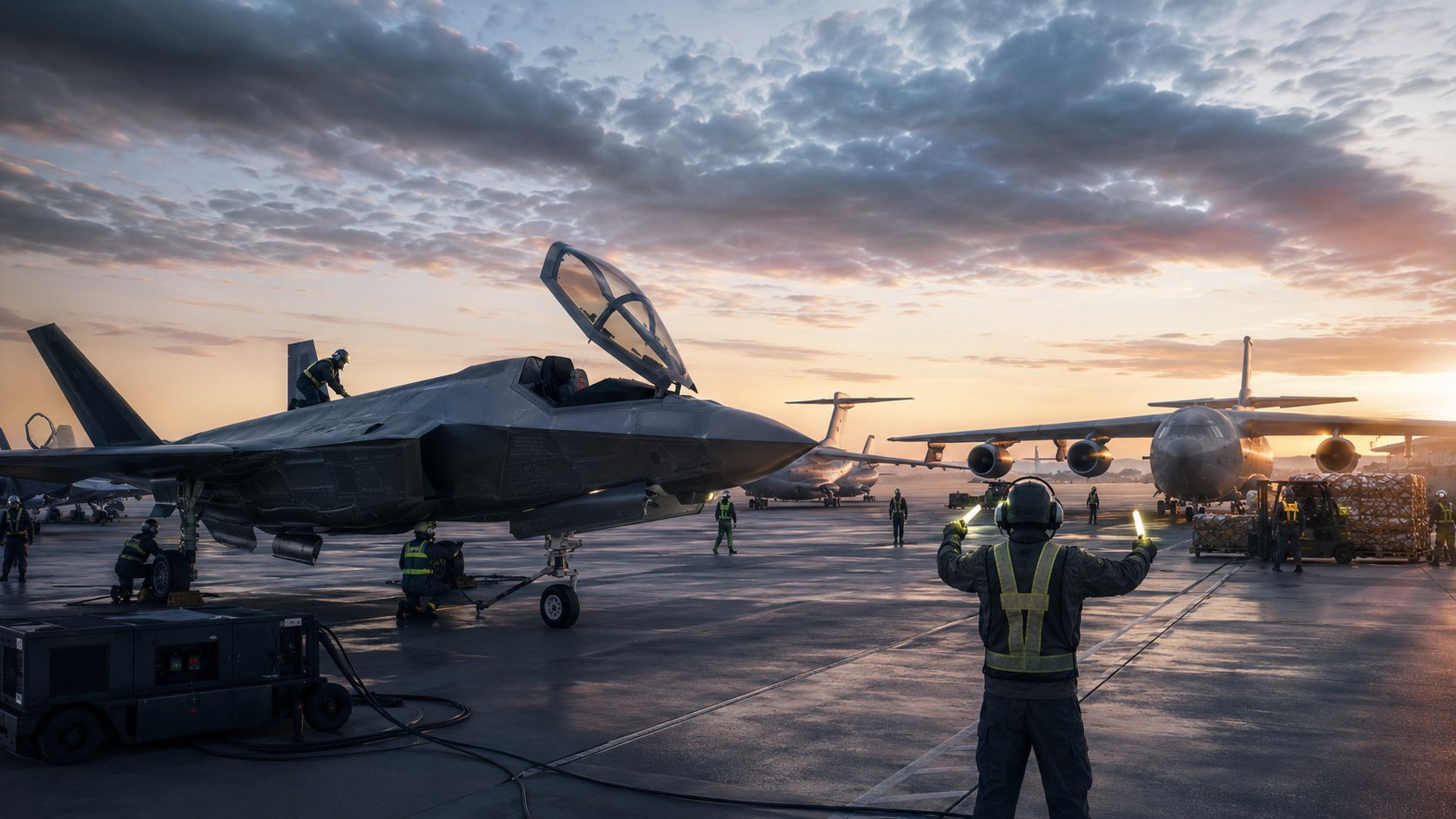
Modern warfare is not fought only on the ground, at sea, or across digital networks. It is shaped from the sky. Long before troops move, ships reposition, or missiles are launched, aircraft may already be watching, mapping, warning, deterring, or preparing the battlefield. The air force has become one of the most important branches of military power because it can see farther, move faster, strike deeper, and respond sooner than almost any other force. Air forces shape modern warfare by controlling access to the air, protecting friendly forces, striking high-value targets, gathering intelligence, transporting people and equipment, and connecting commanders to fast-moving events. In today’s battlespace, aircraft are not just weapons platforms. They are sensors, communication hubs, electronic warfare tools, rescue assets, and strategic signals of national power. The image of a fighter jet streaking across the sky remains powerful, but modern air warfare is much larger than the fighter pilot alone. It includes drones orbiting silently for hours, tankers extending missions across continents, transport aircraft delivering urgent supplies, surveillance platforms tracking threats, satellites guiding navigation, cyber teams defending networks, and command centers coordinating every moving part. The air force turns the sky into a battlefield, a shield, a highway, and an intelligence network all at once.
A: They control airspace, gather intelligence, strike key targets, move forces, protect troops, and connect battlefield operations.
A: It allows friendly forces to operate with less risk while limiting the enemy’s ability to attack from the air.
A: Yes. They defend airspace, escort aircraft, intercept threats, and conduct strike missions.
A: Drones provide persistent surveillance, targeting support, communications relay, and sometimes strike capability without onboard pilots.
A: Precision strike uses guided weapons to attack specific military targets with greater accuracy.
A: It disrupts enemy radar, communications, sensors, and missile guidance to protect friendly operations.
A: Tankers refuel aircraft in flight, extending mission range and endurance.
A: Yes. They deliver aid, evacuate civilians, transport medical teams, and reach areas cut off by damage.
A: Advanced missiles, radar, drones, electronic warfare, cyber threats, and enemy aircraft all make airspace dangerous.
A: The future will likely involve AI, drone teams, hypersonic weapons, stealth systems, cyber defense, and space-linked operations.
Air Power and the Speed of Decision
Speed is one of the defining advantages of air power. Aircraft can cross enormous distances in hours, respond to threats quickly, and give leaders options before a crisis grows out of control. In modern warfare, speed is not just about how fast an aircraft flies. It is about how quickly a military can detect a threat, understand it, decide what to do, and act.
Air forces compress time. A surveillance aircraft can identify movement near a border. A command center can analyze the information. Fighter aircraft can be launched to intercept. Tankers can keep them airborne. Drones can continue watching the area. Within a short period, a nation can shift from uncertainty to action. That ability changes the rhythm of conflict.
This speed affects strategy. An adversary must consider that hostile movement may be detected early and answered rapidly. A military commander must assume that air power can appear suddenly over a battlefield. A political leader can use aircraft deployments as a warning, reassurance, or show of resolve. Air forces shape warfare before the first shot because their presence changes how opponents calculate risk.
Controlling the Sky: The Foundation of Modern Operations
One of the most important ways air forces shape modern warfare is through the pursuit of air superiority. Air superiority means friendly forces can operate in the air with reduced interference from enemy aircraft and air defenses. It does not always mean perfect control of every mile of sky, but it means enough control to conduct operations with confidence. Without air superiority, ground troops face greater danger from enemy aircraft, drones, missiles, and surveillance. Supply lines become easier to attack. Command posts become more vulnerable. Naval forces may face increased pressure from aircraft and long-range weapons. Even the movement of reinforcements can become risky. Air superiority protects the entire military structure beneath it.
Winning control of the sky requires more than fighter jets. Air forces must defeat or suppress enemy aircraft, radar systems, missile batteries, command centers, and electronic warfare threats. This can involve stealth aircraft, precision strikes, jamming, cyber operations, surveillance, and coordinated attacks on air defense networks. The battle for the sky is often a battle against systems, not just individual aircraft. When an air force controls the sky, it gives the rest of the military room to maneuver. Ground forces can advance with better protection. Naval forces can operate with greater freedom. Special operations teams can insert and extract with more confidence. Logistics aircraft can move critical supplies. Air superiority is not a side mission. It is the foundation that makes many other missions possible.
Precision Strike and the Changing Nature of Firepower
Air forces have transformed modern firepower through precision strike. In earlier eras of air warfare, large numbers of aircraft often dropped large numbers of unguided bombs to hit broad target areas. Modern air forces can use precision-guided weapons to strike specific targets such as command posts, radar sites, bridges, weapons depots, armored vehicles, runways, and communication nodes.
Precision changes warfare because it allows commanders to focus force more carefully. A single aircraft can attack a target that once might have required a much larger formation. This does not make war simple or clean, but it does change how military power is applied. The goal is often to paralyze, isolate, or disrupt an enemy rather than simply destroy everything in sight.
Air-delivered precision weapons can shape the battlefield before ground forces arrive. They can break supply chains, damage enemy command networks, neutralize air defenses, and limit an opponent’s ability to coordinate. When used as part of a broader campaign, precision strike can force an enemy to move, hide, disperse, or communicate less effectively. Modern air forces also use long-range weapons that allow aircraft to strike from outside the reach of some defenses. This standoff capability is increasingly important in contested environments where advanced missile systems make it dangerous to fly directly over a target. The combination of precision, range, stealth, and intelligence has made air power one of the most flexible forms of modern military force.
Intelligence from Above: Seeing the Battlefield First
Air forces shape modern warfare by giving commanders the ability to see. Intelligence, surveillance, and reconnaissance missions allow militaries to track enemy forces, monitor borders, locate missile sites, identify moving vehicles, map terrain, observe ports and airfields, and assess damage after strikes. In many conflicts, the side that understands the battlefield first gains a decisive advantage. Aircraft and drones provide a perspective that ground units cannot match. From above, sensors can cover wide areas, detect movement patterns, and monitor locations that are difficult or dangerous to reach. Surveillance aircraft may carry advanced radar, cameras, infrared sensors, signals intelligence equipment, and communication systems. Drones can remain over an area for long periods, feeding information back to analysts and commanders.
This information shapes decisions at every level. A fighter pilot needs threat data. A ground commander needs to know where enemy units are moving. A naval force needs awareness of aircraft, missiles, and ships. National leaders need reliable intelligence before making strategic choices. Air force intelligence connects what is happening on the battlefield to those who must act on it. In modern warfare, seeing first can mean striking first, avoiding an ambush, protecting civilians, or preventing escalation. Air forces do not only deliver force. They deliver awareness.
Drones and the New Airpower Revolution
Unmanned aircraft have changed the way air forces shape warfare. Drones can patrol for long periods, collect intelligence, relay communications, identify targets, and in some cases conduct strikes. They offer persistence, flexibility, and lower risk to pilots because no crew is onboard. This has made them valuable for surveillance, border monitoring, counterterrorism, maritime patrol, and battlefield reconnaissance.
Drones also complicate air defense. Small unmanned aircraft can be difficult to detect, cheap to deploy, and useful for both state militaries and non-state groups. Larger drones may operate as sophisticated surveillance or strike platforms. Future air forces are increasingly exploring how manned aircraft and unmanned systems can work together, with pilots controlling or coordinating drone partners from the air. The drone revolution has made the sky more crowded and more contested. Air forces now need to defend against enemy drones while using their own unmanned systems effectively. Counter-drone warfare has become a major priority, involving radar, electronic jamming, directed energy concepts, interceptor drones, and traditional air defense weapons.
Drones do not replace air forces. They expand them. They add new layers of surveillance, endurance, risk management, and tactical surprise. In modern warfare, unmanned systems are no longer experimental side tools. They are central players in the battle for information and control.
Air Mobility: Moving the Fight Where It Matters
Wars are not won by combat aircraft alone. Militaries must move people, equipment, fuel, ammunition, medical teams, vehicles, and supplies. Air mobility gives a country the ability to deploy rapidly, reinforce allies, evacuate civilians, respond to disasters, and sustain operations far from home. In many cases, the ability to move quickly is what makes military power usable. Transport aircraft can carry troops into crisis zones, deliver humanitarian aid after natural disasters, and move critical cargo when roads, ports, or railways are unavailable. During conflict, airlift can keep isolated forces supplied and move specialized equipment to where it is needed most. This ability gives commanders flexibility and gives governments more choices during emergencies.
Aerial refueling is another essential piece of modern air mobility. Tanker aircraft allow fighters, bombers, surveillance planes, and transports to fly farther and remain airborne longer. Without tankers, long-range air operations would depend much more heavily on forward bases. With tankers, an air force can project power over oceans, continents, and remote regions. Air mobility shapes warfare by shrinking distance. It allows a military to act at strategic speed. It can turn a local force into a global force and a regional crisis response into an international operation.
Electronic Warfare and the Invisible Battle
Modern air warfare is not only about missiles, bombs, and aircraft performance. It is also about the electromagnetic spectrum. Air forces use electronic warfare to detect, jam, deceive, and disrupt enemy systems. This invisible battle can determine whether aircraft are seen, missiles are guided, communications are reliable, and radar networks function properly.
Electronic warfare aircraft and systems may jam enemy radar, confuse missile seekers, intercept signals, or create false targets. These actions can protect friendly aircraft and open pathways through defended airspace. In highly contested environments, electronic warfare may be just as important as traditional firepower. The invisible battle also includes communications and data links. Modern aircraft share information with other aircraft, ships, ground units, satellites, and command centers. If these networks are disrupted, the entire force can become slower and less effective. Protecting information flow is now a central part of air operations.
Air forces shape modern warfare by fighting for control of both the visible sky and the invisible spectrum. The aircraft that wins may not be the one with the most speed or weapons, but the one connected to the best information and protected by the strongest electronic support.
Stealth, Survivability, and Contested Airspace
Modern air forces face dangerous air defense systems. Surface-to-air missiles, advanced radar, fighter aircraft, and integrated command networks can make airspace extremely hazardous. This is why stealth, survivability, and mission planning are so important. Stealth technology reduces an aircraft’s detectability, making it harder for enemy radar and sensors to track and target. But stealth is not invisibility. It is part of a larger approach that includes tactics, electronic warfare, intelligence, route planning, weapons range, and support aircraft. A stealth aircraft is most effective when used inside a well-planned system.
Survivability also depends on speed, altitude, maneuverability, defensive systems, decoys, jamming, and coordination. In modern warfare, aircraft may have to operate against layered defenses designed to detect and attack them at multiple points. Air forces must constantly adapt because air defense systems evolve quickly. Contested airspace has changed how air campaigns are planned. Commanders may use drones, cyber operations, missiles, stealth aircraft, and electronic attack to weaken defenses before sending other aircraft into the area. The goal is to create windows of opportunity. Air forces shape modern warfare by opening those windows and keeping them open long enough for decisive action.
Command and Control: Connecting the Battlespace
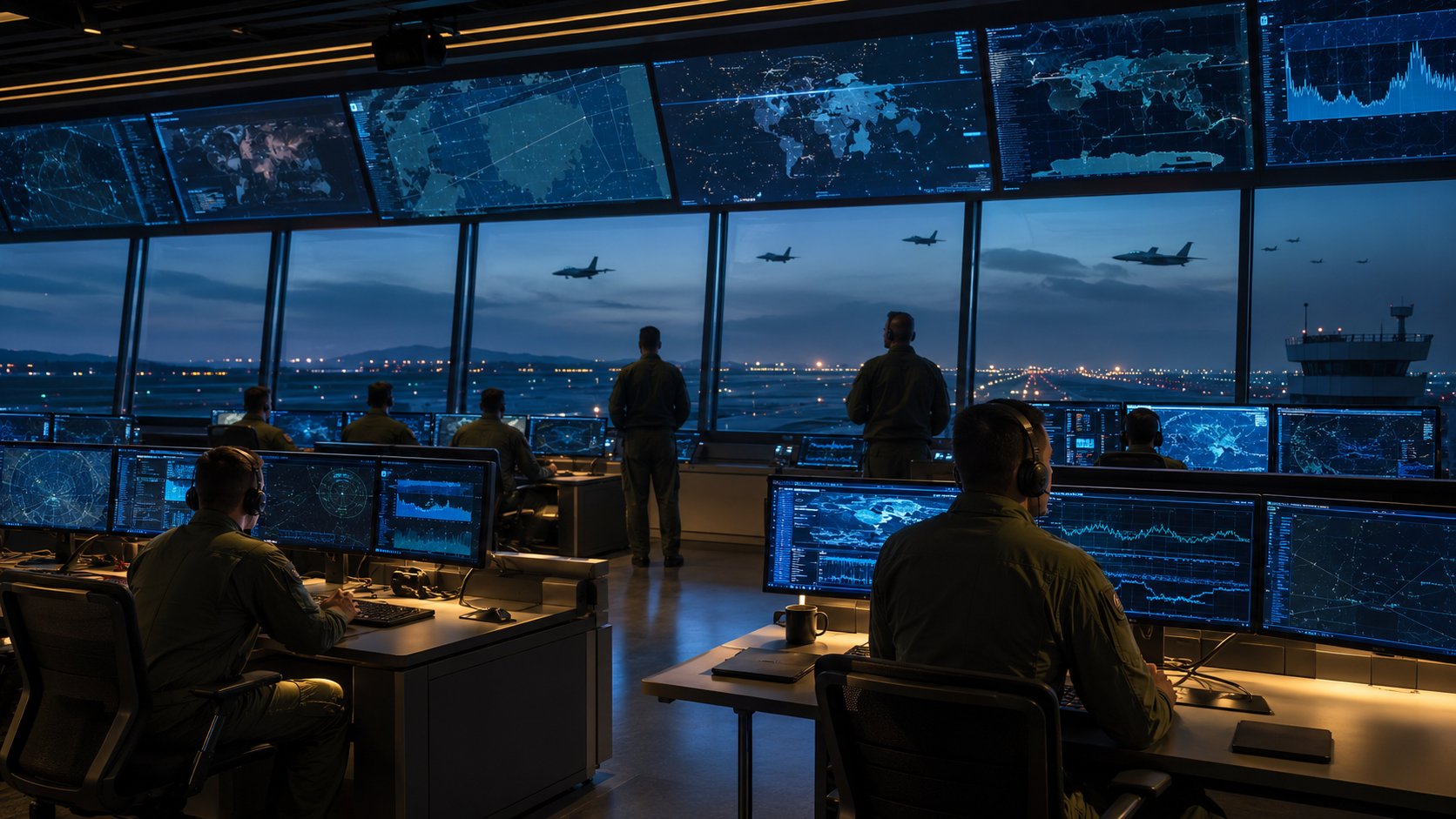
Air warfare moves too quickly for confusion. Aircraft may be flying at high speed, missiles may be moving across borders, drones may be feeding live video, and ground forces may be requesting support. Command and control systems organize this chaos. They connect sensors, commanders, aircraft, and weapons into a coordinated force.
Airborne command-and-control aircraft, ground operations centers, satellite links, data networks, and secure communications all help manage the battlespace. They allow commanders to assign missions, redirect aircraft, identify threats, and prevent friendly forces from interfering with one another. The more complex the conflict, the more important command and control becomes.
Modern warfare is increasingly networked. A sensor on one platform may identify a threat, another platform may track it, and a third may engage it. This level of coordination depends on fast and reliable information sharing. Air forces often sit at the center of this network because they operate across wide areas and connect land, sea, space, and cyber domains. The power of an air force is not only in its aircraft. It is in its ability to connect aircraft into a single fighting system.
Air Forces and Joint Warfare
Modern wars are rarely fought by one branch alone. Air forces work with armies, navies, marines, special operations forces, coast guards, intelligence agencies, and allied militaries. This is called joint warfare, and air power is one of its most important connectors. For ground forces, air forces provide surveillance, close air support, airlift, and protection from enemy aircraft. For naval forces, air power helps with maritime patrol, long-range strike, reconnaissance, and defense against aerial threats. For special operations units, air forces provide insertion, extraction, precision fire, and rescue. For national command authorities, air forces provide rapid options during crisis.
Joint warfare depends on trust and coordination. A pilot supporting troops must understand the ground situation. A ground controller must understand what aircraft can and cannot do. Naval commanders must coordinate airspace with land-based aircraft. Allied forces must share procedures and communication standards. Air forces shape modern warfare by bringing these pieces together across distance and speed. In many operations, air power is the first force to arrive, the force that protects others while they move, and the force that remains overhead when the situation changes.
Humanitarian Power and Crisis Response
Air forces are not only instruments of war. They are also essential tools of humanitarian response. When disasters strike, air forces can deliver aid, evacuate injured people, transport rescue teams, and reach areas cut off by destroyed roads or flooded terrain. Military aircraft are often among the few assets capable of moving large amounts of cargo quickly under difficult conditions.
After earthquakes, hurricanes, wildfires, floods, and conflicts, air mobility can save lives. Transport aircraft can bring food, water, generators, tents, medical supplies, and vehicles. Helicopters can rescue people from rooftops, mountains, or isolated communities. Medical evacuation aircraft can move patients to hospitals far from the disaster zone.
This crisis-response role shapes how people see air forces during peacetime. The same branch that can conduct precision strikes can also deliver relief. The same aircraft that support military operations can carry doctors, engineers, and emergency supplies. Air power is not only about destruction. It is also about reach, rescue, and recovery.
Deterrence and the Psychology of Air Power
Air forces shape modern warfare even when they are not actively fighting. The presence of advanced aircraft can deter aggression by forcing adversaries to consider the risk of rapid retaliation. Fighter patrols, bomber deployments, air defense alerts, and multinational exercises all send messages.
Deterrence works through capability and credibility. A nation must have the ability to respond, and opponents must believe it is willing to use that ability if necessary. Air forces contribute to both. Aircraft can be seen, deployed, tracked, and exercised in ways that make military readiness visible. Air power also affects morale and psychology. Friendly troops may feel more confident knowing aircraft are overhead. Opponents may feel pressure if they know they are being watched or can be struck quickly. Civilian populations may see air defense patrols as reassurance during crisis. In this way, air forces influence not only the physical battlefield but also the mental and political environment around it.
The Future of Air Forces in Modern Warfare
The future of air warfare will be shaped by artificial intelligence, autonomous systems, drone swarms, hypersonic weapons, advanced sensors, stealthier aircraft, electronic warfare, and closer integration with space and cyber operations. Air forces are moving toward a world where information may be as decisive as firepower. Future aircraft may operate in teams with unmanned systems. Artificial intelligence may help analyze sensor data, recommend routes, detect threats, and manage complex missions. Hypersonic weapons may compress decision times. Space-based systems may become even more important for communication, missile warning, and navigation. At the same time, enemies will look for ways to jam, hack, deceive, or destroy these systems.
The air force of the future will need to be flexible. It will need to fight in contested airspace, defend against drones, protect data, maintain readiness, and operate alongside allies. It will need to combine pilots, engineers, analysts, cyber specialists, drone operators, and commanders into one adaptive force. What will not change is the importance of the sky. Whoever can see, move, communicate, and strike from above will continue to shape the course of conflict.
The Sky as the Decisive Domain
Air forces shape modern warfare by giving nations speed, reach, precision, awareness, and strategic influence. They defend airspace, control the skies, strike critical targets, gather intelligence, move forces, rescue people, support troops, and connect the battlefield through advanced networks. From fighter jets and bombers to drones, tankers, transports, radar systems, and command centers, air power is one of the defining features of modern military strength.
The sky is no longer just a place aircraft pass through. It is a contested domain where information, technology, strategy, and firepower converge. Air forces turn altitude into advantage. They allow militaries to act before threats arrive, respond across vast distances, and shape events on land and sea.
Modern warfare is shaped from above because the force that controls the sky often controls the tempo, visibility, and reach of the entire conflict. In a world of fast-moving crises and advanced threats, the air force remains one of the most powerful instruments a nation can possess.