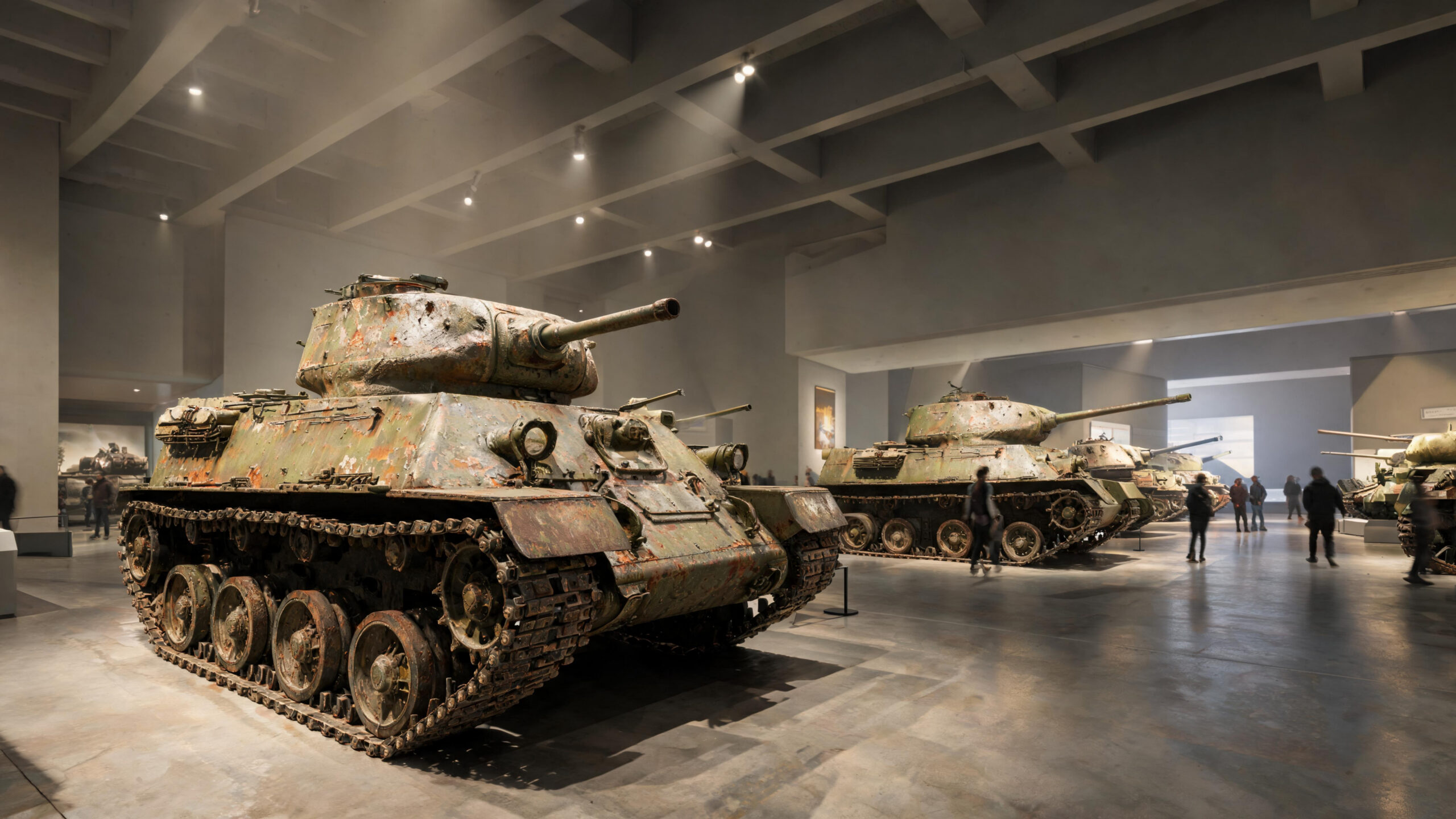
The Global Fascination With Retired Military Tanks
Few machines carry the weight of history quite like a decommissioned military tank. Built for the most extreme conditions of war, tanks combine engineering power, battlefield strategy, industrial design, and national identity into one unforgettable object. Even when silent and retired, they still feel imposing. Their tracks, turrets, armor plates, and scars tell stories of conflict, innovation, and survival. Around the world, decommissioned tanks have become centerpiece attractions at military museums, battlefield parks, memorial grounds, and private armor collections. Some are carefully restored indoors beneath museum lighting. Others stand outdoors in rain, snow, desert heat, or battlefield grass, becoming weathered monuments to the eras that produced them.
A: Bovington, Saumur, Munster, Latrun, and major U.S. armor museums are excellent choices.
A: Some museums allow limited access, but many interiors are restricted for preservation and safety.
A: Yes, most are authentic retired, captured, restored, or preserved armored vehicles.
A: Some restored tanks are operational and appear at demonstrations or living history events.
A: Their size makes outdoor display practical, and battlefield settings create strong historical atmosphere.
A: Study the tracks, turret, armor thickness, hatches, optics, gun size, and crew layout.
A: Absolutely. They show how armored warfare evolved during superpower military competition.
A: Collectors preserve engineering history, military heritage, and rare mechanical artifacts.
A: Yes, many offer large displays, interactive exhibits, demonstrations, and educational programs.
A: They preserve the physical history of armored warfare and help future generations understand past conflicts.
Why Decommissioned Tanks Make Powerful Defense Artifacts
Tanks are more than old military vehicles. They are rolling records of how nations thought about mobility, firepower, protection, and battlefield dominance. Every design choice reveals something about the period in which it was built. A World War I tank reflects the desperate need to cross trenches. A World War II tank shows the rise of maneuver warfare. A Cold War main battle tank reveals the fear of large-scale armored conflict between superpowers.
This is why tank museums and armored vehicle collections remain so popular. Visitors are not just looking at steel. They are looking at strategy made physical. A preserved tank allows people to understand scale, complexity, and combat history in a way photographs never fully capture.
The Tank Museum in Bovington, United Kingdom
One of the most important places in the world for tank enthusiasts is The Tank Museum in Bovington, England. This legendary museum houses one of the most respected armored vehicle collections anywhere, including early tanks, World War II icons, Cold War machines, and rare experimental vehicles. Bovington is especially famous because it connects visitors to the origins of tank warfare. The museum displays vehicles that trace the entire evolution of armored combat, from primitive tracked machines to sophisticated modern main battle tanks. For anyone interested in decommissioned military tanks, Bovington is one of the ultimate destinations.
Musée des Blindés in Saumur, France
The Musée des Blindés in Saumur is another world-class destination for historic armored vehicles. France has a deep military vehicle heritage, and this museum preserves a massive collection of tanks from different countries and conflicts.
What makes Saumur especially exciting is the variety of armor on display. Visitors can see French, German, Soviet, American, and other international designs side by side. This creates a powerful visual comparison of how different nations approached tank design across generations.
Kubinka Tank Museum and Patriot Park in Russia
Russia has one of the richest armored warfare histories in the world, and its preserved tank collections reflect that legacy. Kubinka, now connected with broader displays at Patriot Park, has long been known among armor enthusiasts for rare Soviet, German, and experimental vehicles. For anyone fascinated by Cold War armor, Soviet tank engineering, or unusual prototypes, this is one of the most compelling places to study decommissioned tanks. Soviet designs often emphasized ruggedness, low profiles, powerful guns, and mass production, making them visually and mechanically distinct from many Western tanks.
Deutsches Panzermuseum Munster in Germany
Germany’s Deutsches Panzermuseum Munster is one of the best places to see preserved German armored vehicles and study the evolution of tank warfare from a technical and historical perspective. The museum presents tanks not simply as machines, but as artifacts connected to military doctrine, industry, and society.
Visitors interested in World War II armor, Cold War vehicles, and postwar German tank development will find Munster especially valuable. The museum offers a serious, thoughtful look at armored history without turning warfare into spectacle.
American Heritage Museum in Massachusetts, United States
The American Heritage Museum in Hudson, Massachusetts, has become one of the most impressive destinations for seeing restored military vehicles in the United States. Its collection includes tanks, armored vehicles, aircraft, and other defense artifacts displayed in a highly polished museum environment. The museum is especially appealing because many vehicles are presented with careful attention to restoration quality and historical context. For visitors who want an immersive, cinematic look at military machinery, this is one of the strongest armor-focused destinations in North America.
National Armor and Cavalry Collection in Georgia, United States
The National Armor and Cavalry Collection at Fort Moore in Georgia preserves an extraordinary range of U.S. armored vehicle history. While access and display arrangements can vary, the collection is important because it represents the institutional memory of American armor development.
This collection includes vehicles tied to cavalry, mechanized warfare, World War II, the Cold War, and modern armored doctrine. For serious defense artifact enthusiasts, it is one of the most significant U.S. armored collections.
Yad La-Shiryon in Latrun, Israel
Yad La-Shiryon in Latrun is one of the most visually striking tank memorial sites in the world. Located in Israel, it combines a military museum, memorial, and armored vehicle collection in a powerful setting. The site includes a wide range of tanks and armored vehicles connected to Israel’s military history, as well as captured and foreign vehicles. The outdoor displays create a dramatic experience, with tanks positioned as both historical artifacts and memorial objects.
Australian Armour and Artillery Museum in Cairns
The Australian Armour and Artillery Museum in Cairns is one of the best places in the Southern Hemisphere to see decommissioned tanks and artillery. Its collection includes armored vehicles from multiple countries and time periods, making it a major destination for military vehicle enthusiasts.
The museum’s strength lies in its hands-on atmosphere and strong focus on mechanical preservation. Visitors can see not only famous armored designs but also lesser-known vehicles that rarely appear in mainstream military history coverage.
Royal Tank Museum and Armored Collections in Jordan
Jordan has preserved important military vehicles connected to regional defense history, including armored vehicles displayed in museum and memorial settings. These collections provide a valuable look at how tanks were used in Middle Eastern military history. For visitors interested in global tank preservation, Jordan offers a different perspective from European and American museums. The region’s armored history includes desert warfare, imported tank designs, and locally significant battlefield stories.
Battlefield Parks With Preserved Tanks
Some of the most memorable places to see decommissioned tanks are not traditional museums at all. Battlefield parks and memorial sites often preserve tanks close to the landscapes where armored warfare took place. These settings can be especially powerful because the vehicles are tied directly to geography, memory, and sacrifice.
A tank displayed in a museum teaches engineering and history. A tank displayed on or near a battlefield can feel like a witness. It invites visitors to imagine the terrain, the conditions, and the human experiences behind the machine.
Why Outdoor Tank Displays Feel So Dramatic
Outdoor tank displays often have a rugged authenticity that indoor exhibits cannot fully replicate. Rain streaks, sun-faded paint, mud, snow, grass, and rust can make a retired tank feel like it still belongs to the landscape of war. Of course, outdoor preservation also creates challenges. Weather can damage armor, tracks, rubber components, optics, and paint. Museums must balance public access with conservation. Still, for many visitors, seeing tanks outdoors beneath open sky creates the most cinematic and memorable experience.
World War II Tanks That Still Draw Crowds
World War II tanks remain among the most popular decommissioned military vehicles to visit. Vehicles such as the Sherman, T-34, Churchill, Panther, Tiger, and Cromwell continue to fascinate audiences because they represent one of the most studied conflicts in history.
These tanks also show how different nations solved battlefield problems in different ways. Some prioritized reliability. Others emphasized armor thickness, gun power, mobility, or production speed. Seeing these vehicles in person makes those design differences immediately visible.
Cold War Tanks and the Age of Superpower Armor
Cold War tanks have a different kind of appeal. They represent an era of massive armored forces, nuclear tension, and technological competition between NATO and the Warsaw Pact. Vehicles such as the M60, Chieftain, Leopard 1, T-55, T-62, T-72, and early Abrams models tell the story of a world preparing for conflicts that many hoped would never happen. These tanks often look more modern, more angular, and more refined than their World War II predecessors. Their preservation helps visitors understand the scale of Cold War military planning and the rapid evolution of armored technology.
Rare Prototype Tanks and Experimental Armor
Some of the most exciting tanks to see are prototypes and experimental vehicles. These machines may never have entered mass production, but they reveal bold ideas about what armored warfare might become.
Experimental tanks often feature unusual turret shapes, strange suspension systems, oversized guns, unconventional armor layouts, or design concepts that were later abandoned. For defense artifact fans, these vehicles are especially valuable because they preserve the roads not taken in military engineering.
Private Tank Collections and Restoration Workshops
Not all important tanks are preserved by national museums. Private collectors, restoration teams, and military vehicle foundations have saved many tanks from decay or scrapping. Some private collections are open to visitors, while others appear at special events, reenactments, or military vehicle shows. Restoring a tank is a massive undertaking. Tracks, engines, transmissions, armor sections, and interior components can be extremely difficult to repair or replace. When a restored tank runs again, it becomes more than a static display. It becomes a moving piece of history.
Tank Driving Experiences and Living History Events
In some parts of the world, visitors can do more than look at decommissioned tanks. Certain museums and private venues offer tank driving experiences, ride-alongs, or live demonstrations. These experiences are popular because they reveal the physical power of armored vehicles in motion.
Hearing an old tank engine start, watching tracks bite into the ground, and feeling the vibration of tons of steel moving across a field creates a completely different appreciation for the machine. Living history events bring mechanical history back to life.
Planning a Tank Museum Trip
A great tank museum visit is easier to enjoy when planned with enough time. Large armored collections can take hours to explore properly, especially for visitors who want to read interpretive panels, photograph vehicles, compare designs, and study restoration details. The best trips often include a mix of indoor exhibits, outdoor displays, restoration areas, and nearby historical sites. Some museums also host special demonstration days, anniversary events, or vehicle running weekends that make the visit even more memorable.
What to Look for When Viewing Decommissioned Tanks
When standing beside a preserved tank, it helps to look beyond the obvious. Notice the size of the tracks, the shape of the turret, the thickness of the armor, the placement of hatches, the visibility from the crew positions, and the height of the vehicle compared with a person.
These details reveal how the tank was meant to fight, survive, and move. A low-profile tank suggests concealment and survivability. A large turret may indicate a powerful gun or complex crew arrangement. Wide tracks suggest mobility over mud, snow, or soft terrain.
The Future of Tank Preservation
As modern tanks become more advanced, preservation will become increasingly important. Digital systems, composite armor, advanced optics, and classified technologies may make future restoration more complicated. Museums will need to preserve not only the vehicles but also the context that explains how they worked and why they mattered. Today’s decommissioned tanks are tomorrow’s irreplaceable defense artifacts. The vehicles now entering retirement will eventually help future generations understand the military technology, strategy, and global tensions of our own era.
Why Decommissioned Tanks Still Matter
Decommissioned military tanks continue to matter because they give history weight, scale, and presence. They remind us that military innovation is never abstract. It is built, tested, deployed, retired, remembered, and preserved.
Whether found in a world-class museum, a battlefield park, a desert display yard, or a private restoration collection, a retired tank still commands attention. These machines may no longer move into battle, but they continue to educate, challenge, and inspire everyone who stands before them.