
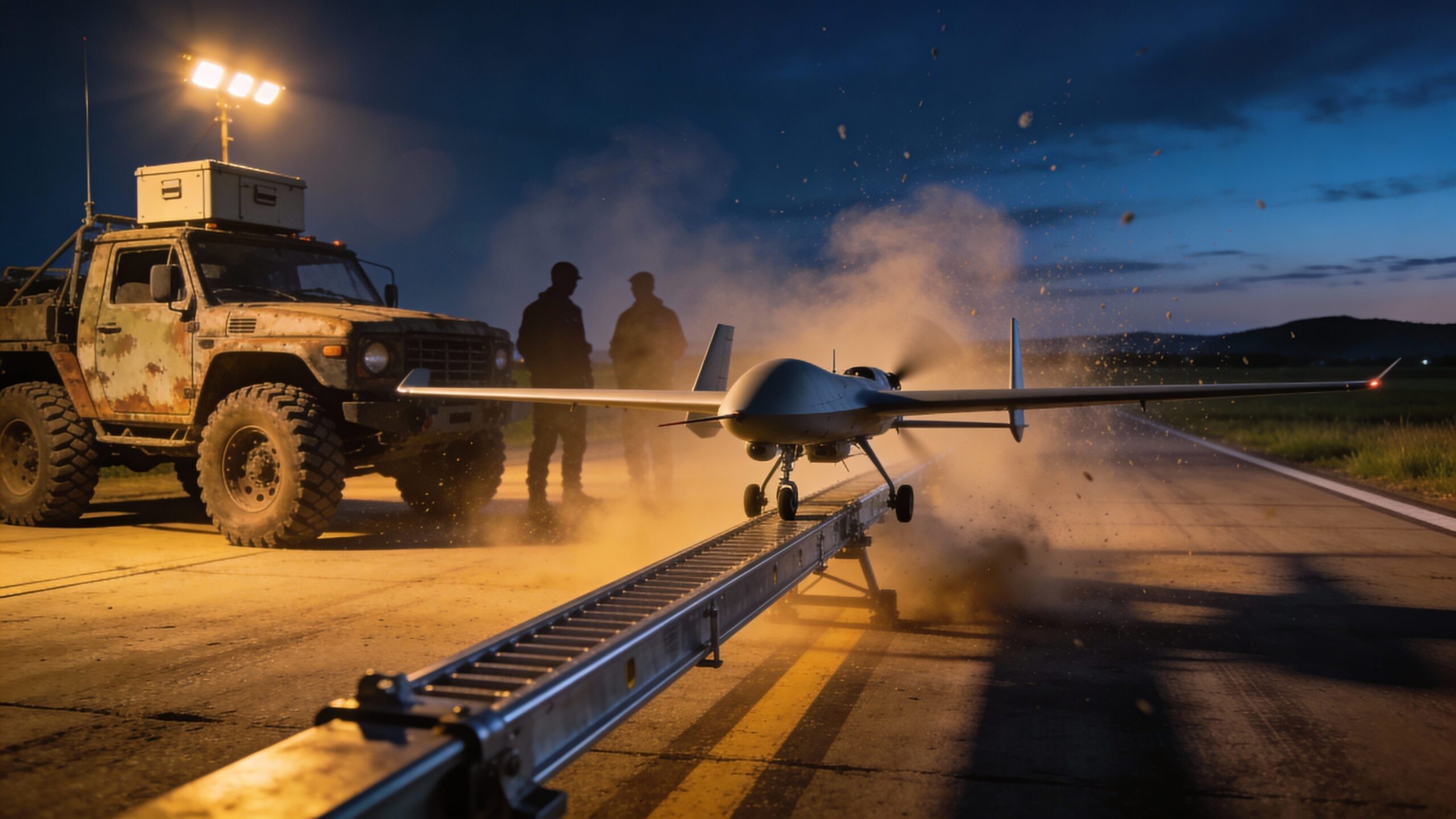
Robotics and drones are rewriting the tempo of modern defense, turning distance, danger, and uncertainty into problems that machines can help absorb. From high-endurance aircraft watching vast terrain to palm-sized quadcopters peeking around the next corner, unmanned systems extend eyes, ears, and reach—often where a human presence would be too slow, too risky, or simply impossible. But this isn’t just about flying cameras. Today’s battlefield robotics includes ground vehicles for reconnaissance and resupply, maritime drones that patrol and map, and autonomous swarms that coordinate like a single organism. As sensors sharpen and onboard computing grows smarter, drones can navigate contested environments, fuse data at the edge, and relay actionable intelligence in seconds. At the same time, new threats emerge: counter-UAS tactics, electronic interference, cyber vulnerabilities, and the challenge of keeping humans meaningfully in control. This category explores the platforms, payloads, and principles behind unmanned operations—how they’re built, how they’re used, and how the next generation of human-machine teaming will shape missions across air, land, sea, and the electromagnetic spectrum.
A: Drones are often aerial; robots can be air, ground, or sea—both can be unmanned.
A: No—many are manually piloted with limited assist features.
A: Resilience, secure links, ruggedization, and mission-specific payloads.
A: Communications links and ground control equipment.
A: Detection plus layered responses—RF, kinetic, and electronic options.
A: Sometimes—using vision, inertial nav, terrain cues, or alternative signals.
A: Not always, but AI can help coordination and target recognition.
A: A human approves key actions rather than full autonomy deciding alone.
A: Through training, SOPs, deconfliction, and dedicated analysis workflows.
A: Better autonomy, resilient comms, and tighter human-machine teaming.

