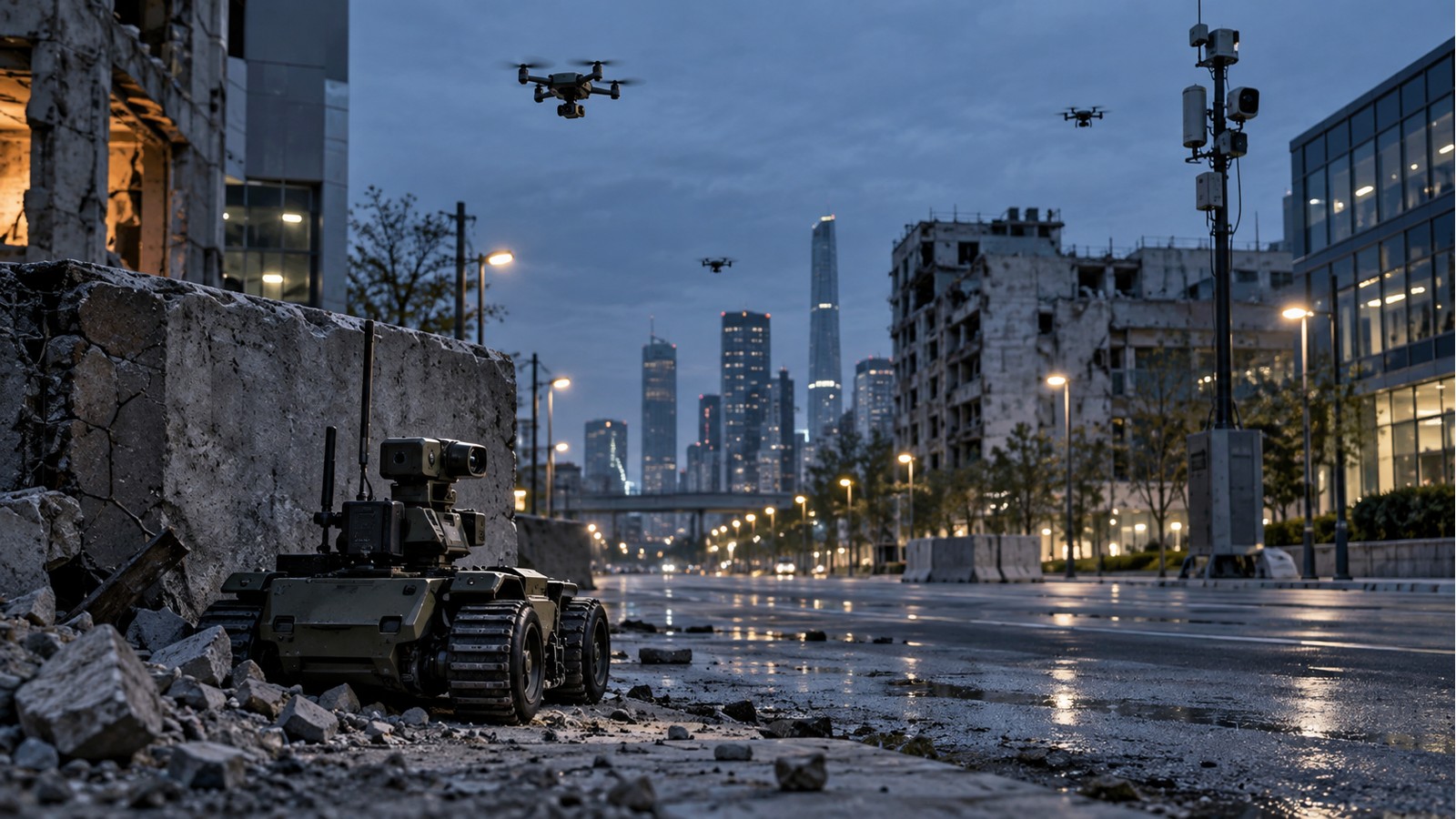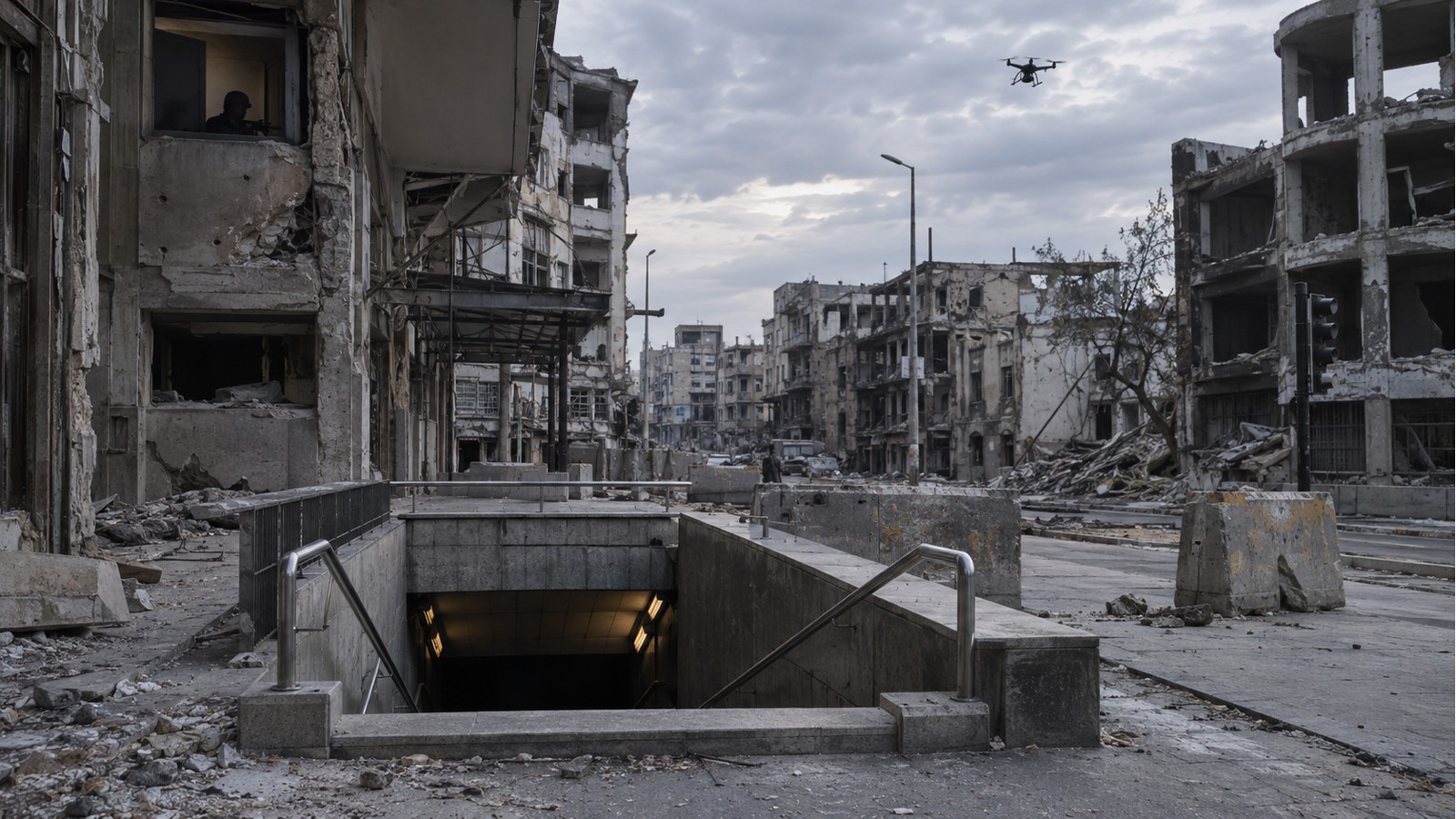
Modern Urban Combat: Drones, Tunnels, Snipers, and Street-by-Street Fighting
Modern Urban Combat: Drones, Tunnels, Snipers, and Street-by-Street Fighting is best understood as a practical defense explainer about terrain, people, timing, and judgment. Modern Urban Combat puts military power into crowded spaces where routes are short, information is uneven, civilians are close, and small mistakes can spread quickly. The useful way to read the subject is to connect tactics with logistics, intelligence, restraint, technology, and the slow work of turning movement into control.
What the Topic Means in Defense
Modern Urban Combat is best understood as part of a larger defense problem rather than as a standalone headline. It connects people, terrain, equipment, policy, and command judgment into a practical question: what has to be protected, moved, observed, deterred, or sustained under pressure?
That framing keeps this subject from turning into a list of impressive terms. A serious explanation looks at purpose first, then asks which forces, tools, limits, and responsibilities shape the result. The details matter because military ideas are useful only when they can be applied within lawful authority and real conditions.
The safest explanation stays broad enough for civilians but specific enough to be useful. It names the mission problem, the responsible institutions, and the practical limits without turning the subject into instructions.
The point is not to make the subject sound larger than it is. The point is to explain where it fits inside planning, preparedness, and public understanding. That gives the reader a stable frame before moving into claims, examples, or comparisons.
Readers can come away knowing the role of the concept, the kind of decision it supports, and why it cannot be reduced to a single slogan.
In this what the topic means in defense discussion, that practical view keeps the material useful for a broad audience. It gives enough detail to explain the subject while avoiding claims that would require private information or operational guidance.
Why the Topic Matters
Modern Urban Combat matters because defense decisions are rarely made in perfect conditions. Leaders weigh incomplete information, public risk, mission goals, civilian impact, and the available time to respond. A concept that looks simple from a distance may become complicated once geography, communication, sustainment, and human judgment enter the picture.
The topic also matters because public discussion often compresses military subjects into slogans. A better explanation shows why readiness, discipline, training, maintenance, and coordination can be more important than a single statistic. That approach gives readers a clearer way to judge claims without pretending that every sensitive detail can be public.
That context helps readers understand why defense professionals spend so much time on planning, rehearsals, and review. The visible moment is only the end of a chain that includes preparation, authority, and support.
When those supporting details are missing, readers are left with either excitement or fear. A stronger article gives them a middle path: enough detail to understand the stakes, and enough caution to avoid overclaiming.
That is especially important in defense writing, where simplified stories can make hard choices look cleaner than they really are.
In this why the topic matters discussion, that practical view keeps the material useful for a broad audience. It gives enough detail to explain the subject while avoiding claims that would require private information or operational guidance.
The Main Parts to Understand
Most defense subjects can be broken into several connected parts: the mission, the people assigned to it, the tools they rely on, the environment they operate in, and the support network that keeps the effort moving. If one part is missing, the whole picture becomes less reliable.
For this subject, the important pieces are not just visible equipment or dramatic outcomes. The quieter parts, including planning discipline, communications, transport, medical support, spare parts, and legal review, often decide whether a capability can actually help when the situation becomes difficult.
The pieces also need to be read together. A strong tool with weak support, a clear plan with poor communications, or a trained unit without sustainment can all produce a weaker result than the headline suggests.
Looking at the parts also shows why simple answers can mislead. A well-supported operation can make a modest tool effective, while a poorly supported effort can waste a powerful one.
If the parts do not connect, the explanation should slow down and show the missing link instead of moving on to a stronger claim.
In this the main parts to understand discussion, that practical view keeps the material useful for a broad audience. It gives enough detail to explain the subject while avoiding claims that would require private information or operational guidance.
How to Read Public Claims
Public claims about defense need careful reading. Some details are classified, some are simplified for public communication, and some are shaped by political pressure, marketing, or incomplete battlefield reporting. A claim can be useful and still need context before it becomes trustworthy.
A good reader asks what is being measured, who is making the claim, what assumptions are included, and what conditions would change the answer. Numbers such as range, speed, cost, strength, or inventory can help, but they do not replace questions about training, reliability, doctrine, and support.
This is why careful language matters. Public material can explain roles, tradeoffs, and history while leaving out sensitive details that would not help ordinary readers make a better judgment.
That does not mean every public claim is wrong. It means each claim should be placed beside the evidence available, the limits of that evidence, and the mission conditions that would make the claim stronger or weaker.
The strongest public explanations are comfortable saying what is known, what is likely, and what remains uncertain.
In this how to read public claims discussion, that practical view keeps the material useful for a broad audience. It gives enough detail to explain the subject while avoiding claims that would require private information or operational guidance.
Where People Get Confused
One common confusion is treating capability as certainty. A system may be powerful on paper but limited by weather, terrain, maintenance, crew experience, supply, command rules, or the opposing force's adaptation. Defense outcomes depend on interaction, not isolated features.
Another confusion is assuming this subject has one universal meaning. The same concept can look different in homeland defense, expeditionary operations, alliance planning, peacekeeping, training, disaster response, or crisis deterrence. Context changes what matters most.
A second mistake is reading one example as a universal rule. Defense organizations adapt quickly, and the same idea can produce different results when the mission, opponent, allies, or local population changes.
The better habit is to compare scenarios rather than memorize a single answer. That approach makes room for geography, readiness, command structure, and the way opponents learn from each other.
That habit also protects the reader from treating dramatic examples as proof that every future case will work the same way.
In this where people get confused discussion, that practical view keeps the material useful for a broad audience. It gives enough detail to explain the subject while avoiding claims that would require private information or operational guidance.
Real-World Context
Real-world defense planning is shaped by tradeoffs. More protection can reduce speed. More reach can raise cost. More automation can increase dependence on software, sensors, and communications. More secrecy can make public accountability harder to understand. These tradeoffs do not make a capability good or bad by themselves, but they do shape how it should be judged.
Modern Urban Combat also fits into a broader system of allies, institutions, budgets, industrial capacity, and public trust. A military organization does not operate in isolation. It depends on political authority, civil infrastructure, technical expertise, and a supply base that can support readiness over time.
The broad context also includes cost and patience. Readiness takes years of procurement, training, testing, maintenance, and institutional learning before it appears as a short news item.
This long chain is why defense planning can look slow from the outside. Decisions have to account for readiness today, replacement capacity tomorrow, and the political trust needed to sustain both.
Context gives the topic a realistic scale: important enough to study, but not so simple that one paragraph can settle it.
In this real-world context discussion, that practical view keeps the material useful for a broad audience. It gives enough detail to explain the subject while avoiding claims that would require private information or operational guidance.
Limits, Risks, and Tradeoffs
The limits are often the most important part of the story. Defense tools can fail, be misread, be used outside their best conditions, or create second-order effects. Responsible analysis names those limits without turning the article into alarmism.
Risk also includes escalation, civilian harm, miscommunication, cost growth, maintenance burden, and overconfidence. A mature defense article explains why restraint, oversight, and clear command authority matter. Power is most useful when it is connected to judgment.
Naming risk does not weaken the explanation. It makes the subject more credible because every real capability has boundaries, dependencies, and conditions where judgment matters more than raw power.
Tradeoffs also explain why democratic oversight and professional standards matter. Defense institutions need enough flexibility to respond quickly and enough accountability to keep that speed under control.
Limits are not side notes. They are part of the main explanation because they show where judgment, training, and oversight enter the story.
In this limits, risks, and tradeoffs discussion, that practical view keeps the material useful for a broad audience. It gives enough detail to explain the subject while avoiding claims that would require private information or operational guidance.
How the Topic Is Changing
Defense subjects change as technology, politics, and battlefield lessons change. Drones, satellites, electronic warfare, cyber operations, artificial intelligence, precision weapons, and contested logistics are altering how many older ideas work in practice.
That does not mean every new tool replaces every older one. It means this subject should be read as a moving subject. The strongest forces usually combine older fundamentals such as leadership and discipline with newer tools that improve awareness, coordination, and survivability.
Change is not only technical. Institutions also change doctrine, training pipelines, acquisition habits, and alliance procedures when new lessons show that older assumptions are no longer enough.
Readers should expect the vocabulary to change as well. Older terms may remain useful, but new sensors, software, and operational lessons can shift what those terms mean in practice.
The most useful updates will explain what changed and why that change matters, rather than presenting every new development as a revolution.
In this how the topic is changing discussion, that practical view keeps the material useful for a broad audience. It gives enough detail to explain the subject while avoiding claims that would require private information or operational guidance.
Questions Worth Asking
A useful set of questions keeps the topic grounded. What problem is being solved? Who is responsible for the decision? What evidence supports the claim? What limits are acknowledged? How would the answer change in a different terrain, timeline, or political setting?
Those questions make this subject easier to understand because they shift attention from spectacle to function. Readers do not need access to classified details to recognize when an explanation is balanced, cautious, and connected to real constraints.
These questions are useful because they work across many defense stories. They help separate evidence from excitement and make room for uncertainty without losing the main point.
A good answer does not have to settle every debate. It should leave the reader with a clearer map of the issue, the evidence that matters, and the uncertainties that deserve follow-up.
Those questions also make the article easier to revisit when new evidence, policy, or technology changes the discussion.
In this questions worth asking discussion, that practical view keeps the material useful for a broad audience. It gives enough detail to explain the subject while avoiding claims that would require private information or operational guidance.
Bottom Line
The clearest way to understand Modern Urban Combat is to connect the headline back to mission, readiness, support, and responsibility. The topic is not only about what a force can do in theory. It is about what can be done lawfully, reliably, and effectively when conditions are uncertain.
That balanced view is more useful than a dramatic ranking or a vague warning. It helps readers compare claims, notice tradeoffs, and understand why defense power depends on people, systems, discipline, and context working together.
The final lesson is measured confidence. A reader can understand the importance of the subject while still asking for evidence, context, and a clear account of what remains uncertain.
That is the standard used here: explain the role, name the limits, and keep the subject connected to real-world responsibility. Anything less risks sounding confident without actually being useful.
With Modern Urban Combat, that means valuing clarity over drama and grounded explanation over repetition.
The practical value of studying the subject is not memorizing a phrase. It is learning how mission, evidence, limits, and responsibility fit together when the stakes are high.